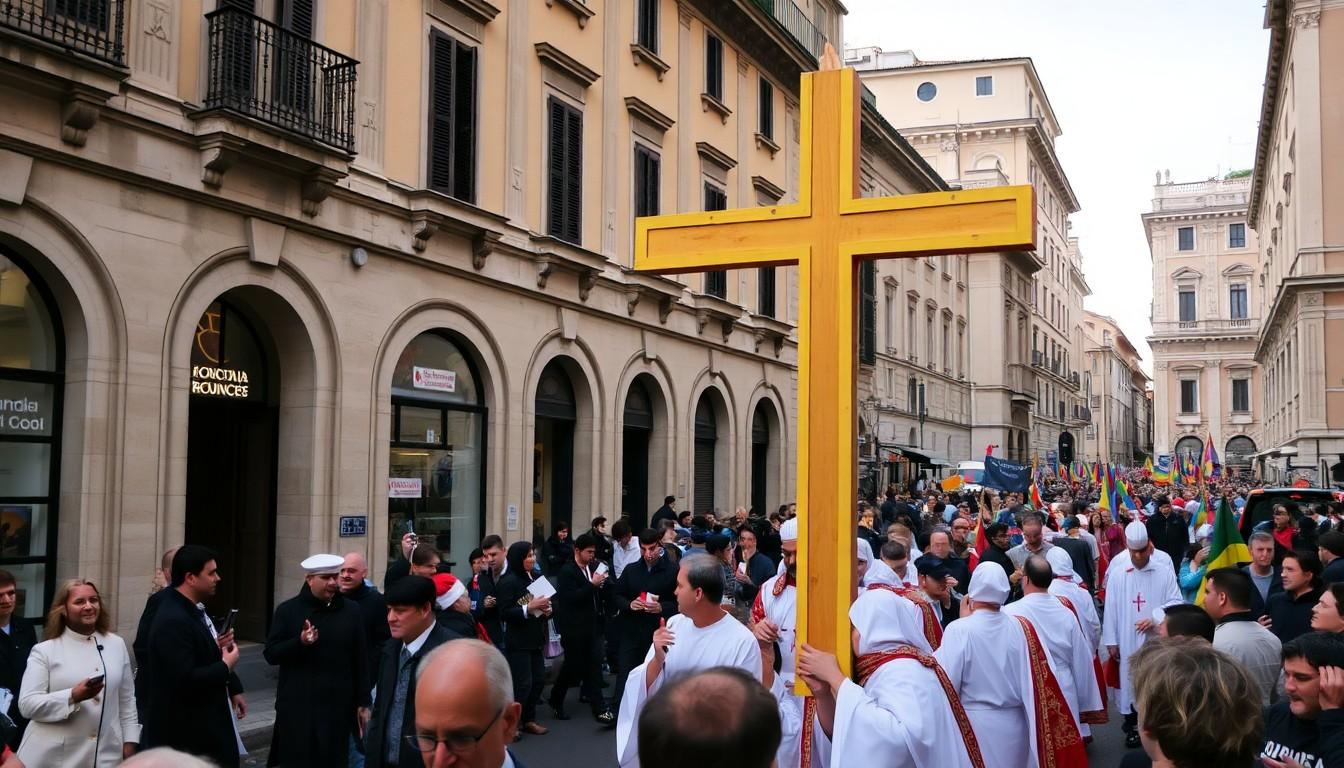
Shoppers and onlookers took notice as members of Mosaiko, Italy’s LGBTQ+ Catholic community, marched visibly in Rome Pride carrying a rainbow cross , a striking sign that faith and queer identity can coexist. This public witness blended spirituality, civil rights campaigning, and a warm, emotional presence in the city’s biggest Pride.
Essential Takeaways
- Visible faith: Members of Mosaiko marched with a rainbow-coloured Cross of the Covenant, bringing prayerful symbolism into Rome Pride.
- Dual purpose: The group aimed to show that LGBTQ+ identity and Christian faith belong together while pressing for Italian civil rights like marriage equality and parenting recognition.
- Inter‑faith support: Protestant groups such as REFO+ and the Episcopal Church joined them, reflecting long-standing inclusive moves by some Italian Protestant denominations.
- Mixed reactions: The parade reception was largely warm and emotional, but participants faced a surge of hostile online responses afterwards.
- Personal stakes: For marchers like Tiziano and Titti, participation was both a spiritual act and a family statement , tender, defiant, and public.
A rainbow cross in the crowd , what it looked and felt like
The strongest image from Rome Pride was simple and tactile: a painted cross, bright with rainbow hues, bobbing above the crowd with a steady, peaceful presence. Participants say it felt calming and powerful, a quiet declaration of belonging rather than a provocation. According to interviews published in New Ways Ministry, the cross is used in Mosaiko’s prayer gatherings, and carrying it into the parade turned a private spiritual object into a public sign of solidarity. For viewers it wasn’t just colour and wood, but a human story , one marcher painted it with his son , which made the gesture feel intimate as well as political.
Why Catholics marched at Pride , faith meets civil advocacy
This wasn’t a stunt: for Mosaiko and allied groups, the march served two linked purposes. First, they wanted to witness theologically , arguing that a careful, historical reading of Scripture needn’t condemn LGBTQ+ people. Second, they lined up behind tangible civil goals still unresolved in Italy, such as full marriage equality and equal parenthood rights. The move follows a wider pattern in some Italian Protestant communities, where blessings for same‑sex couples and inclusive practices have preceded civil change. That context helps explain why Catholic marchers framed their presence as both spiritual testimony and civil-rights campaigning.
Allies on the route , Protestant churches and networks
Mosaiko didn’t march alone. REFO+, an Italian Evangelical network that explicitly welcomes diverse sexual orientations and gender identities, and the Episcopal Church of St. Paul Within the Walls joined the procession. These partnerships echo earlier Italian Protestant steps , the Waldensian Church’s blessings and the Italian Baptist Union’s encouragement of inclusion , showing that inter‑denominational alliances can shape public religious attitudes. For marchers, seeing fellow Christians beside them felt like a sign of momentum: inclusion in pockets of the Christian world is already a reality, and public collaborations make that visible.
Warmth on the street, hostility online , the paradox of visibility
On the day, marchers report an overwhelmingly warm welcome: people hugged, took photos, and some were moved to tears at the sight of the rainbow cross. But that goodwill met a darker, digital echo after the parade. One participant said he received hundreds of hostile comments, many from self‑identified Catholics wielding Scripture as a weapon. He responded calmly and the exchange produced something else too , other believers stepped forward with support. The episode highlights a modern pattern: public visibility can convert immediate compassion into online controversy, yet it also opens up new channels for solidarity.
Practical takeaways for faith communities thinking of marching
If a parish or community is considering a visible role at Pride, practical choices matter. Carry clear symbols that reflect your spiritual life, prepare simple statements explaining why you’re there, and designate spokespeople to handle media and online fallout. Think about safety, procession logistics, and follow‑up pastoral care: visibility often brings strong responses, positive and negative. Above all, centre the people affected , LGBTQ+ members and families , and let their dignity and stories guide decisions.
It's a small, public step that helps shift how faith and queer life are seen , and it may open doors for more conversations within churches and across the city.
Source Reference Map
Story idea inspired by: [1]
Sources by paragraph: