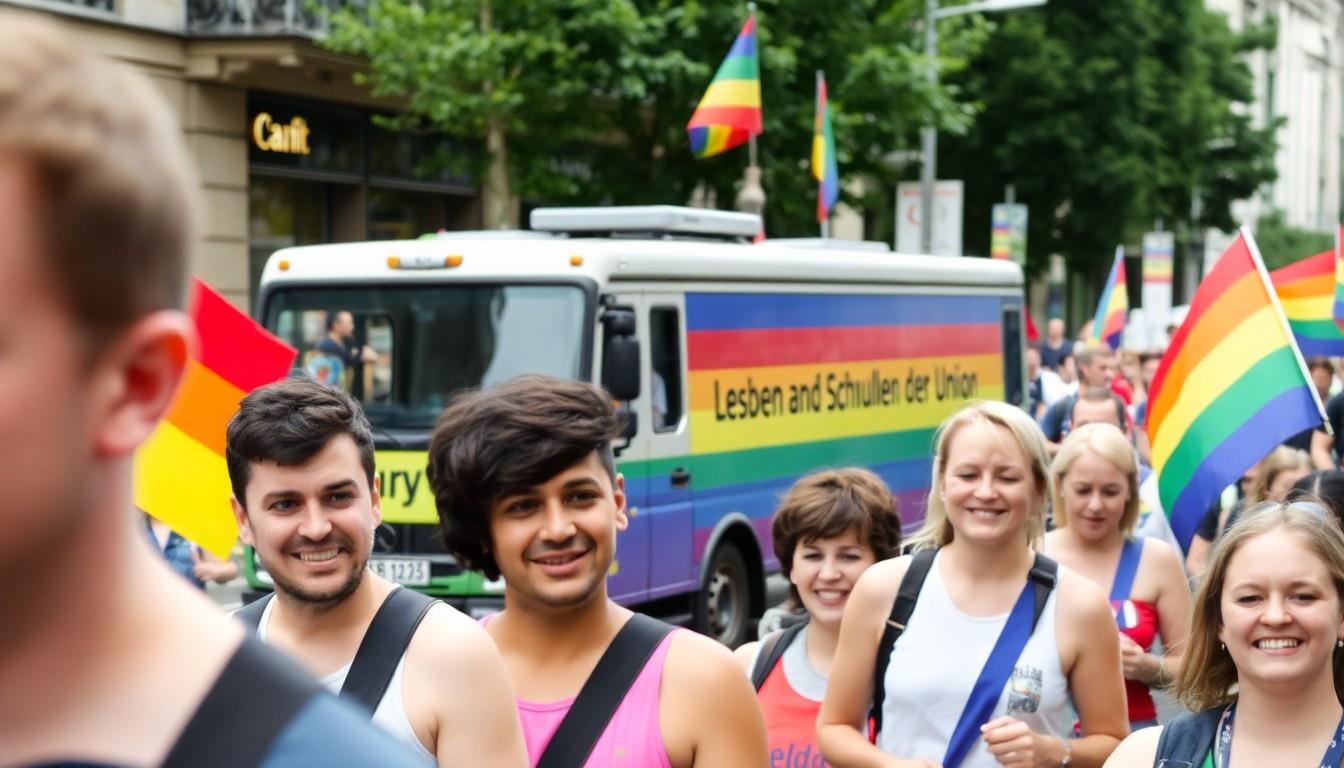
Watchers jeered a CDU-affiliated float at Cologne's Christopher Street Day, sparking a wider question about trust and queer politics: who can credibly represent LGBTQ+ interests inside conservative parties, and why that matters to activists, voters and everyone who cares about equal rights.
Essential Takeaways
- Public backlash: A CDU/CSU-linked float drew boos and insults during Cologne's CSD parade, signalling distrust from parts of the crowd.
- Inside voices: Members of the Lesben und Schwule in der Union (LSU) say they're pushing for change from within but face credibility problems.
- Policy context: Critics point to past CDU votes and positions, on marriage equality and anti-discrimination protections, as reasons for scepticism.
- Organising split: LGBTQ+ groups and critics urge a clearer break from party leadership before acceptance by the community returns.
- Practical consequence: Presence alone won't repair relations; demonstrable policy shifts and sustained allyship are needed to win back trust.
A jeer on the parade: what happened and why it felt sharp
The scene was vivid: one float from the Lesben und Schwule in der Union (LSU) met not cheers but boos as it rolled through Cologne’s streets. The reaction was loud enough to make participants uneasy and to make national headlines. Witnesses said it felt personal and pointed, less a critique of individual activists than of the CDU’s record on queer issues. That sharpness tells you something about how symbolic acts like joining a parade can expose raw, ongoing tensions.
Inside the party: reformers say they're trying, but face limits
LSU members insist they're working to change the CDU from within, stressing small wins and growing representation. Their perspective is nuanced: they want the party’s broad tent to include queer voices, yet they admit progress is slow and uneven. The presence of senior officials at CSD events is used as proof of change, but reformers also acknowledge internal resistance and leadership signals that make deeper trust hard to win.
Why the crowd reacted: credibility, history and policy
The boos weren't just theatre; they were a judgement rooted in recent history. Critics point to past CDU votes against marriage equality and ongoing scepticism about explicit discrimination protections as reasons they doubt the party’s sincerity. For many in the crowd, a single float doesn't erase a pattern of policy positions that felt exclusionary. That scepticism reflects a wider debate about whether representation inside conservative parties can be effective without structural shifts.
What organisers and activists are asking for instead
Voices from the streets and advocacy groups have been clear: gestures won't do without action. Calls range from explicit public distance from party figures who have denounced queer rights, to concrete policy commitments on anti-discrimination clauses and self-determination laws. Campaigners suggest that the CDU could start rebuilding trust with transparent pledges, voting records that match pro-equality rhetoric, and a demonstrable willingness to defend queer rights in parliament.
How to read this for the future of queer politics in Germany
This episode is as much about optics as it is about strategy. Being present at Pride can be a positive step, but for a party with a contested track record it can backfire when the audience senses inconsistency. If the CDU genuinely wants to be seen as an ally, it will need sustained policy moves and credible internal change, not only colourful floats. For activists and voters, the moment is a reminder to demand evidence of commitment, not just attendance.
It's a small public moment with a big lesson: presence without proof won't pass muster.
Source Reference Map
Story idea inspired by: [1]
Sources by paragraph: