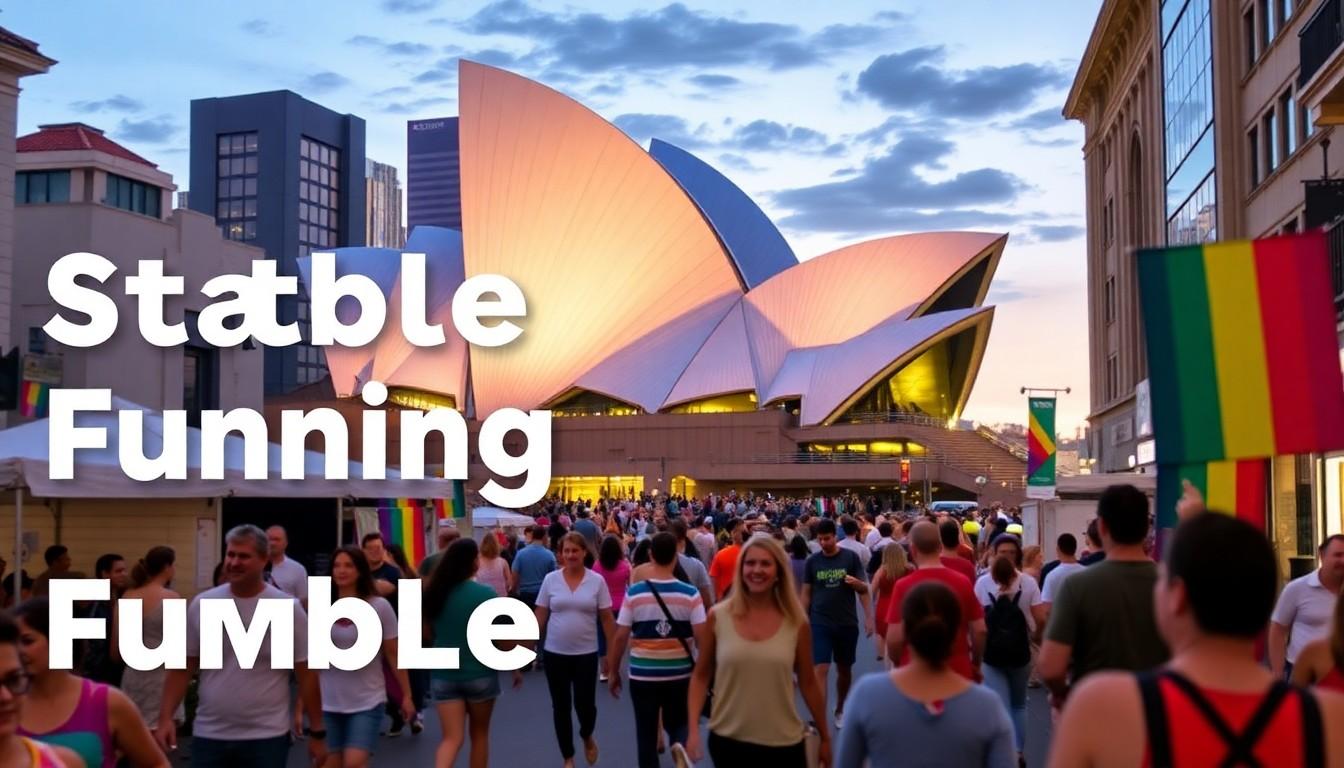
Remember your first Pride? For many, it's where community, visibility and belonging begin , but across NSW and beyond, regional and grassroots Pride events are under threat from funding gaps and organised hostility, and that matters for safety, mental health and community resilience.
Essential Takeaways
- Community lifeline: Pride events offer connection and belonging, especially for young and rural queer people, and can be life-changing.
- Funding fragile: Many local Pride gatherings rely on short-term grants, piecemeal sponsorship or luck, leaving them vulnerable to cancellation.
- Safety concern: Rising threats from organised extremist groups make planning and insurance harder, and increase costs.
- Model to copy: Victoria's ongoing Pride Events and Festivals Fund shows how government backing can stabilise events and grow access.
- Practical wins: Steady funding boosts outreach, safer infrastructure, and year-round programs that help mental health and visibility.
Pride is more than a party , it's where people find each other
Pride's first job is human: it creates visible places where queer people meet, learn and feel less alone, and that sense is often tactile , a warm crowd, colourful banners, someone catching your eye with relief. Psychology Today and community groups note attending Pride can reduce isolation and improve wellbeing for LGBTQIA+ people, particularly teens and those in isolated areas. For many regional young people, a single parade or movie night can be a turning point.
That human value gets squeezed when events are run on a shoestring. When organisers must juggle fundraising and safety costs, the simple act of holding space becomes precarious. Supporting Pride isn't just about spectacle , it's about protecting those initial, life-affirming encounters.
Small towns need Pride just as much as big cities
Local Pride festivals act as social infrastructure in towns where queer resources are thin on the ground. Community pages and regional organisers explain how a one-off weekend can seed support networks, local services and year-round groups. Rural events often double as outreach, education and visibility work; they reduce secrecy and open safe channels for people to reach out.
But small organisers typically don't have the same access to sponsors or grant-writing teams as metropolitan organisers. That imbalance means regional events are the first to disappear when funds dry up, even though those communities arguably need them most.
Funding models make or break an event's future
The difference between what happens and what could happen often comes down to money and security. The NSW government funnels tourism funds to big events, while Victoria has created a dedicated Pride Events and Festivals Fund to provide stable, ongoing support. That continuity lets organisers plan multi-year programmes, invest in insurance and safety, and expand to under-served towns.
If public funding is framed only as a tourism boost, community value can be sidelined. Rebalancing that narrative , acknowledging Pride's social and mental health benefits as well as economic ones , makes better policy sense and protects events from being treated as mere attractions.
Safety costs are rising as threats increase
Organisers now factor in security, legal advice and resilient communication strategies because far-right intimidation is real and sometimes violent. Events that once relied on volunteers and donated tents now need professional safety measures, which raises budgets dramatically. When a regional Mardi Gras or film night folds after a sponsor withdraws, it’s not just about lost confetti , it’s about volunteers burned out, audiences left unsupported, and young people losing rare chances to belong.
Governments and local councils can help by underwriting safety costs, improving emergency support, and offering accessible insurance schemes for community organisers.
Practical moves communities and policymakers can make today
Communities can diversify income by combining small local sponsorships, modest ticketing, membership and targeted grants, but that takes capacity many groups lack. Policymakers should consider ring-fenced, ongoing funds for Pride and queer cultural programming; the Victorian model is a useful blueprint. Councils can also make venue access, permits and promotional support easier and cheaper.
Meanwhile, individuals can show up: volunteer, donate, champion local Pride with businesses, and push elected representatives to back sustained funding. Visibility matters in more ways than one , it keeps events safer, better resourced and more welcoming.
It's a small policy shift that keeps entire communities connected and safer.
Source Reference Map
Story idea inspired by: [1]
Sources by paragraph: