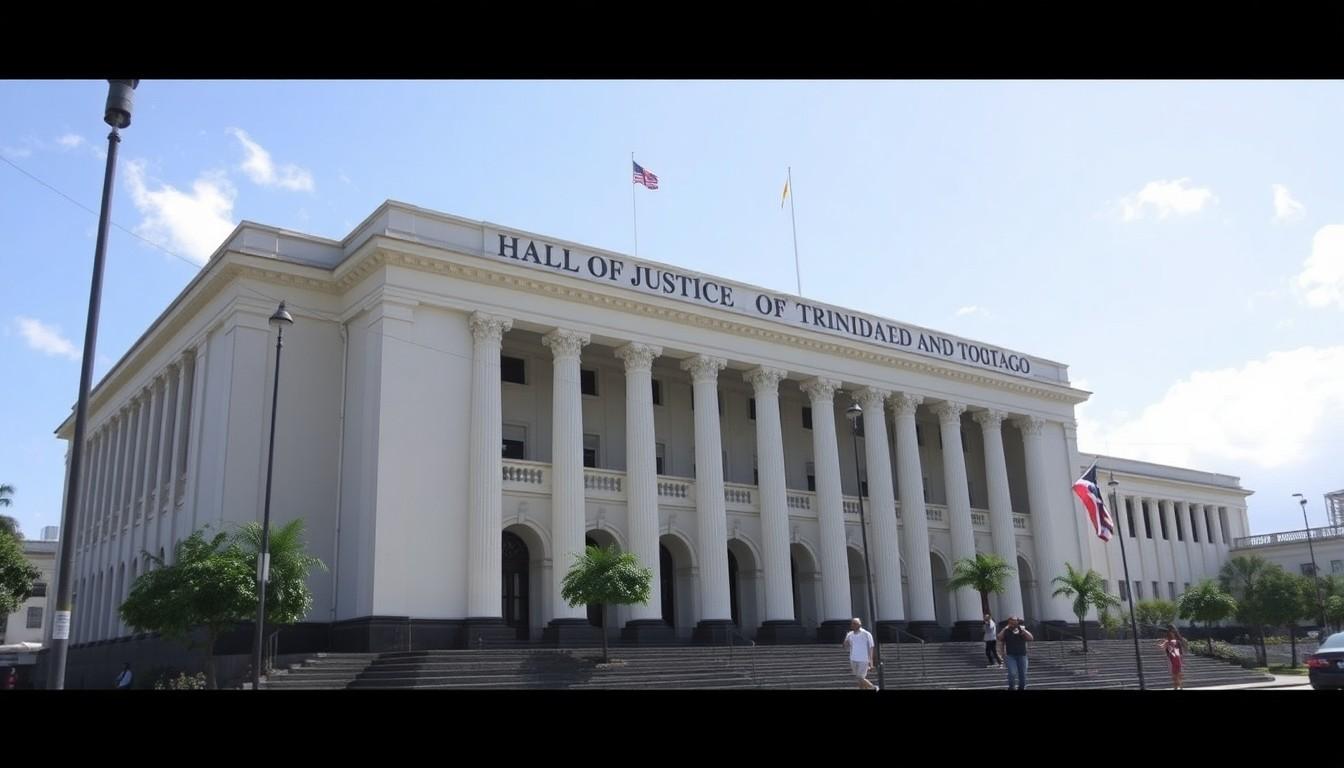
Shoppers for justice have watched a nearly 10-year fight; Trinidad and Tobago’s final appeal at the Privy Council in London could finally decriminalise gay sex, a move that matters across the Caribbean for rights, health and equality.
Essential Takeaways
- Final hearing: The Judicial Committee of the Privy Council in London heard the appeal challenging Trinidad and Tobago’s buggery laws, with a ruling possible immediately after the hearing.
- Long legal battle: The case began in 2017 with Jason Jones; Trinidad’s High Court struck down the law in 2018, but an appeals court partially reversed that decision in 2025.
- Wider stakes: A Privy Council decision in favour of decriminalisation could set persuasive precedent for other Caribbean nations with similar colonial-era laws.
- Human impact: Activists stress the law’s harm goes beyond prosecutions , stigma, fear and barriers to healthcare and education persist.
- Key voices: Jones is represented by Anand Ramlogan, who argued constitutional protections aren’t subject to majority opinion; religious groups and the government oppose the challenge.
Why this Privy Council hearing feels momentous
This isn’t just another courtroom day , you can feel the history in it, a quiet, consequential sort of tension. According to reports, the five-judge panel could hand down a decision as soon as the hearing ends, which would make the moment feel sudden and definitive. Jason Jones’ decade-long fight has turned a private grievance into a public constitutional test, and the outcome will ripple across a region still wrestling with colonial-era statutes.
The case has been building steam since 2017, when Jones filed his challenge. The High Court’s 2018 ruling in his favour suggested a shift, but the appeals court’s 2025 partial reversal reopened the debate. Now, with the Privy Council , the final court of appeal for Trinidad and Tobago , the issue lands where colonial legal architecture and modern human rights meet.
What’s at stake for ordinary people and public health
This is about more than legal text; it’s about whether citizens can exist without the threat of criminalisation shaping their daily lives. Activists pointed out in filings that even unused laws do damage: they encourage stigma, prompt concealment, and discourage young people from seeking help. Decriminalisation can loosen those barriers, making health services and education safer to access and reducing fear.
Public-health advocates note that decriminalised sex between consenting adults usually improves outcomes , testing, treatment and honest conversations become easier. So the ruling is as much about dignity as it is about practical wellbeing.
The legal and regional context you need to know
Trinidad and Tobago retains the Privy Council as its final appellate court, even as discussions continue about swapping it for the Caribbean Court of Justice. The country’s buggery statute dates back to colonial times and carries up to five years’ imprisonment, though it hasn’t been widely enforced in recent years. Several Caribbean states have already seen judges strike down comparable laws , Barbados, Dominica, St Lucia and Antigua and Barbuda among them , while others like Grenada and Jamaica still criminalise gay sex.
That patchwork of rulings means the Privy Council’s decision will be watched closely; a favourable judgement could prompt renewals of legal challenges elsewhere, and a refusal could stall the momentum for change across the region.
The players: Jones, his lawyers and the opposition
Jason Jones, who has been openly gay since his teens and left Trinidad and Tobago in 1996 because of homophobic violence, is front and centre. His legal team includes Anand Ramlogan, the former attorney general, who framed the case in constitutional terms: rights protect minorities from majority opinion. Ramlogan’s line about dignity and equality cut through the courtroom record and the media coverage.
On the other side, the Trinidad and Tobago government has backing from influential religious groups, including the Council of Evangelical Churches and the Sanatan Dharma Maha Sabha. Their arguments reflect deeply held convictions in parts of the country, making this not only a legal contest but a cultural and political one.
What happens next and why it matters beyond Trinidad
If the Privy Council strikes down the law, Trinidad and Tobago would no longer criminalise consensual same-sex activity , a change that could encourage similar legal challenges and shift public conversations in neighbouring states. A decision against Jones would close this particular avenue and likely refocus activists on domestic courts or legislative campaigns.
Either outcome will be read, argued about and lived with across the Caribbean. For people directly affected, the ruling is less abstract: it could change whether they live openly, access services without fear, and feel protected by the constitution rather than punished by old statutes.
It's a small change that can make every life in this debate a little bit freer.
Source Reference Map
Story idea inspired by: [1]
Sources by paragraph:
- Paragraph 1: ,
- Paragraph 2: ,
- Paragraph 3: ,
- Paragraph 4: ,
- Paragraph 5: ,