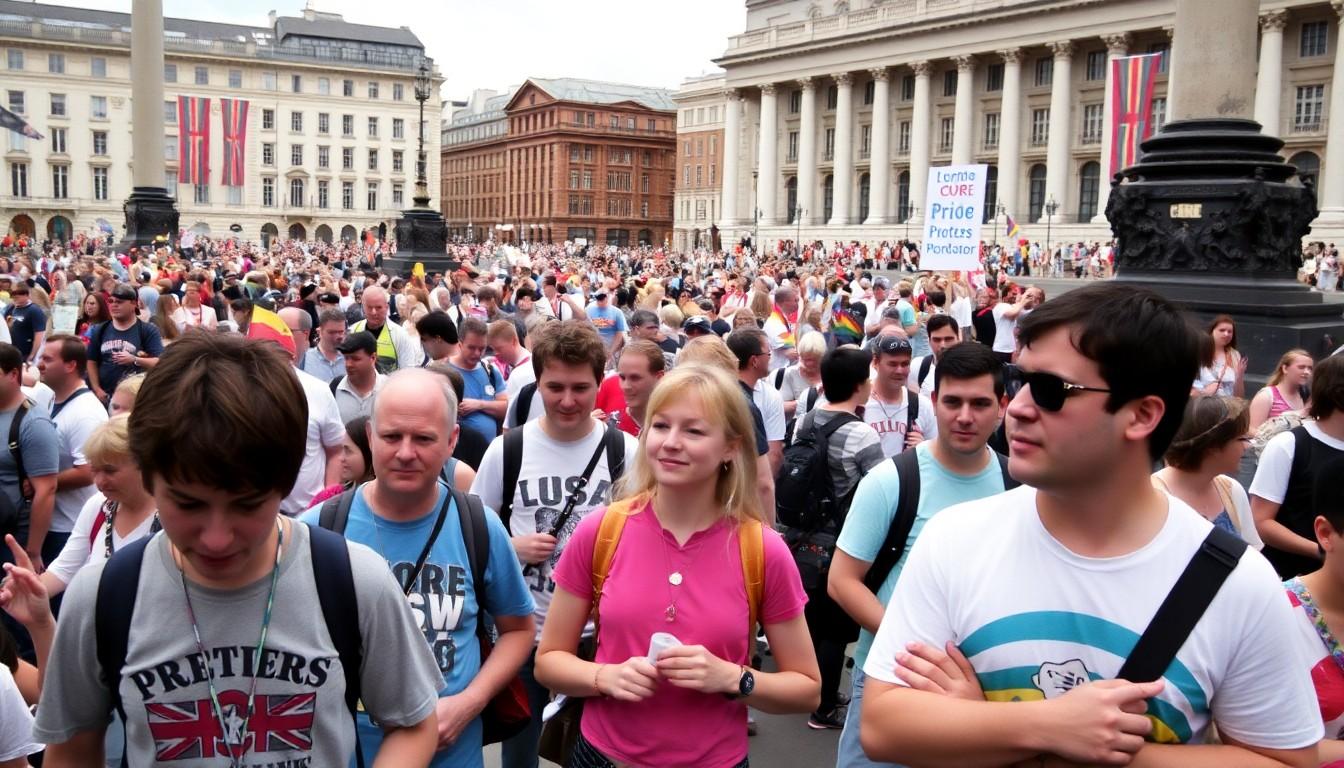
Remembering a livelier London Pride: a photographer revisits his 2004 march pictures, noting how the event shifted from protest to parade and why those earlier streets still feel important. These images from Hyde Park to Trafalgar Square capture humour, dissent and a changing city , useful context for anyone curious about Pride’s evolution.
Essential Takeaways
- Photographer’s view: Peter Marshall documented Pride London in 2004 and feels the event had already lost some of its protest edge by then.
- Scenes and tone: Images mix playful moments (people in fountains) with subdued or platitudinous speeches and a smaller-than-expected turnout.
- Historical record: The photos sit alongside earlier projects like Pride Not Profit and have been exhibited and archived, giving them cultural value.
- Where he shot: Marshall photographed from Hyde Park, paused at Paternoster Square near St Paul’s, and returned to Trafalgar Square for the rally.
- Practical note: The series is a reminder that visual archives help track changes in activism, celebration, and public reception.
A sharp eye on a softer march , the opening hook
Photographers notice the mood change before most of us do, and Marshall’s 2004 shots give a small jolt of recognition: Pride was still bright and chaotic but the bite of direct protest was fading into spectacle. The pictures of people splashing in fountains and making faces are quietly vivid, the sort of detail that makes a crowd feel human rather than anonymous.
Backstory and context matter here. Over the 1990s and early 2000s Pride in London shifted from a militant march to a more mainstream parade, a trend discussed in contemporaneous campaigns like Pride Not Profit and by activists who wanted to preserve protest elements. Those debates explain why a photographer with a long history of covering the event felt the change keenly.
Small crowds, big statements , what the images reveal
Marshall noted the march felt smaller than pre-event press estimates suggested, yet the Trafalgar Square rally still drew a decent crowd. The contrast between quieter streets and a lively rally is visible in the photos: open spaces, clusters of banners, and faces that register amusement, indifference or dissent.
This kind of visual gap is useful for anyone studying how festivals adapt. If you’re comparing Pride across decades, look not just at headline attendance numbers but at the mixture of banners, stewards, speakers and spontaneous moments , these are the clues to whether an event is shifting toward celebration or remaining rooted in activism.
From Hyde Park to Paternoster Square , the photographer’s route
There’s a pleasing oddity in Marshall’s day: he left the march briefly to photograph Paternoster Square’s buildings by St Paul’s then returned to Trafalgar Square. That detour gives his set architectural breathing room and shows Pride in an urban context , London’s civic spaces, not just its crowds.
For photographers or archivists, this is a good reminder: mix portraiture of participants with shots that place an event in the city. It helps later viewers understand how public rituals interact with place, policing and municipal endorsement , Ken Livingstone’s attendance was noted as a marker of the event’s mainstream acceptance.
Protest threads still visible , why it matters
Even in a parade that “lost the edge”, there were still banners against ongoing discrimination and voices of dissent, however muted. Those traces matter because they show continuity , activists hadn’t vanished, they’d adapted tactics, language and staging.
Researchers, campaigners and curious readers should treat such photo sets as partial but valuable evidence. According to contemporaneous campaign material and commentary, strands like Pride Not Profit argued against commercial dilution and urged a return to campaigning , the photos are a visual echo of that argument.
How to look at old Pride photos , practical tips
If you want to explore this or similar archives, start by scanning for moments that contrast with official narratives: unauthorised actions, small protest banners, facial expressions that show boredom or anger. Check captions, dates and route notes , small details like a detour to Paternoster Square can change interpretation.
And if you’re curating or collecting, consider context: pair street-level images with flyers, union motions or activist essays from the time. That way you get both the festive surface and the political undercurrent.
It's a small change in perspective that makes these old Pride pictures feel alive again.
Source Reference Map
Story idea inspired by: [1]
Sources by paragraph: