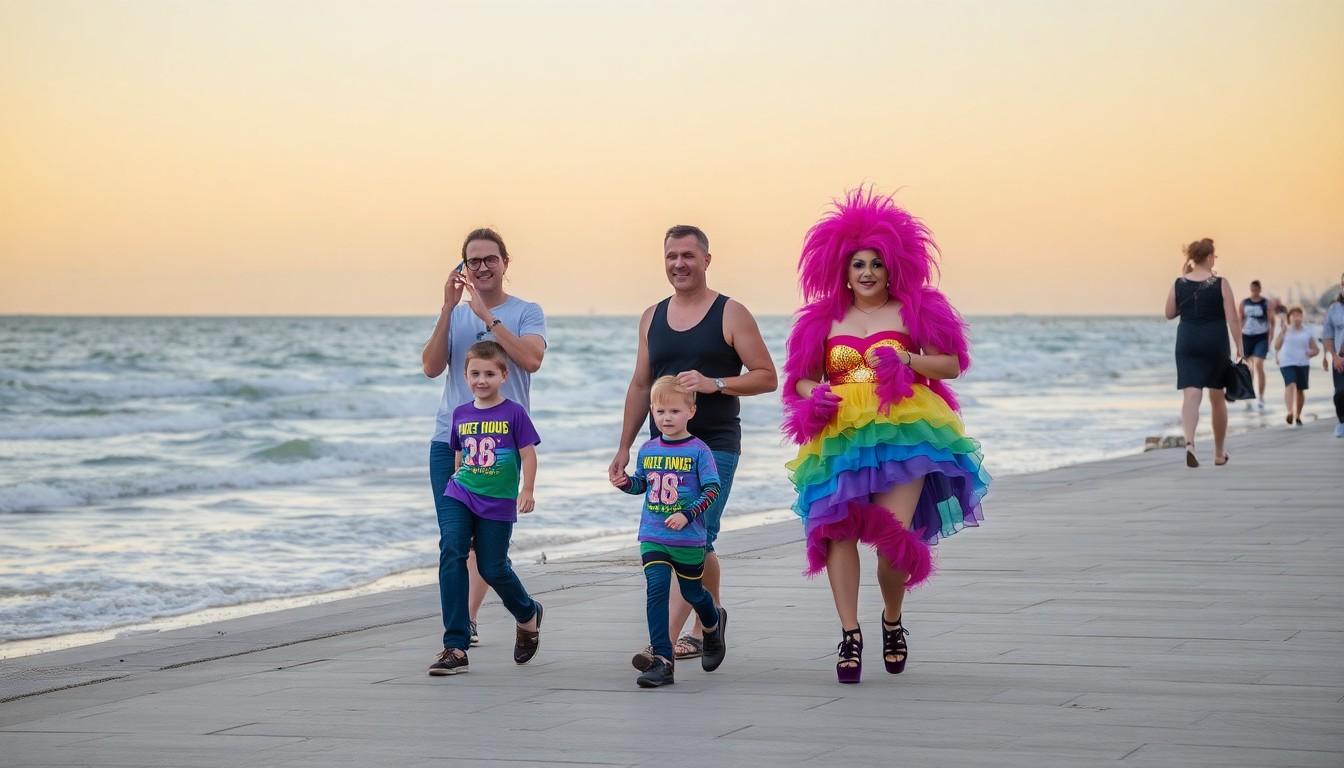
Spotting courage by the seaside: I went to Clacton Pride to show solidarity where politics and prejudice have been loud, and found families, flags and a stubborn, joyful community that matters far beyond a single day. Here’s what happened, why it counts, and how to support local Pride events in tricky places.
Essential takeaways
- Warm, community-led vibe: Clacton Pride felt like a proper family day out with music, drag and beachside chatter, not a tense protest.
- Visible mixed signals: Union Jack and progressive Pride flags hung side by side, giving the event a strange, colourful tension.
- Grassroots effort: The festival runs on local fundraising and National Lottery support, not council funding, and relies on volunteers.
- Real risks, real resilience: Organisers and attendees face threats and hostility but still create a safe, celebratory space.
- Practical solidarity: Turning up, donating, and sharing local sex-health info made a measurable difference on the day.
An odd welcome: sunshine, sand and a painted speed camera
The first sight after the station was a bar and an England flag, then a speed camera sign daubed with a red cross , a small, startling message about local mood. The air smelled of sea salt and chips; people were smiling, kids ran about and a blues band played on the seafront. It wasn’t what the warnings imagined, but there was a nervous, watchful energy underneath that made my crown and copper armour feel oddly sensible.
Clacton’s Pride is a product of local people, not political goodwill. Cheryl Piper began it in 2020 after a neighbourhood poll, and it’s grown into one of the area’s bigger events. That backstory matters because the festival’s existence isn’t symbolic window-dressing , it’s deliberate community-building in a place where public support isn’t guaranteed.
If you’re used to big-city Prides, expect smaller scale and stronger intimacy: you can mix with councillors who litter-pick in their free time, meet families who’ve come out for loved ones, and overhear candid conversations about life here. That grounded, local feel is part of why Clacton matters.
Flags, fandom and awkward alliances
The town fronted both progressive Pride banners and England football shirts, which made the scene oddly hybrid: very British, very seaside, very now. People wore Union Flag bows and rainbow sashes in the same breath. That visual mash-up underlined a bigger political awkwardness , many locals support Reform for single issues like immigration, even while having friends or family in the LGBTQ+ community.
That tension is real in places where national rhetoric meets personal relationships. For visitors thinking about solidarity, it’s a reminder: being present doesn’t have to be confrontational. Showing up can be the quiet work that builds trust. If you’re visiting a Pride in a contested area, pack patience, listen more than you speak and bring small comforts , sunscreen, water, or a friendly smile.
Threats, funding gaps and the cost of visibility
Organisers face threats and financial uncertainty. Since 2024 local fundraising has faltered and some acts refuse to perform because they’re afraid to be associated with a Reform-leaning town. That puts pressure on volunteers and forces the event to rely on National Lottery grants and community fundraising.
This matters because in recent years some councils controlled by Reform-style groups have banned Pride flags and cancelled council-funded events, shrinking safe, visible spaces. Supporting Pride in these towns often means chipping in , time, money or amplification , rather than waiting for a big national name to turn up. If you want to help, donate to the local fund, buy from stallholders on the day, or volunteer for cleanup and stewarding.
Education on the sand: small moments, big impact
One unexpected moment was a man on the beach who’d never heard of PrEP; a quick, informal explanation on the sand felt both urgent and ordinary. Pride isn’t just parades and politics , it’s a chance to share practical health info and cut through stigma with simple conversations.
Community education can be low-tech and high-impact. Bringing leaflets, signposting sexual health clinics, or just knowing where to direct people who ask questions can change outcomes. Consider that when you support grassroots Pride: practical resources often matter more than celebrity appearances.
Why showing up still works
A rainbow over the seafront that afternoon felt like a small, cinematic victory , people stopped, phones came out, strangers smiled. Visibility changes minds in ways politicians often underestimate. The town’s mixed reactions showed that many people are quietly supportive, while a minority make the loudest noise online. Presence dilutes that noise.
If you’re nervous about attending a Pride in a contested area, go with a friend, wear something that makes you feel safe, and stick to public, busy areas. And remember: solidarity isn’t only about confrontation; it’s about community care, laughter and ordinary acts of celebration. I’m looking forward to going back. Join me?
Source Reference Map
Story idea inspired by: [1]
Sources by paragraph: