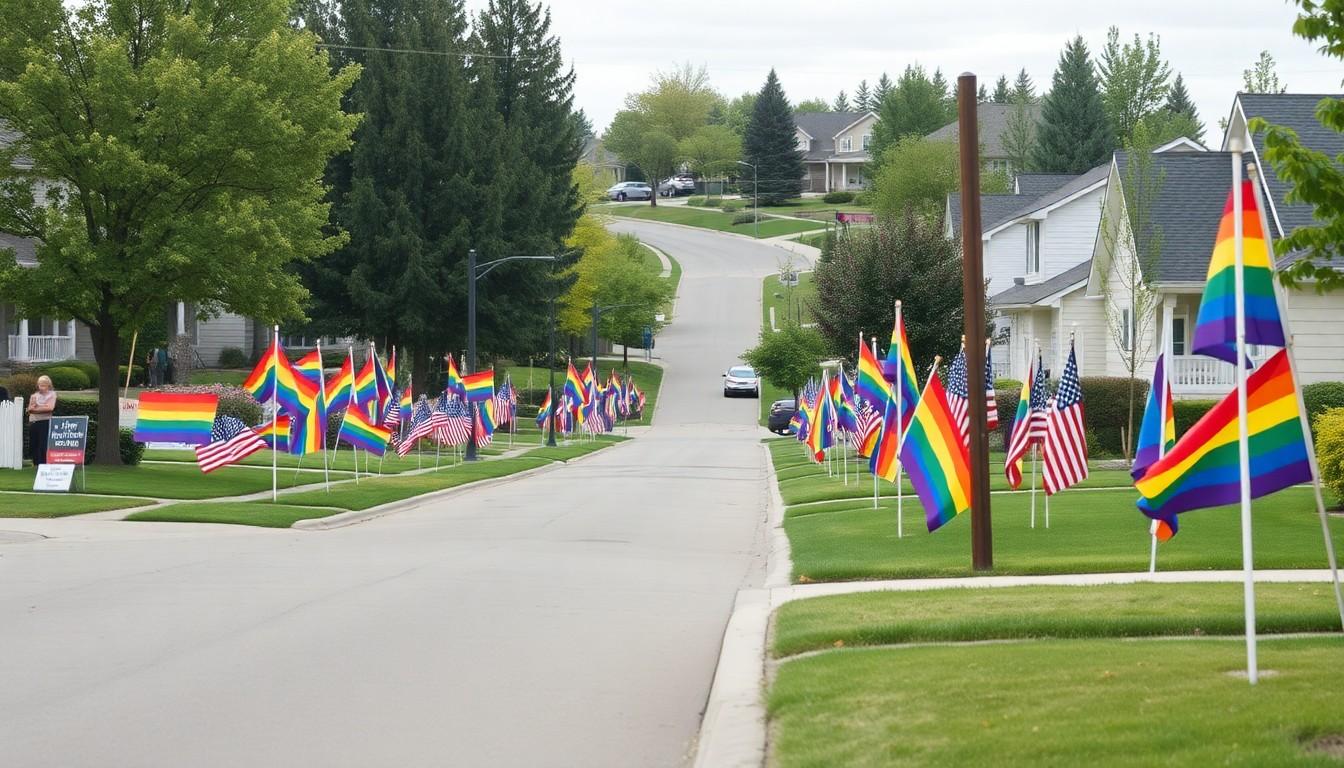
Shoppers, neighbours and passers-by are spotting colourful fronts up and down Boise as residents respond to Idaho’s government flag ban by putting Pride flags in their yards and on porches; the grassroots push has turned into a neighbourhood artful protest that matters to people and local charities.
Essential Takeaways
- Grassroots surge: Neighbourhood group Pride North End helped distribute more than 250 Pride flags and 900 yard signs, creating bright, visible support across the city.
- Funds raised: A GoFundMe that asked for $2,000 has raised over $10,000, with surplus donations pledged to LGBTQ+ nonprofits.
- Local history: Boise had flown Pride flags on municipal property for years before Idaho’s 2025 law blocked that practice.
- Tactile impact: Flags, signs and rainbow poles give a warm, communal feel , visible from the pavement and reassuring to passing residents.
- Legal backdrop: The state law restricts flags on government property; residents are using private property to keep visibility and solidarity alive.
Neighbourhoods turned frontlines , what you see on the streets
You’ll notice pockets of bright colour where a city once hung rainbows from official poles, and there’s a friendly, handmade vibe to many of the displays. Neighbours have hooked small flags to fences, planted yard signs and tied banners across porches, creating a collage effect that reads as defiance and comfort at once. According to local reporting, volunteers delivered flags door to door and residents say the displays feel reassuring to families and LGBTQ+ people walking by.
This response didn’t come from nowhere. For years Boise commemorated Pride with municipal flags and public displays, so the sudden removal of that civic gesture felt personal. Community groups quickly pivoted to private action, turning activism into decoration. If you’re thinking of adding a flag of your own, choose weatherproof material and a stout pole , the flags will take consistent wind and rain through summer and into autumn.
How a small fundraiser ballooned into a citywide push
What began as a modest GoFundMe target of $2,000 grew to more than $10,000, and organisers say excess funds will go to LGBTQ+ charities. Crowdfunding tapped a ready audience: people wanted to show visible support but also to help neighbours who might not afford signs or flags. The cash allowed for bulk purchases, distribution and a few community events where people could pick up signage and swap stories.
The fundraising shows how symbolic gestures can find real-world backing when neighbours want to act together. If you’re running a local drive, transparency matters , list where money will go and partner with established nonprofits to reassure donors.
The legal tug-of-war: state rules vs local traditions
Idaho’s 2025 law limits flags on government property to official banners, and when Boise tried to designate a Pride flag as an official city flag, the state legislature moved to close that loophole. Local press coverage framed it as a targeted change that left cities scrambling. The result is simple: public buildings can’t fly the rainbow, but private homeowners can.
That legal boundary pushed the movement onto lawns and porches. For residents worried about repercussions, basic advice: check local ordinances about sign sizes and placement, but remember private property rights are where most civic expression survives. Community organisers emphasise peaceful, law-abiding display as a way to keep the focus on solidarity rather than courtroom fights.
Why this matters beyond a colourful row of flags
Flags do more than decorate , they signal who’s welcome and who isn’t. For LGBTQ+ youth, an unexpected rainbow in a neighbour’s yard can mean safety or relief. Neighbours report emotional moments , people stopping to take photos, older residents expressing gratitude, and kids pointing them out with delight. That tactile, emotional payoff has been central to the push’s popularity.
Seeing a patchwork of private displays across an urban neighbourhood also reshapes debates about visibility. It’s a reminder that civic culture isn’t only made by councils and courts; it’s knitted between homes. For anyone interested in keeping visibility alive, small, consistent acts , a lawn sign, a timed display during Pride Month, or joining a bulk-order group , make a measurable difference.
What comes next , community momentum and broader questions
Organisers say they’ll keep distributing materials while donations last, and they’ve signalled plans to funnel leftover funds into local LGBTQ+ services. Meanwhile, the state law remains unchanged, so this patchwork approach could be a model in other places facing similar restrictions. Observers note that visible, distributed support is harder to legislate away than a single flagpole.
For citizens contemplating joining in, focus on durable materials, respect for neighbours’ property, and thoughtful placement , the aim is to amplify welcome, not provoke conflict. This moment in Boise feels less like an endpoint and more like a lesson: when official channels close, community channels often widen.
It's a small change that can make every doorstep feel like a safer place.
Source Reference Map
Story idea inspired by: [1]
Sources by paragraph: