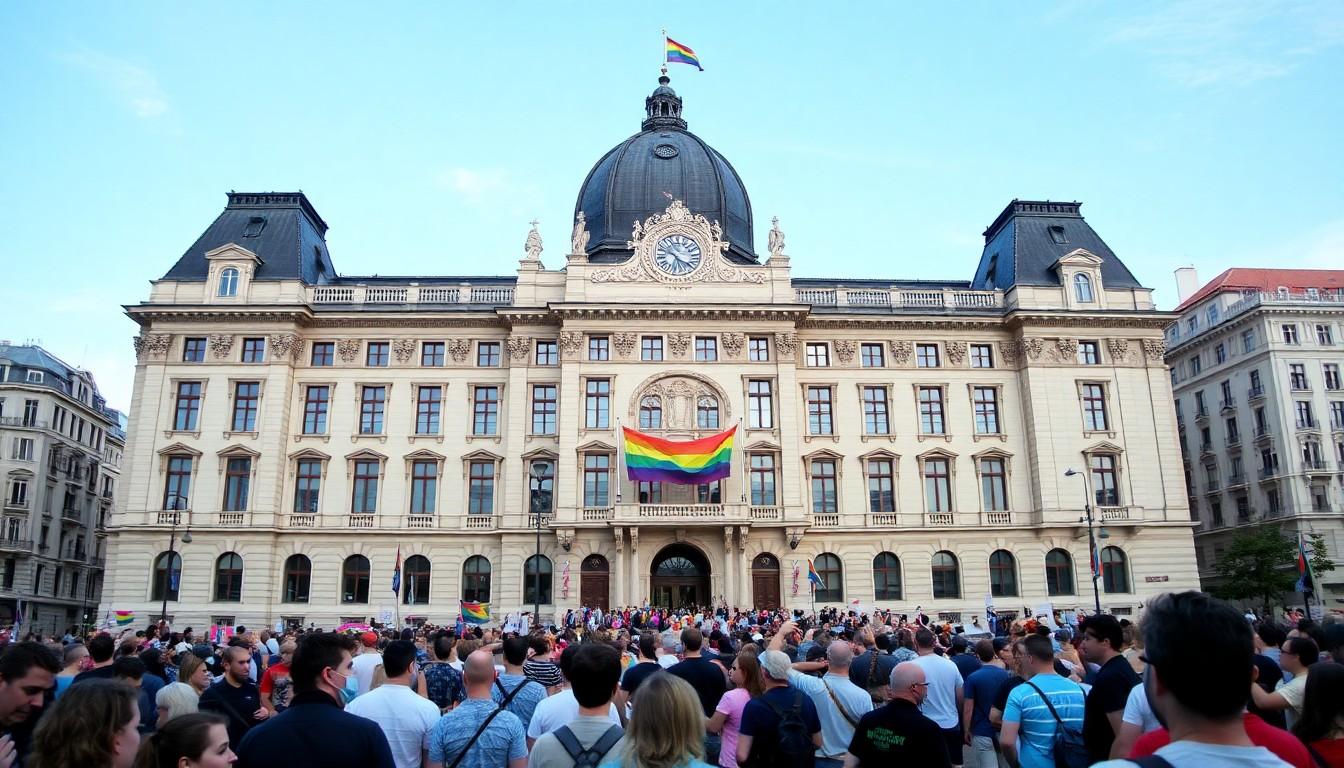
Celebrants flocked to Budapest in a vivid show of defiance and hope as tens of thousands joined the first major Pride march since Viktor Orbán’s ouster, a landmark moment for Hungary’s LGBTQ+ community and a visible sign the country’s political mood is shifting.
Essential Takeaways
- Mass turnout: Tens of thousands marched in Budapest, a colourful, loud demonstration that felt both celebratory and political.
- New political backdrop: The march came after Prime Minister Péter Magyar’s centre‑right government replaced Orbán’s long‑running administration.
- Legal shifts: Hungary’s recent laws and constitutional amendments had restricted public LGBTQ events, but authorities allowed this year’s march without restrictions.
- Local relief: Prosecutions tied to past Pride organising, including against Budapest’s mayor, were dropped, easing tension around the event.
- Atmosphere: Participants described relief and cautious optimism; visual scenes included banners, music, and families , the march felt both festive and determined.
A vivid return to the streets , atmosphere and scale
The scene in Budapest was immediate: loud music, bright flags and the hum of conversation, with people smiling, chanting and dancing as they walked. According to multiple reports, tens of thousands of participants filled central routes, giving the event a festival feel even as it carried political weight. Journalists on the ground described a mix of joy and wary relief, as many attendees acknowledged how recent laws had tried to stamp out public displays.
Organisers emphasised the visual impact , long lines of marchers, homemade banners and a steady stream of supporters , but they also made plain this was a protest as much as a party. For many, showing up was a response to last year’s large demonstration and to the legal battles that have shadowed Hungary’s LGBTQ+ scene for years.
Politics in the background , what changed this year
The march occurred less than two months after Péter Magyar’s Tisza party unseated Viktor Orbán’s Fidesz-KDNP coalition in April elections. That political change matters: it altered how authorities handled Pride, with police announcing they would allow the march to proceed without restrictions. The European Union’s courts and rights bodies have also been involved in recent cases, creating a broader context that affected both the mood and the legal space for the event.
Still, caution lingered. Organisers and participants spoke of recent laws , and amendments to the constitution , that had sought to ban or criminalise public LGBTQ activities, so the decision to permit the march felt significant even if some activists remained sceptical about long‑term change.
Legal fallout easing , dropped charges and symbolic gestures
One concrete shift before the march was the dropping of charges tied to previous Pride events. Officials abandoned proceedings against Budapest Mayor Gergely Karácsony for his role in organising the 2025 march, and local authorities in towns like Pécs similarly stepped back from earlier prosecutions. Those moves offered practical relief to organisers and sent a message that the new government might not prioritise punitive measures against Pride activities.
Human Rights groups have monitored these cases closely; their reporting suggests the legal climate for public demonstrations had been among the most immediate threats to LGBTQ life in Hungary. For participants, the withdrawals felt like a small, hard‑won victory and made the streets safer for families and first‑time marchers.
Voices from the march , hope mixed with caution
People at the march shared a mix of emotions. Some described a sense of triumph, others spoke of PTSD‑level worry after years of legal restrictions and hostile rhetoric. Local leaders made public commitments , for instance, hopes to perform same‑sex weddings in Budapest , but activists cautioned that legislative shifts can be slow and reversible.
International outlets framed the event as both a celebration and a test: a barometer of how much the political change in April will translate into lasting protections. For many attendees, turning up was a practical choice as much as a symbolic one , a way to be seen, to meet allies and to build momentum for advocacy that will continue long after the flags are folded.
What this means for the future , cautious optimism
If nothing else, this year’s Budapest Pride showed that large-scale public solidarity remains possible in Hungary despite legal headwinds. Observers noted that the EU’s institutions and human-rights organisations have kept pressure on Budapest, and domestic political change has opened brief windows for public life to breathe.
Practical takeaways for activists and supporters: stay engaged locally, document incidents closely, and build broad coalitions that include families, faith groups and allies. The march was a moment, but durable progress will need steady organising and legal vigilance.
It's a small but powerful reminder that public visibility still matters , and that showing up can change the conversation.
Source Reference Map
Story idea inspired by: [1]
Sources by paragraph: