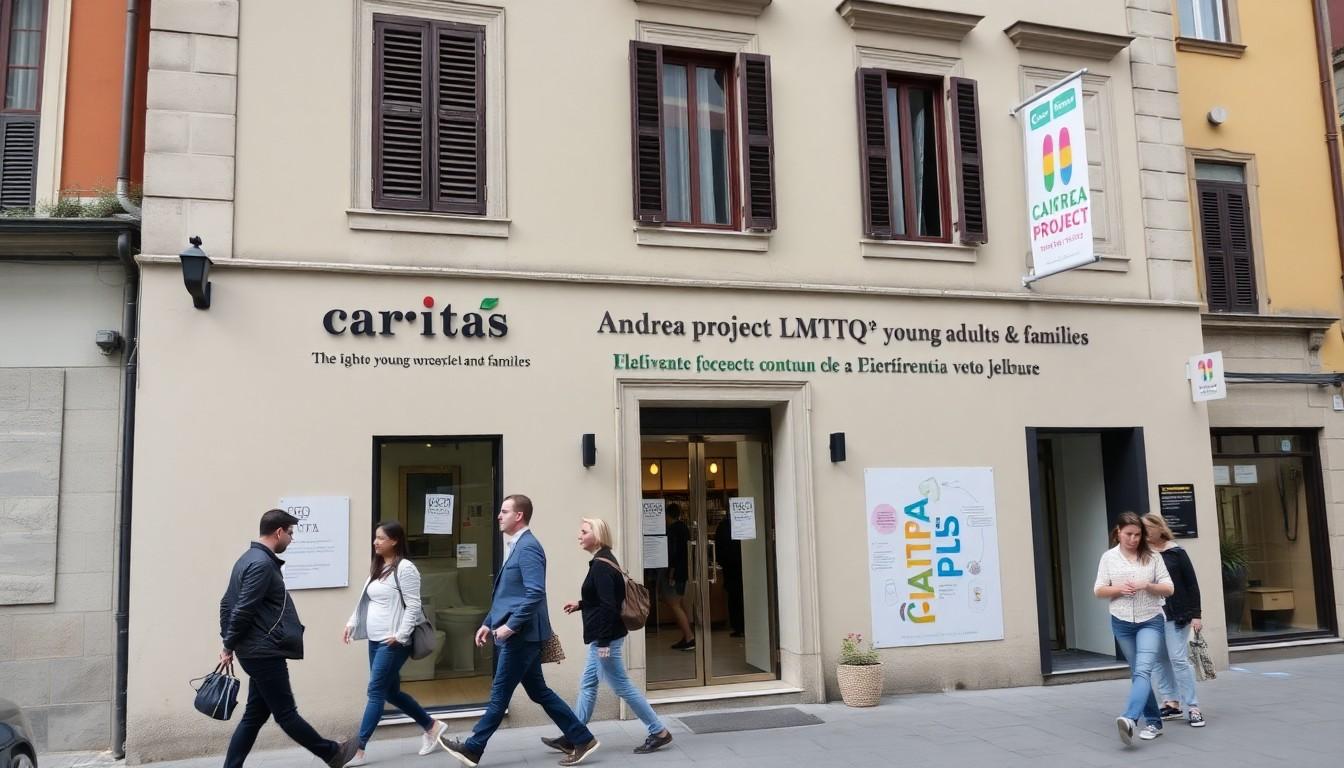
Shoppers of goodwill are turning deeds into shelter: Florence’s Caritas has launched Andrea’s Project, a new programme offering temporary housing, psychological support and family assistance for LGBTQ+ young adults, a practical, taxpayer-funded response that could become a model for other dioceses.
Essential Takeaways
- What it offers: Andrea’s Project includes a staffed helpline, psychological support, educational programmes and Andrea’s House, a temporary housing facility for 18–35 year-olds.
- How it’s funded: The initiative is financed through Italy’s 8×1000 tax allocation system, meaning taxpayers can direct a small share of income tax to Caritas.
- Partnerships matter: The programme was co-designed with local LGBTQ+ groups, including Kairos and Arcigay Florence, which supplied shelter expertise and training.
- Scope and limits: Andrea’s House currently serves people mainly in the Florence area and has limited capacity, with stays from a few days up to 18 months.
- Tone and approach: Church leaders frame the work as pastoral and practical, emphasising respect, protection and collaboration across secular and religious partners.
Why Andrea’s Project matters now
Florence’s move feels tactile and immediate: it began with a real person in crisis, not an abstract debate. According to reporting, Kairos members sought help for a transgender woman facing health, housing and work problems, and that encounter exposed a gap in diocesan responses. The result is a programme that mixes emergency shelter with longer-term support, and it smells of practical compassion rather than simply policy rhetoric. For many LGBTQ+ young adults facing rejection, this combination can mean the difference between instability and a viable route back to independence.
What Andrea’s House actually provides
Andrea’s House is designed as temporary, protective housing for 18–35 year-olds who need a place to stay while they rebuild. Residents can stay anywhere from a few days to up to 18 months, receiving tailored social and psychological support alongside life-skills education. Arcigay Florence’s involvement brings useful experience: they already run an LGBTQ+ youth shelter and supplied training on how to run a safe, sensitive space. If you’re looking for help locally, the model emphasises dignity, confidentiality and professional care.
The funding angle: 8×1000 and public trust
The project is being financed through Italy’s 8×1000 system, a tax mechanism that lets taxpayers allocate part of their income tax to recognised religious or social bodies. That means this is not purely a private charity effort; it has a public funding strand, and with that comes both opportunity and scrutiny. Critics and supporters alike will watch how funds are used and whether the model scales. Supporters argue the system allows nimble responses to social need, while sceptics will want clarity about accountability and reach.
Church, LGBTQ+ groups and the awkward but productive partnership
One striking element is how this initiative stitches together Catholic and secular actors. Father Andrea Bigalli , a parish priest who coordinates the scheme , has spoken about the importance of working with groups that have sometimes criticised the Church. That collaboration, which includes training and operational input from Arcigay, shows a pragmatic politics of care: organisations that disagree on doctrine can still partner on protecting vulnerable people. If the programme succeeds, it may model a new kind of local cooperation.
Limits, next steps and the potential to scale
For now, Andrea’s Project is local and modest in scale, mostly serving Florence-area residents with limited places available. Organisers say they hope the initiative proves effective enough to be copied by other Caritas chapters across Italy. Practical questions remain: how many people can be helped each year, how outcomes will be measured, and whether dioceses with different local cultures will adopt the same approach. Still, turning supportive words into beds, counselling and family help is a clear step forward.
It's a small change that can make shelter and support a real option for people who need it most.
Source Reference Map
Story idea inspired by: [1]
Sources by paragraph: