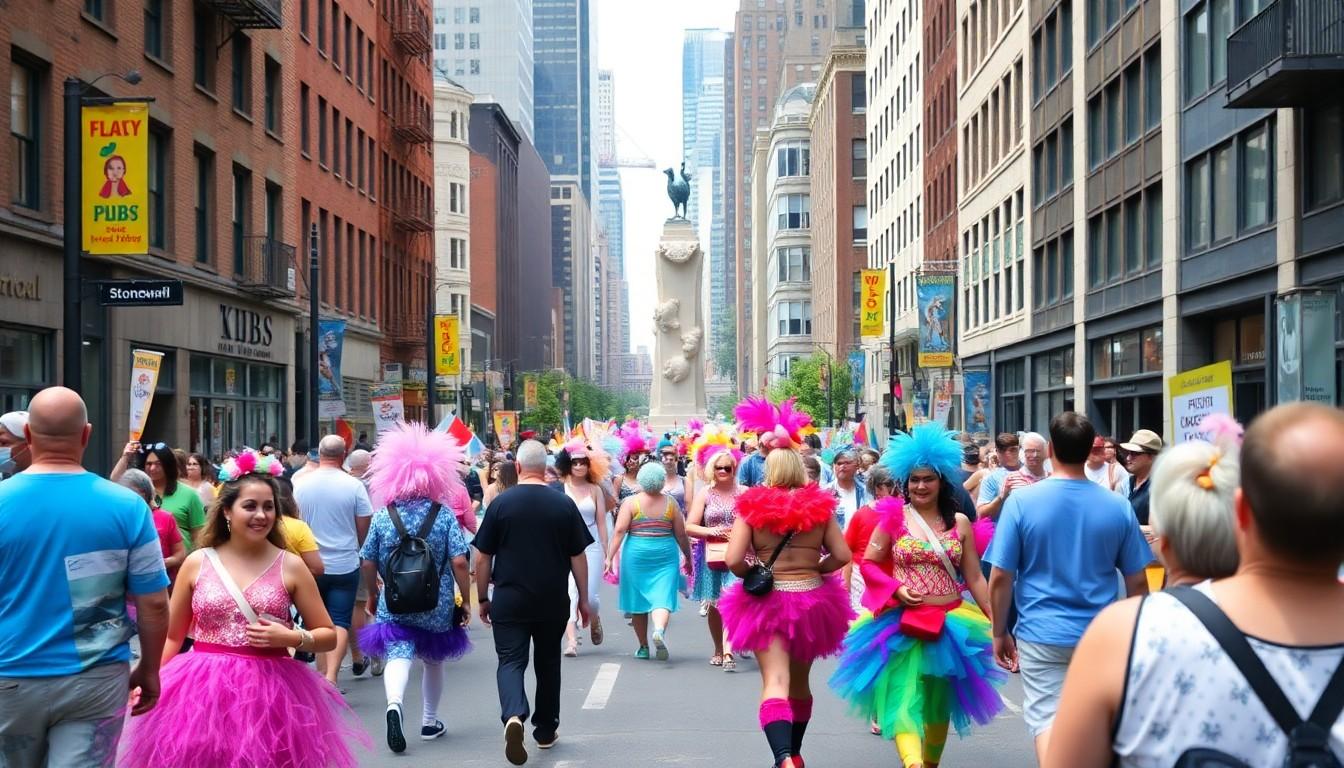
Bursting with colour and joy, the Drag March drew almost a thousand people through Lower Manhattan on June 26, a freewheeling celebration of queer culture that’s as much about community as it is about costume. Organisers, marshals and volunteers made accessibility and inclusivity a priority, and photographers couldn’t get enough.
Essential Takeaways
- Big turnout: Nearly a thousand participants gathered at Tompkins Square Park and paraded to the Stonewall National Monument, creating lively street theatre and photo ops.
- Long history: The march’s organiser has been involved since the late 1990s, helping the event expand while keeping queer roots front and centre.
- Accessibility-first: Wheelchairs, ASL interpretation and pedicabs for elders were provided to make the route more inclusive.
- Volunteer power: More than 40 marshals and a network of volunteers kept the procession safe, fun and flowing.
- Open-format celebration: The march welcomes drag performers, allies, masked revelers and anyone who wants to express themselves , it’s deliberately eclectic and exuberant.
A joyful, messy parade that still feels like home
The first sight of the crowd at Tompkins Square Park was pure theatre: bright fabrics, glitter, handmade signs and people laughing while striking poses for cameras. According to organisers, the scene now attracts hordes of photographers during the hour before step‑off, which has become part of the ritual. That hectic, slightly chaotic energy is the point , it makes the march feel alive and immediate.
The Drag March began as a smaller protest‑cum‑celebration and has grown “exponentially” over the decades, thanks to community organisers who’ve stewarded the event without turning it into a corporate parade. For many, the march still reads as an unfussy, anarchic counterpoint to larger, ticketed Pride events.
If you want the most photogenic moment, arrive early, bring a camera and expect to be wowed , and photographed , back.
Stewardship, not spectacle: the organizer’s approach
The person who’s steered the march since 1998 talks about service rather than showmanship. He told reporters he tries to “remove his ego” and make decisions that serve the larger circle, not just headline acts. That attitude helped keep the event rooted in grassroots values even as attendance climbed.
That community‑first approach shows up in small practical choices: keeping the route compact enough for pedestrians, inviting a range of performers, and leaning on experienced marshals. It’s a useful reminder that big, joyful things can still be run with humility.
If you’re thinking of starting a local march or block party, consider the same mindset: prioritise people over publicity and recruit a reliable volunteer core.
Accessibility: real steps, not lip service
Organisers made accessibility visible , offering wheelchairs, American Sign Language interpretation and pedicabs for older participants. That was no accident; the team explicitly aimed to broaden who could join the circle, echoing wider movements to make Pride events more physically and culturally accessible.
Other New York events, including the NYC Pride March and Disability Pride activities, have been ramping up similar efforts, so this isn’t an isolated move. For attendees, practical tips matter: check event pages for access details, arrive early to secure a space near ramps, and contact organisers if you need specific accommodations.
These measures change the feel of a march: when everyone can take part, the energy becomes more communal and less performative.
Volunteers: the unsung backbone
More than 40 marshals helped guide the crowd across town, a reminder that every joyful march needs a lot of unseen labour. Volunteers handled everything from crowd flow to safety to sticking to the planned route, which also involved coordination with city services about street closures.
If you loved the vibe, consider signing up next year. Volunteering is an easy, meaningful way to be part of the event without being in the spotlight , and marshals often get the best view of the parade.
What it all means for Pride weekend
The Drag March sits alongside larger, structured events , think the NYC Pride March, Dyke Marches and Pride festivals , but it offers a different, looser pulse that many say is essential. It’s where experimentation and queer joy meet in the streets, and where long‑term community care gets practised in real time.
Looking ahead, expect organisers to keep pushing for inclusivity while resisting commercialisation. That tension is part of what makes the march feel vital: it’s an expression of celebration and a small, stubborn stand for community.
It's a small change that can make every march moment matter.
Source Reference Map
Story idea inspired by: [1]
Sources by paragraph: