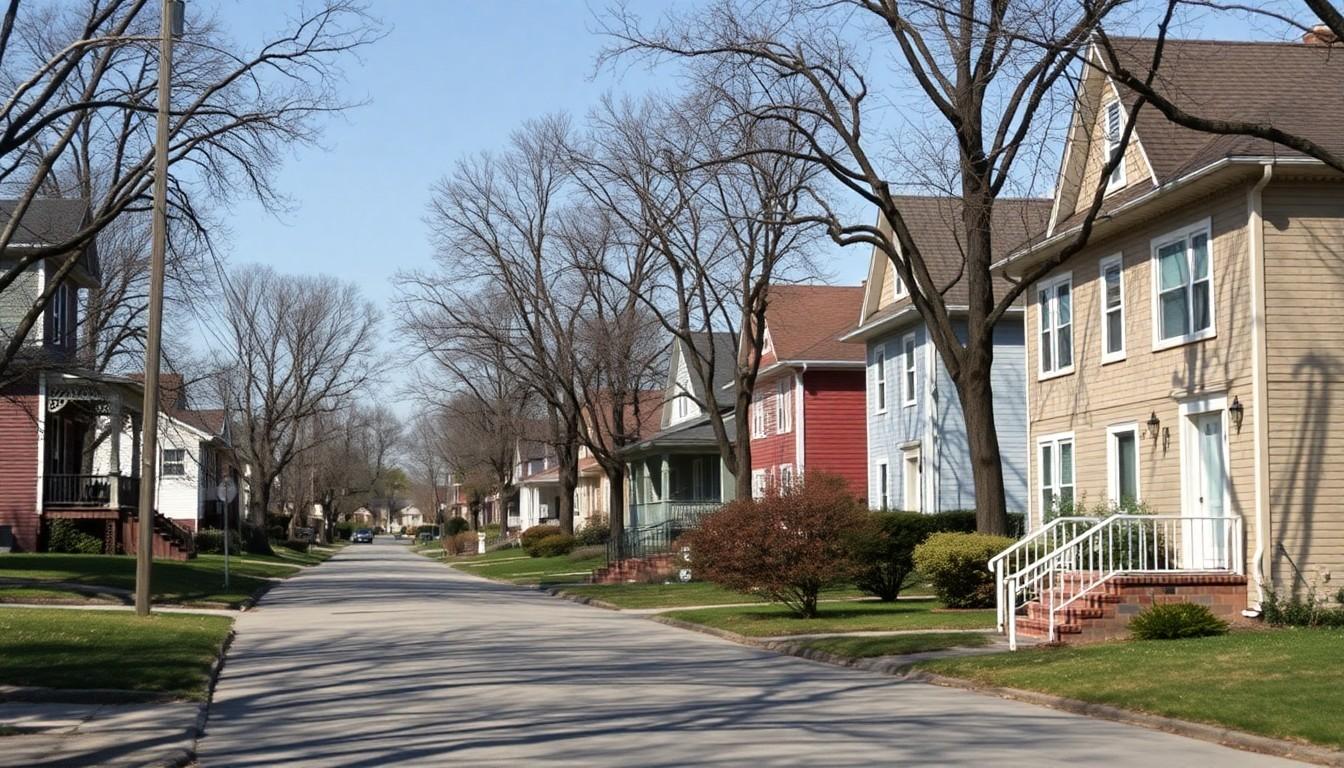
Shoppers and history buffs alike are discovering Womontown , a 1990s lesbian enclave in Kansas City that turned cheap houses into a bold, visible community; its story shows how grassroots organising, tulips in front gardens and sheer perseverance can carve out safe urban space when the law and culture were hostile.
- Founded by neighbours: Andrea Nedelsky and Mary Ann Hopper organised home purchases and outreach so lesbians could live openly together in Longfellow, Kansas City, in the early 1990s.
- Affordable homes, sturdy bonds: Houses sold for roughly $15,000–$20,000 then, letting women build financial stability while creating community.
- Visible signals: Purple flags with yellow tulips and front‑yard bulbs served as discreet, welcoming markers , visually striking and quietly effective.
- Cultural wins and limits: The organised community largely dissolved by 1995 from burnout, but many residents stayed and archives and a plaque keep the story alive.
- Resonant today: GLAMA’s collections, local tours and a 2022 PBS documentary have revived interest among young women seeking models of autonomous, urban queer life.
How two women imagined an urban lesbian utopia
Womontown began with a blunt, human question: could lesbians live together openly in a city street and be safe doing it? Andrea Nedelsky and Mary Ann Hopper turned that question into action, recruiting friends and strangers to buy longfellow neighbourhood properties. According to a Kansas City PBS documentary, the pair looked at run‑down but affordable housing and saw an opportunity , a cheap city house could be both a home and a foothold for something bigger.
That backstory matters because it shows intent. They deliberately chose urban stock rather than rural co‑ops, and they leaned into the practical , negotiating with landlords, advertising in Lesbian Connection and networking at womyn’s festivals. The result was an organised cluster of homes where women could walk hand in hand without fear, at least most of the time.
Tulips, flags and the art of signalling safety
Visible cues were small but genius. Residents placed purple flags with yellow Dutch tulip motifs in doorways and planted tulips along the blocks as a way to signal safety to one another. The flowers softened the street view and made the neighbourhood read as intentional to outsiders, too.
This wasn’t about aesthetic alone. It was a communication tool in a time when queer people still faced legal and social peril. The tactic is a reminder that community building often uses low‑tech symbols that are easy to maintain and read , a useful idea if you’re thinking about how to create welcoming spaces in your own area.
Money, ownership and the tricky question of gentrification
Buying rather than renting was central to Womontown’s strategy. With houses selling for around $15,000–$20,000 in that era, women could build equity and stability. Documentarians and local reporters note that residents fixed up homes to stay, not to flip, which presents a different model from the usual gentrification script.
Still, the queer community’s relationship to neighbourhood change is complicated. As coverage in Kansas City outlets observes, LGBTQ+ presence has at times led to rising values and displacement , the so‑called “gaytrification.” Womontown offers a model that tried to improve an area without pricing people out, but it also underlines that good intentions don’t erase broader market forces.
Burnout, upkeep and why the organised project faded
Running a neighbourhood takes labour, and Womontown’s founders paid the price. Hopper and Nedelsky found promotion, paperwork, landlord negotiations and event planning became a “second job.” When leadership thinned and one resident tried to carry the load alone, the organised community lost momentum and largely dissolved by 1995.
That arc is familiar to activists: grass‑roots movements often founder on logistics and burnout rather than lack of will. The lesson is tactical , build shared, sustainable systems, delegate early and plan for administrative tasks if you want longevity.
Why Womontown still matters today
Archives at the Gay and Lesbian Archive of Mid‑America (GLAMA), a commemorative plaque installed in 2024, and renewed local interest , including walking tours and a PBS documentary , show Womontown’s legacy is far from dead. Young women in Kansas City reportedly light up when they hear about it, and a middle‑school project even went on to a national competition.
That renewed attention arrives as municipal and national politics shift. Kansas City has tried to protect queer residents with sanctuary policies and pride initiatives, while state and federal moves have at times rolled back protections. The history of Womontown offers both inspiration and practical lessons in how determination, creative signalling and property ownership can create space even in hostile times.
It's a small change that still helps folks imagine safer streets and stronger communities.
Source Reference Map
Story idea inspired by: [1]
Sources by paragraph: