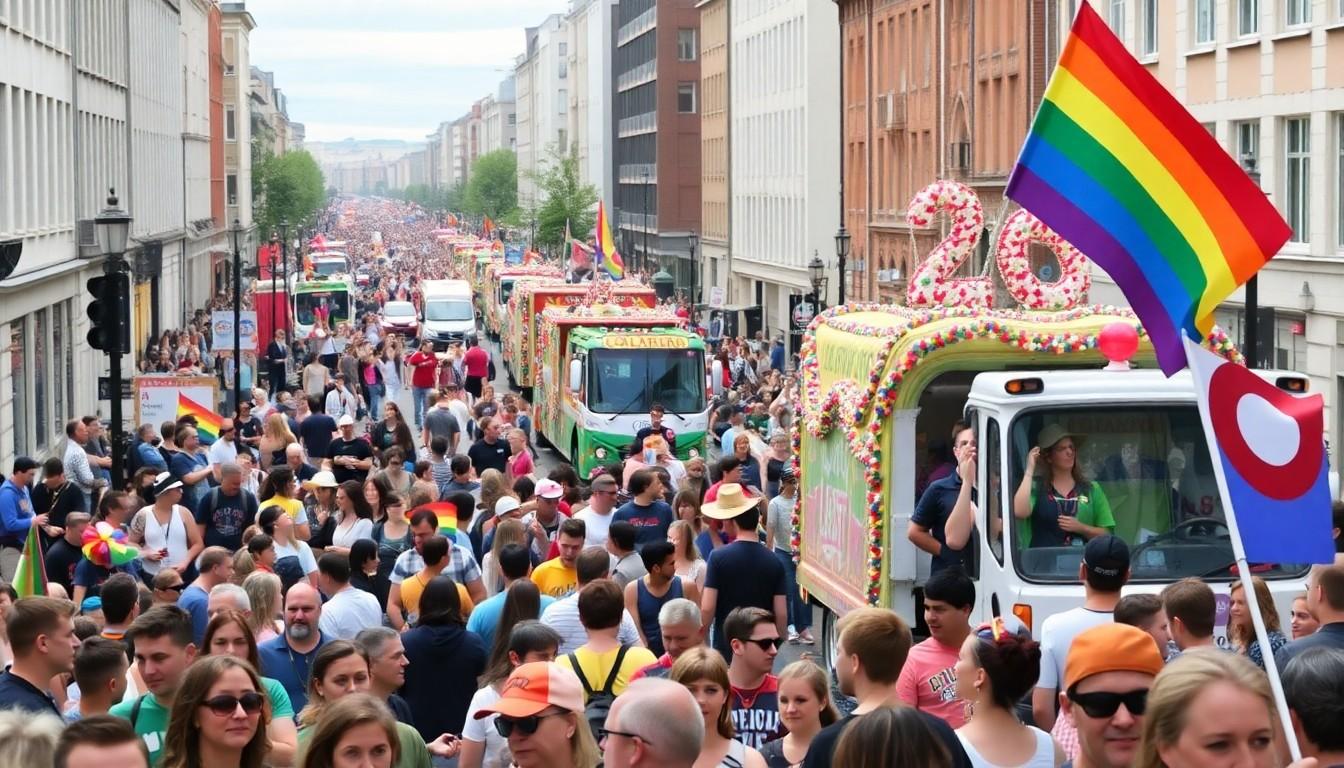
Bursting with colour and noise, Oslo’s streets once again filled with glitter, flags and an unmistakable sense of joy as tens of thousands turned out for Oslo Pride , a vivid reminder of community, politics and culture coming together in a city that’s making Pride bigger and bolder.
Essential Takeaways
- Huge turnout: Organisers reported about 90,000 people across 153 floats and sections, creating a lively, crowded parade route.
- Slight dip in numbers: Attendance was roughly 10,000 fewer than last year, but activity across 11 days and 400 events made organisers call it their largest-ever celebration.
- Route and feel: The parade moved from Grønlandsleiret through central Oslo, ending at Rådhusplassen, with streets described as jubilant and colourful.
- Diverse programme: Events ranged from political panels to parties, signalling Pride’s mix of protest, celebration and culture.
- Mixed counting: Different outlets and organisers gave slightly different figures, reflecting how organisers, media and authorities sometimes report crowd sizes differently.
Streets packed, flags high , the scale and the atmosphere
The most striking image from the parade was the sheer crowd and the kaleidoscope of colours, with participants and spectators packed along Karl Johan and Stortorvet. According to organisers, about 90,000 people marched or watched, a number that gives you a sense of the scale: picture entire city blocks singing, cheering and waving rainbow flags. Reports and photos captured a festive, inclusive energy that many described as joyful and defiant at once.
Organisers and participants said the day felt like a celebration of community and a rebuttal to the polarised online debates of the moment. That emotional lift , people smiling, hugging, dancing , is what keeps many coming back year after year, even when precise headcounts vary.
Why the numbers differ , counting a moving crowd
Not every source tallied the same figure; some outlets and a press release put slightly different totals, and independent reporting sometimes landed on other estimates. Variations like this are common for outdoor events where people join and leave at different points, and where floats and sections criss-cross city streets.
The discrepancy doesn’t erase the main point: Oslo Pride drew a very large crowd and staged an ambitious series of events. If you’re tracking trends, the small dip compared with last year’s headline number is worth noting, but the breadth of programming and the sense of scale still mark the festival as a major moment in the city’s cultural calendar.
Politics, protest and programme , not just a parade
Pride in Oslo has grown beyond a single march into a multi-day programme with political panels, community workshops and performances. Organisers listed some 400 events over eleven days, which helps explain why they call this year their biggest yet despite the slightly lower parade headcount.
This blend of celebration and political urgency is central to Pride’s identity. For many attendees it's about visibility and rights as much as music and spectacle. Expect speeches, advocacy booths and moments that underline why Pride remains important in a time of heated public debate.
Practical tips for next year , go early, pick a view, bring water
If you want to join next year, plan for crowds. Arrive early to secure a good spot on Karl Johan or near the stage at Rådhusplassen, and pack water, sunscreen and a small umbrella in case of changeable weather. If you have mobility needs, check official accessibility information beforehand , large parades can be physically demanding.
For photographers and families, sidewalks near Grønlandsleiret and Jernbanetorget offer good vantage points without the densest crowds. And if you prefer quieter participation, many of the eleven days of events include smaller, indoor activities that still capture Pride’s spirit.
What this means going forward
Oslo Pride’s mix of scale, politics and culture shows how Pride festivals continue to evolve into broad civic moments. Whether attendance nudges up or down a bit year to year, the lasting image is of a city willing to fill its streets with colour and conversation. Expect future iterations to keep pushing the balance between party and protest, and to experiment with ways to include more voices and quieter, community-focused programming.
It’s a small change in planning that can make every Pride safer and more joyful , and the city looks set to keep the momentum going.
Source Reference Map
Story idea inspired by: [1]
Sources by paragraph: