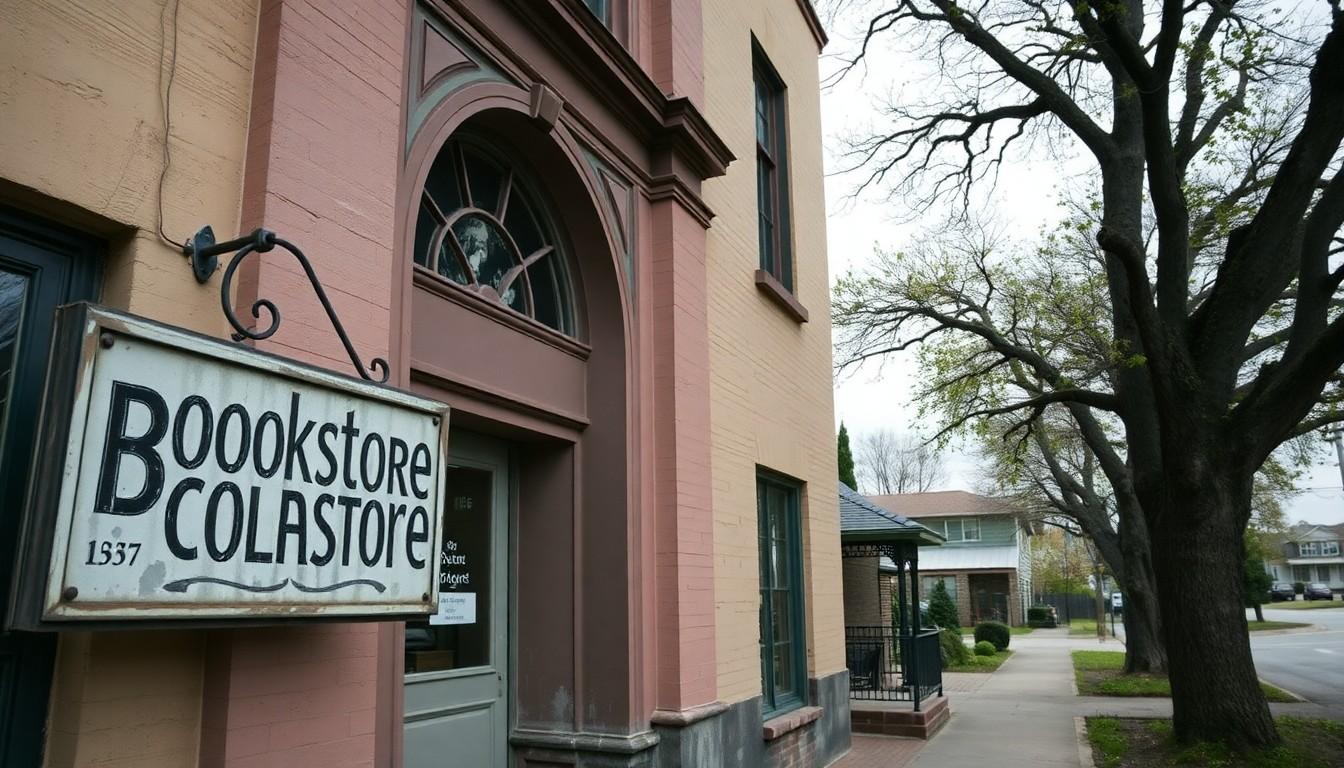
Shoppers and passersby might not notice a small room near Over-the-Rhine, but volunteers there are quietly preserving decades of lesbian life in Cincinnati , and racing to keep a planned historical marker from disappearing. It matters because these ephemera make a visible record where history has often erased them.
Essential Takeaways
- Grassroots origin: The Ohio Lesbian Archives began in 1989, born from the Crazy Ladies Bookstore community and feminist collectives that flourished in Cincinnati.
- Volunteer-run: The archive is powered by local volunteers who catalogue zines, buttons, newsletters and oral histories; the space feels intimate and lived-in.
- Marker stalled: A state-funded marker recognizing the Archives and Crazy Ladies was set to be installed, but federal grant cancellations paused the project, leaving a $3,000–$5,000 gap.
- Broader fallout: Cuts to the Institute of Museum and Library Services funding have threatened multiple Ohio cultural projects, affecting digitisation and youth programming.
- Community value: For visitors, the archive offers a reflective, tangible connection , a sense of not being the first queer person and proof that lesbian lives existed here.
A people-powered collection that smells faintly of old paper and tea
The archive’s strongest image is its domesticity: rows of books, a filing cabinet of Dinah newsletters, and a jar of campaign buttons that feel like time capsules. According to local reporting, the Ohio Lesbian Archives grew out of the Crazy Ladies Bookstore scene in Northside, which in the 1970s and ’80s served as a social hub for lesbian Cincinnatian women. That lived-in quality matters , it’s not a sterile repository but a collection that still smells faintly of paper and coffee and human conversation.
The backstory is cheerfully DIY. Feminist collectives ran the bookstore and created a culture where oral histories, posters and zines were saved because the women involved knew these items proved their existence. Volunteers later formalised that impulse into the archive, insisting their community wouldn’t be invisible again.
Why the historical marker mattered , and why its pause stings
Ohio’s Gay Ohio History Initiative selected the Crazy Ladies Bookstore and the Ohio Lesbian Archives for recognition as part of a broader attempt to diversify the state’s roughly 1,800 historical markers. The planned plaque would have made lesbian history legible in public space, a small but symbolic correction to decades of omission. Then federal grant money evaporated when funding from the Institute of Museum and Library Services was cancelled, leaving the marker in limbo.
Locals tell reporters the cost to finish and install the marker is modest , a few thousand pounds , yet finding that backing without federal help proves tricky. The pause underscores how fragile public commemoration can be when it relies on a thread of external funding and political will.
The human work behind preservation
Walk into the archive during open hours and you’ll meet volunteers like Lüdi Rich and Nancy Yerian, people who arrived in Cincinnati seeking connection and stayed because they found a community reflected in the shelves. They organise books by first names, digitise photos, and archive ephemera ranging from Pride buttons to VHS copies of The L Word. For many newcomers, those items offer mirrors , proof that other lesbians lived, loved and organised here before them.
This hands-on stewardship also shapes how history is told. Local reporting highlights that the archive’s volunteers decide what gets preserved, and that curation is itself an act of memory and resistance against erasure.
Cuts ripple beyond one plaque , Ohio’s cultural safety net frays
The loss of IMLS grants didn’t only threaten a single marker. Museums, libraries and cultural programmes across Ohio faced funding gaps for everything from teen arts programming to digitisation of rare materials. Organisations warned services could be scaled back or staff reduced. Industry voices argued that libraries and museums are key democratic institutions , places that preserve diverse perspectives and provide access to knowledge.
In practical terms, that means projects like the archive’s digitisation work or public programming risk slowing or stopping unless local funders step in. Some markers may proceed with community backing, but many projects are now seeking replacements for what federal funding once provided.
What this means for anyone who cares about local history
If you want to help, start local: attend archive open hours, donate materials or money, or encourage community foundations to cover modest marker costs. Preservation here is not abstract , it’s about keeping evidence that organised, joyful queer life existed and that it mattered. As local reporting shows, small actions from neighbourhood volunteers can make history stubbornly visible.
It’s a small change that can make every story stick around.
Source Reference Map
Story idea inspired by: [1]
Sources by paragraph: