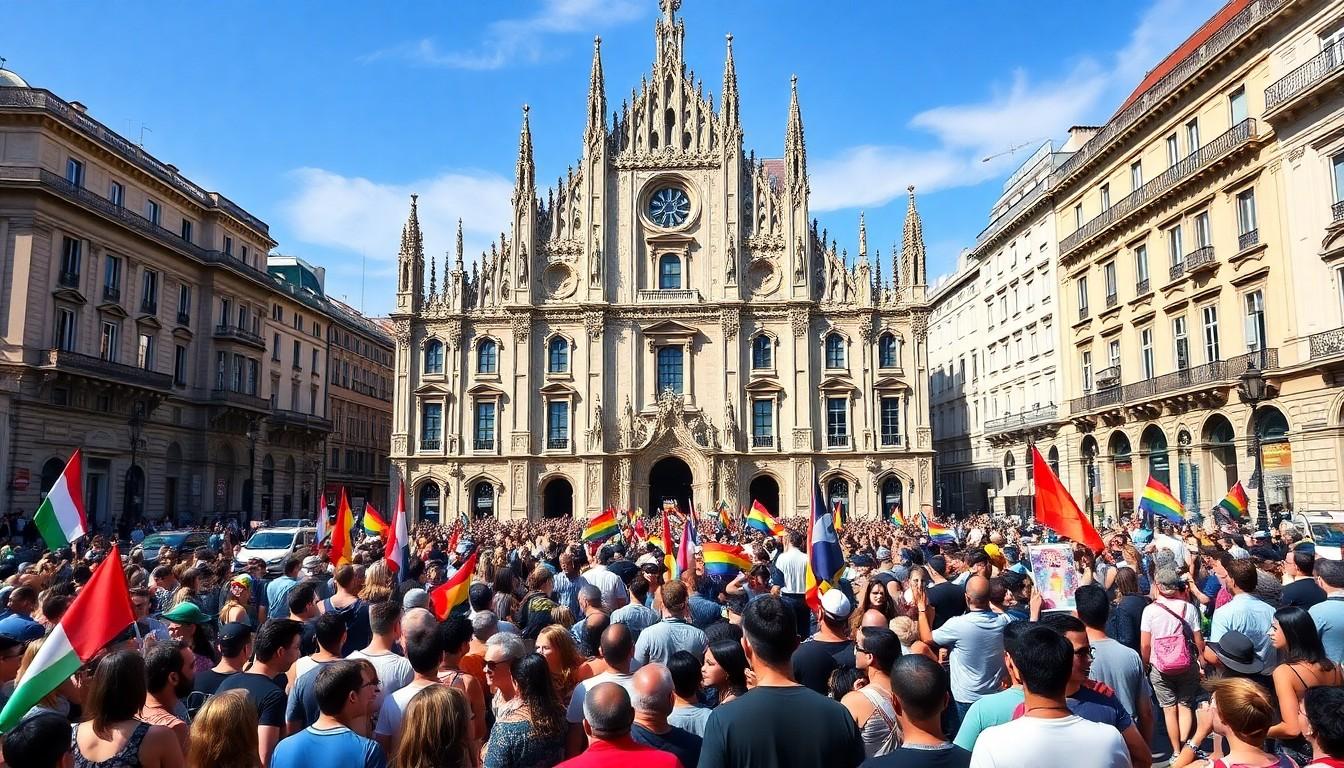
Watchers filled the streets as Milan’s Pride rolled on despite a heatwave, drawing roughly 350,000 people and a sharp political edge; organisers say the turnout matters because rising hostility toward LGBTQIA+ lives makes visibility and education urgent across the city.
- Big turnout: Organisers estimate about 350,000 people marched, with colourful floats and loud music weaving through central Milan.
- Political moment: Elly Schlein attended and warned that “homotransphobia kills,” linking recent violent incidents to public rhetoric.
- Local leadership: Arcigay Milano framed the event as both celebration and resistance, citing a spike in hostile discourse and calls for more education.
- Community vibe: Mixed crowd , families, young people, elders , creating a lively but determined atmosphere; banners felt both festive and pointed.
- Practical note: Parade kick-off moved to late afternoon because of the heat, making it easier for families and older attendees to join.
Heat, flags and a sharper message , the opening hook
Milan’s Pride looked and sounded like a party, but it hit with a heavier undercurrent this year, the kind that makes your chest tighten while you dance. Organisers say about 350,000 people turned out despite a tarmac-melting heatwave and a decision to delay the start until 17:00 to keep everyone safer and more comfortable. And while there were the expected rainbow flags and music, many banners carried a clear political jab at figures who minimise discrimination.
Why the mood felt more political than celebratory
The parade’s tone shifted because recent national debates and a brutal hate crime have sharpened nerves. Political figures who dismiss discrimination were a prime target for placards and chants, and the presence of national politicians underscored that this wasn’t only a local festival. Arcigay Milano told reporters the march is now an essential political act as much as a communal one, because public denial of homophobia leaves people exposed.
The visit that stopped people in their tracks
Elly Schlein’s appearance gave the march extra weight. She spoke about a recent transfobic murder, reminding the crowd that rhetoric has consequences and that legal protections and cultural change are still needed. Coverage in outlets including ANSA and Adnkronos showed how her words crystallised a broader fear: when discrimination is minimised in public debate, violence can seem more tolerable to some.
How the event reflects a wider cultural shortfall
Organisers argued that Italy has had patchy, inconsistent education and awareness efforts, especially in schools, and that decades-old prejudices haven’t been properly tackled. The result, they say, is a society where visibility grows , more people at Pride, more families attending , but hostility lingers. That tension explains why the Pride combined celebration with calls for structural change and more inclusive public conversation.
What this means practically for people who want to take part
If you’re thinking of heading to a Pride in a politically charged year, go prepared. Expect big crowds, a mix of party and protest, and a programme of events across the month from talks to performances. Later start times can help with heat, bring water, and pick a meeting spot with mobile reception in case networks get jammed. And if you want to support beyond one day, look for local groups offering volunteer roles or ongoing advocacy.
It's a small change that can make every gathering safer and more powerful.
Source Reference Map
Story idea inspired by: [1]
Sources by paragraph: