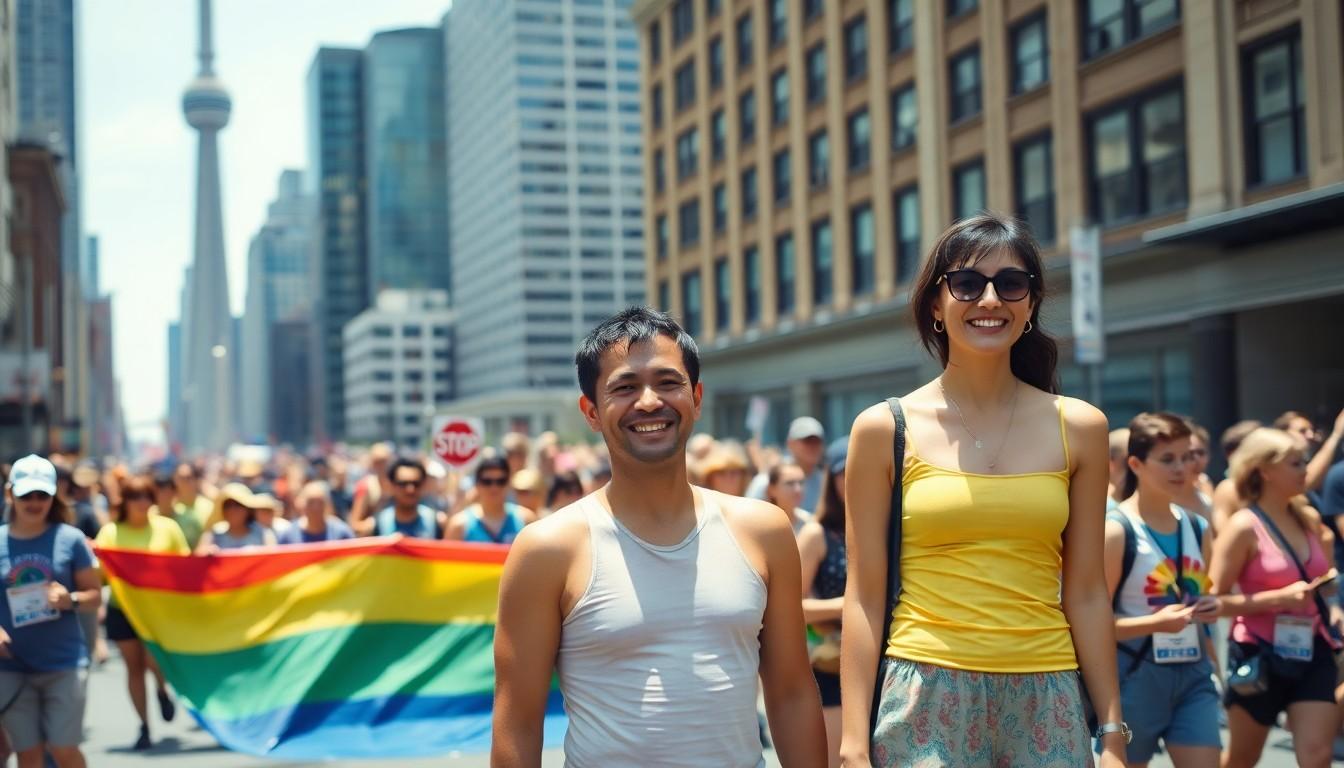
Spotting politicians in rainbow is one thing, but watching the prime minister get soaked by playful revellers made Toronto Pride feel alive , and reminded everyone why public celebration still matters. Here’s what happened, who was there, and why the day mattered to many attendees.
- High-energy moment: Prime Minister Mark Carney marched on Yonge Street and invited revellers to spray him, ending up with a drenched pink shirt and laughable theatrics.
- Meaningful remembrance: The parade included a tribute to the Pulse nightclub victims, with volunteers carrying names and faces in a quiet, solemn slice of the route.
- Generational shift: Longtime attendees described Pride’s evolution from a risky protest to a mainstream celebration, complete with employer booths and family groups.
- Emotional stakes: Newcomers and queer youth used the day to honour lost friends and call for better mental-health supports; the mood mixed joy with serious reflection.
- Festival feel: Crowds, selfies, water guns and a sense of community made Pride both playful and poignant , sun, soaked shirts and all.
A playful splash that summed up the mood
The strongest image from Sunday was as simple as it was joyful: the prime minister, hair wet and shirt soaked, grinning amid the crowd after goading people to squirt him with water. Festival-goers loved it , the moment felt spontaneous, slightly silly and very human. According to local coverage, he joined Toronto Mayor Olivia Chow for a short stretch, shaking hands and posing for selfies, and seemed to lean into the carnival atmosphere rather than keep a stiff distance.
That cheeky exchange underlined how Pride has shifted in public life; officials walk the route not just to be seen but to be part of it. For many onlookers the sight of a high-profile figure being playfully drenched made the whole event feel more accessible, less guarded. It was a visual shorthand for inclusion: if your leader can laugh at a soaking, the rest of us can relax a little.
A solemn moment remembered amid the party
Even as music and confetti filled Yonge Street, the parade paused for remembrance. Volunteers carried signs bearing the names and faces of those killed in the Pulse nightclub shooting, marking the tenth anniversary of that massacre. The tribute introduced a hush into an otherwise raucous procession, and it reminded attendees why Pride remains, at its core, about safety, remembrance and solidarity.
Historically, Pride began as protest and mourning as much as celebration, and those threads were visible on Sunday. The juxtaposition of playful antics and respectful memorials made the event feel layered: joy and grief, laughter and commemoration, all walking the same strip of asphalt.
What attendees said: from secret trips to family tradition
Longtime parade-goers noted how different the scene is now. One frequent attendee recalled sneaking out as a teen to join Pride under the radar; this year, the same person marched with a workplace group and a visible employer booth, a small but telling sign of social change. For others, the event is family tradition: generations turn up together, sharing culture and memory.
Newcomers described a mix of celebration and mourning. A first-time marcher, raised in a religious household, said the day was about honouring themself and friends they’d lost , and used the platform to press for better supports. Those personal snapshots show that Pride still serves many functions at once: festival, affirmation, protest and therapy.
The broader picture: acceptance, visibility and the work still to do
Toronto’s Pride is part of a larger cultural shift where queer visibility has gone mainstream in many settings. But the day’s discussions also highlighted ongoing problems: mental-health struggles among LGBTQ+ youth remain acute, and advocates used the parade to call for practical policies, like free psychiatric care. Statistics and researchers repeatedly show higher rates of suicidal thoughts and behaviours among queer youth, so the public platform mattered.
Politicians marching in Pride sends a signal, but many attendees stressed that symbolic gestures need to be matched by policy. The vibe on the streets was optimistic , people danced, laughed and sprayed water , but the conversations off-stage were earnest and policy-focused.
How to make the most of Pride , practical tips
If you’re heading to a parade like Toronto’s, pack light, wear sun protection and expect crowded streets. Bring a refillable water bottle and comfortable shoes; a light waterproof layer won’t go amiss if someone hands you a water gun. Be mindful near memorial groups and give space for quieter moments of remembrance. And if you want a selfie with a public figure, patience and a polite wave still work best.
Whether you’re celebrating, remembering, or both, Pride can be a day of small rituals that feel big , a splash of colour, a tender tribute, or a drenched pink shirt that makes the whole crowd laugh.
It's a small change that can make every parade feel both joyful and meaningful.
Source Reference Map
Story idea inspired by: [1]
Sources by paragraph: