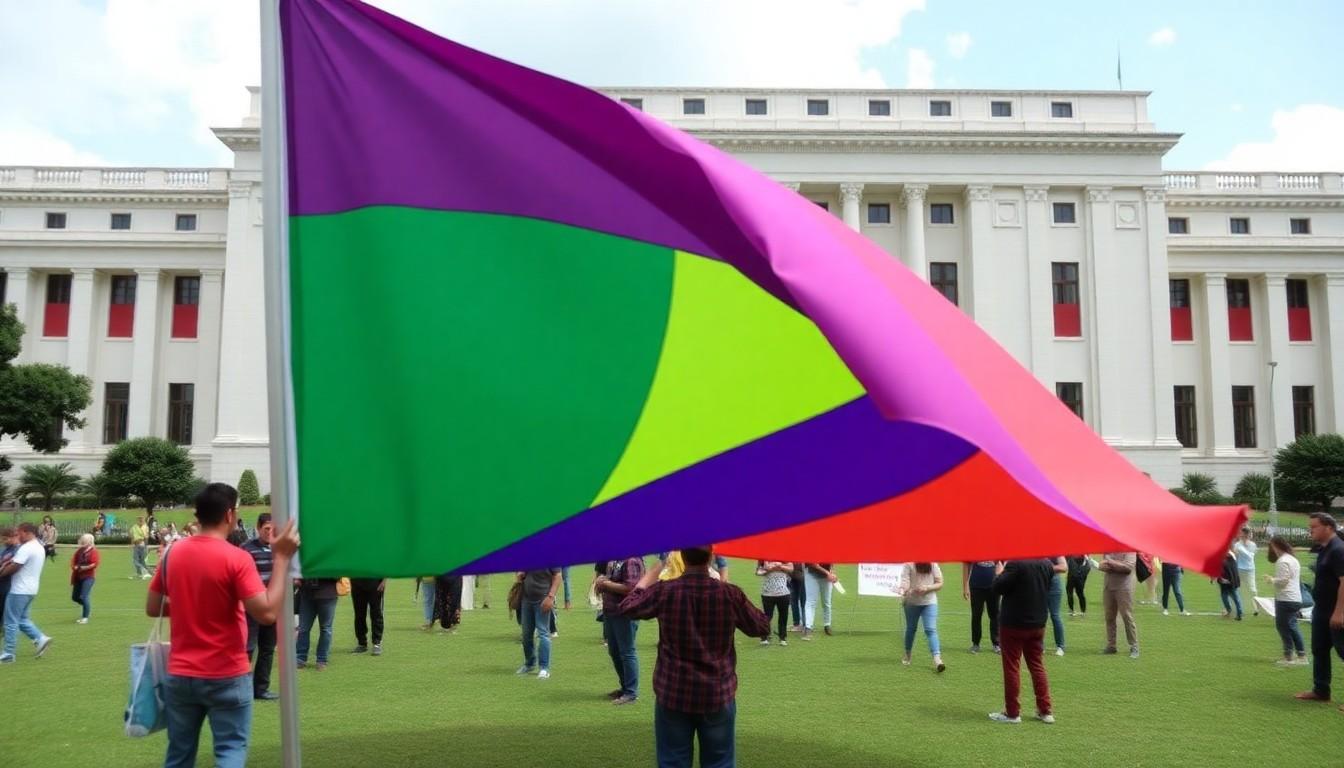
Shoppers of democracy and onlookers noticed activists were stopped from laying a 50-metre rainbow flag on the Congress lawn in Brasília on Pride Day, a tense moment that raises questions about public protest rules, police conduct and visibility for LGBTQIA+ rights in Brazil.
Essential Takeaways
- What happened: A group of about 20 activists attempted to unfurl a roughly 50m rainbow flag on the Congresso Nacional lawn on Pride Day and were stopped by legislative police.
- Tone of the encounter: Activists describe the approach as hostile and said they were startled by police vehicles and officers.
- Permits and explanation: Organisers say they notified authorities more than 24 hours in advance; police told them there was no authorisation for the action.
- Aftermath: Human‑rights groups plan to seek an investigation into the conduct of the legislative police; a local deputy has promised to request explanations.
- Contextual note: The Congress buildings were lit in rainbow colours for Pride, underscoring an odd contrast between symbolic recognition and the physical prevention of a public demonstration.
The scene on the lawn: visual and awkward
The clearest image from the day is vivid: a long rainbow banner spread across grass, bright against Brasília’s clean modern geometry, then suddenly interrupted by flashing vehicles and officers approaching. Witnesses say the mood shifted from celebratory to anxious; people were startled by the heavy presence of legislative police.
According to activists, the flag was intended as a peaceful visibility action for Pride Day. Organisers say they informed authorities in advance, but were told on arrival that the deployment lacked permission. It’s a small but sharp clash between symbolic celebration and rules about demonstrations.
Who’s raising the complaint , and why it matters
Local human‑rights groups and the organisers are not letting the episode rest. The Grupo Estruturação and the Centro Brasiliense de Defesa dos Direitos Humanos plan to file a representation asking the Câmara to investigate whether the legislative police acted appropriately.
A district deputy who chairs a human‑rights commission has also said he will demand explanations. That political follow‑up matters: it’s one thing to stop a banner, another to have the stoppage reviewed by representatives who can push for transparency and potential policy change.
The contrast: Congress lit up, yet the banner was stopped
There’s an ironic backdrop here. The Congresso Nacional and other official buildings were lit in rainbow colours for Pride, a move widely reported and meant to signal inclusion. Yet when activists attempted a physical, peaceful demonstration on the lawn, they were prevented from carrying it through.
That contrast feeds a conversation that’s been growing in Brazil and beyond: symbolic gestures by institutions don’t always line up with how authorities treat grassroots visibility efforts. It’s a reminder to look beyond optics and ask how people on the ground are being allowed to express themselves.
Rules, safety and public protest: what organisers and activists should know
If you’re planning a public Pride action, take two practical steps: notify organisers well ahead and document every step of communication with authorities. Even when you’ve informed the relevant offices, bring clear, printed confirmation and a calm liaison to explain the intent to any officers on site.
If police stop your action, remain peaceful, record the interaction and collect witness details. Human‑rights groups can help lodge formal complaints. Political pressure, public records requests and follow‑ups with elected officials are often the routes that prompt investigations.
What this episode says about the wider landscape
Incidents like these feed into a larger debate over civil liberties and enforcement practices around demonstrations. For many activists, being blocked from a peaceful Pride display isn’t simply a logistical hiccup , it’s emblematic of continuing friction over visibility, safety and recognition.
Expect scrutiny now from local media and human‑rights advocates. Whether this leads to rules being clarified, training for legislative police, or formal reprimands will depend on the outcome of investigations and political will.
It's a small but telling clash between symbolic inclusion and the on‑the‑ground reality of protest.
Source Reference Map
Story idea inspired by: [1]
Sources by paragraph: