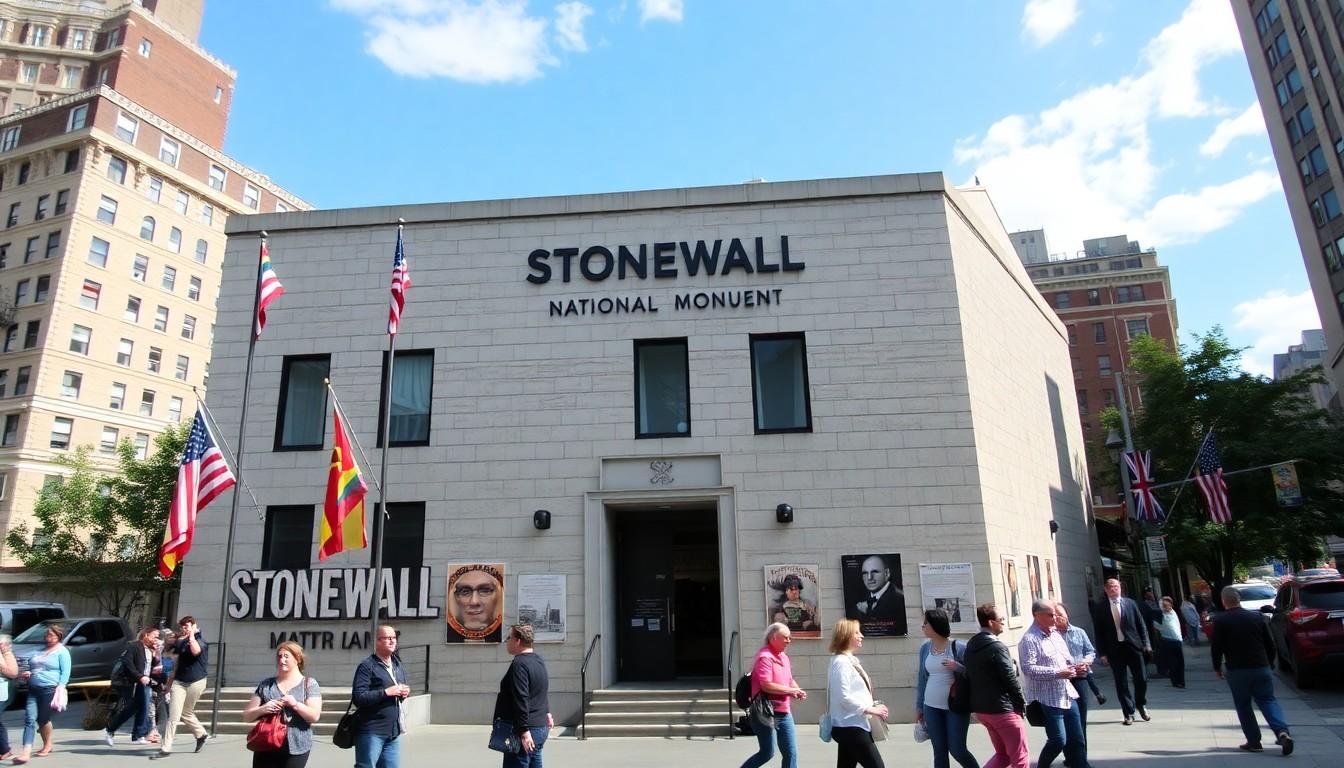
Celebrate the moment: New Yorkers, visitors and allies are marking the 10th anniversary of Stonewall National Monument in Greenwich Village with flags, posters and reflection , because the tiny park tells a big story about LGBTQ history, why it matters today, and what still needs fixing.
Essential Takeaways
- Historic site: Stonewall National Monument is the only federal park site dedicated to LGBTQ history and sits around Christopher Park in Greenwich Village.
- Anniversary displays: Organisers installed 250 rainbow flags and 27 educational posters to amplify the liberation movement’s story and mark the 250th anniversary of the Declaration of Independence.
- Recent tensions: Federal guidance removed trans-related language and flags at the site in 2025, prompting protests, a lawsuit, and a settlement that restored a rainbow flag.
- Community concern: Local groups want full reinstatement of transgender and queer histories; many worry about erasure and inaccurate storytelling.
- Why visit now: The monument attracts millions and offers a powerful, emotional encounter with civil-rights history , but visitors should expect ongoing debate over interpretation and displays.
Why Stonewall still matters , and why it feels personal
Walk into Christopher Park and you sense something compact but charged: a small stretch of grass and iron fence with a history that reverberates far beyond its size. The monument sits across from the Stonewall Inn, where patrons resisted a police raid in 1969, an uprising that helped ignite the modern LGBTQ liberation movement. Local groups and former park advocates say millions have left the site with “a deeper sense of our shared humanity,” and that emotional resonance is exactly why Stonewall matters: it’s not just a marker, it’s a moment visitors feel. That intimacy is why recent disputes over language and flags have felt like an affront to many who treat the space as sacred.
How the 10th anniversary is being marked in Greenwich Village
Organisers went visual this year: 250 rainbow flags on the park fence and 27 posters in nearby shop windows that tell the arc of LGBTQ activism. The parade route ran past the monument, so marchers saw the flags and the display-lined streets. Christopher Park Alliance and other grassroots groups led the effort because they wanted an unmistakable, public celebration of the site's significance. They didn’t wait for an official park programme , they made their own: a community-led commemoration that’s bright, walkable and easy to experience between café stops.
What changed after 2025 , flags, language and legal fights
A federal ruling in early 2025 restricted displays related to gender identity, and park websites and signage were altered to remove words like “transgender” and “queer.” Trans flags were taken down from the park, and staff were reportedly told to avoid telling visitors about the role of transgender activists in the Stonewall uprising. That shift prompted protests, a midnight removal of the pride flag that outraged locals, and ultimately a lawsuit. A settlement this spring allowed an official rainbow flag to fly again alongside the Park Service and U.S. flags, but many activists warn that restoring one flag doesn’t fix erased histories.
Why the erasure debate matters , context and what’s at stake
This is more than a fight over fabric and wording; it’s a battle over whose stories are preserved in America’s public memory. Advocates point out that transgender women of colour and queer people were central to the original uprising, and leaving them out skews the historical record. Groups such as the Christopher Park Alliance have started educational projects and uncensored poster campaigns to ensure the fuller story gets told. If federal interpretation remains constrained, expect more community-driven signage, walking tours, and legal challenges aimed at safeguarding an inclusive narrative.
How to visit, what to expect, and practical tips
If you plan a visit, go with curiosity: read the posters, linger at the benches, and follow local guides who often add context you won’t find on a pared-back plaque. Peak times are Pride weekend and summer afternoons, so aim for a weekday morning for quieter reflection. Bring something small to leave behind: a note, a flower, or a respectful sign of remembrance; many community members say tangible gestures help connect you to the place. And if you want fuller interpretation, look for free, independent tours run by activists and local groups , they’ll often cover the trans and queer contributions that official materials have, at times, downplayed.
Closing line It’s a compact park with a big job: keep visiting, listening and insisting that the full story of Stonewall is told.
Source Reference Map
Story idea inspired by: [1]
Sources by paragraph: