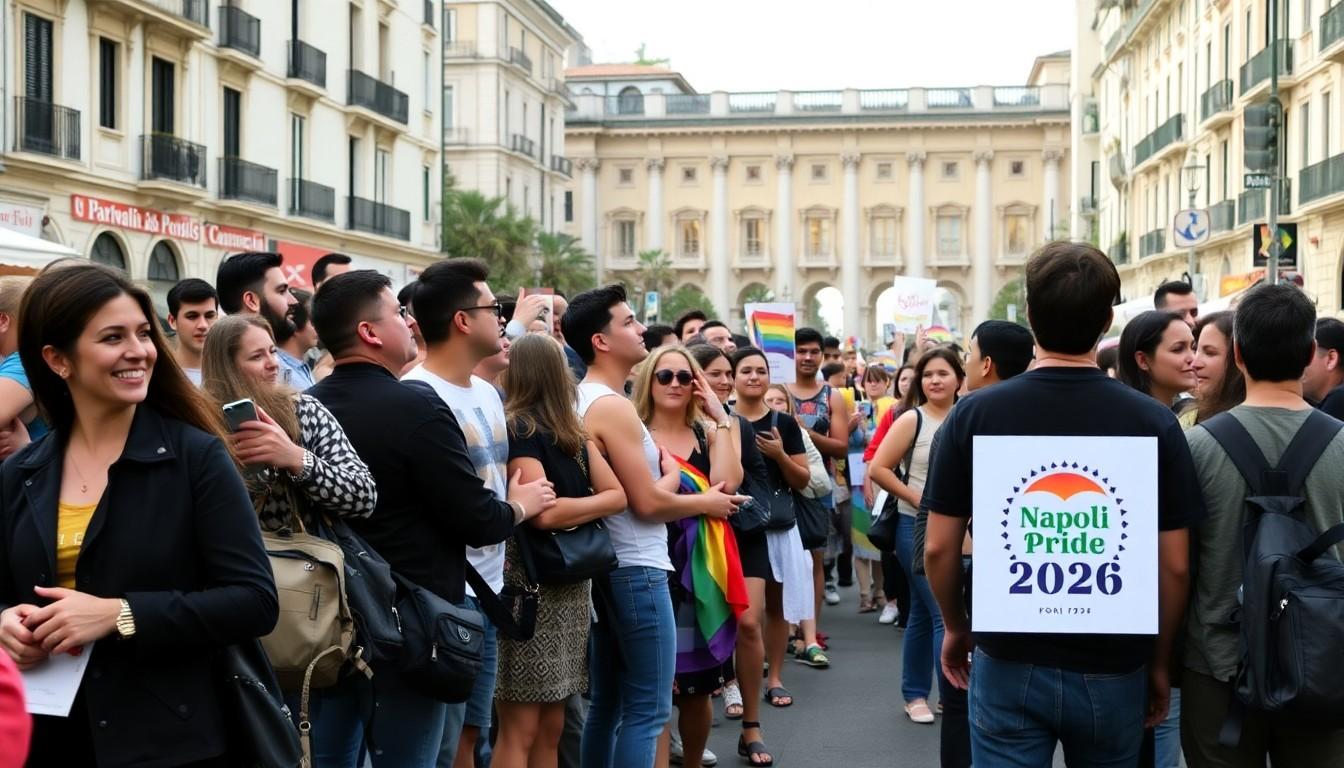
Shoppers and residents watched as Naples turned into an enormous rainbow street party for Naples Pride 2026, celebrating 30 years since the first southern Italian parade; thousands marched from Porta Capuana to Piazza Dante, under the slogan ’A libertà nun se corregge’, to insist on rights, inclusion and bodily autonomy.
Essential Takeaways
- Huge turnout: Several thousand people marched through the historic centre, growing in numbers as the day warmed up and the route progressed.
- High-profile support: Regional president Roberto Fico, mayor Gaetano Manfredi and celebrities including Maria Grazia Cucinotta and Leo Gassmann fronted the parade.
- A living bridge: Ninety‑year‑old La Tarantina embodied continuity, linking early queer memory to today’s activists.
- Festive and serious: Five floats, music from queer pop icons and testimonies , plus calls for family recognition, anti‑violence measures and prison rights.
- Local engagement: Traders and residents lined streets from Forcella to via Toledo, while civil protection crews helped with misting as temperatures rose.
A march that felt both historic and immediate
The opening beat was unmistakable: a long line of colour, voices and flags moving through Naples’ old streets, the air sticky with heat and song. According to organisers and local outlets, participation swelled as the procession moved from Porta Capuana towards Piazza Dante, turning everyday corners into cheering points. Residents and shopkeepers stepped out, phones up, and for a few hours the city’s routine became a shared celebration.
The 2026 edition commemorated the 1996 southern parade and carried a clear message about autonomy , “A libertà nun se corregge” , that threaded through speeches and banners. That blend of carnival atmosphere and political urgency is what keeps Naples Pride rooted in both memory and modern demands.
Politicians, stars and community leaders at the front
The parade’s opening banner was shouldered by a mix of public figures and grassroots organisers: Roberto Fico and Gaetano Manfredi walked alongside representatives of Antinoo Arcigay Napoli, Associazione Trans Napoli and other groups. Celebrity patrons Maria Grazia Cucinotta and Leo Gassmann rode on the lead float and were warmly greeted, while BigMama, an early activist and one of the event’s madrinas, joined the crowd after a delayed flight.
Their presence matters beyond photo opportunities. It signals municipal and regional visibility for queer causes in the city, and for many participants it reinforced the idea that civic institutions can, and should, be on the side of inclusion.
Memory on the march , La Tarantina’s poignant role
One of the day’s most arresting images was La Tarantina, the 90‑year‑old madrina who walked despite the heat and the occasional faintness, escorted by applause. Her participation served as a living reminder of the battles that paved the way for today’s demands and gave the parade an emotional anchor; she also features in the official spot that pays homage to Naples’ queer traditions with a local, theatrical touch.
Events that visibly connect generations , through music, imagery and figures like La Tarantina , help turn Pride into civic history, not just a single annual festival.
From party songs to urgent pleas: what the crowd wanted
Musically the parade leaned into queer pop staples , Raffaella Carrà, Madonna and Cyndi Lauper could be heard from the floats , but alongside the party beat the event foregrounded concrete social claims. Speakers and banners called for family recognition, protections against violence and better access to health and dignity for trans and non‑binary people. The recent murder of Mirko Moriconi was remembered in the crowd, a sorrowful reminder of why anti‑hate work remains vital.
Organisers also highlighted testimonies from marginalised groups, such as the “Sirene di Secondigliano”, transgender detainees asking for rights and inclusion inside prisons , a sign that the parade is also a platform for lesser‑seen voices.
New features, local logistics and the city’s response
This year brought new elements: five decorated floats, a Botox Bar stall supporting BEyou services aimed at transgender and non‑binary people, and a Pride Park week of events leading up to the march. Local authorities issued temporary traffic plans for the day and civil protection teams even used cooling mists to help participants cope with the heat, a small but practical touch that shows how logistics and welfare now go hand in hand with celebration.
Naples’ ability to turn its streets into a stage for civic debate , while keeping it accessible and family‑friendly , underlines the city’s long‑standing role in southern Italy’s queer movement.
It's a vivid reminder that street parties can carry policy demands; choose the events and voices that feel most relevant to you and keep showing up.
Source Reference Map
Story idea inspired by: [1]
Sources by paragraph: