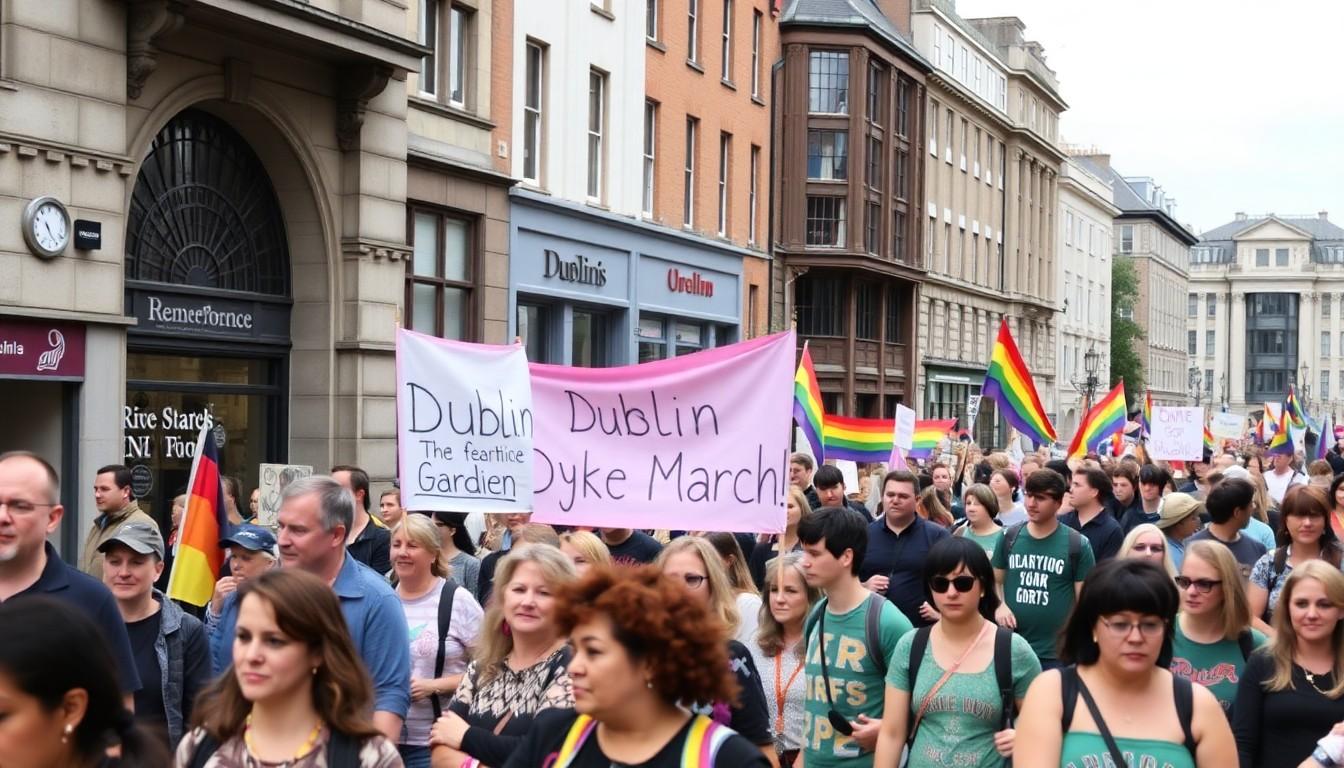
Shoppers and city-goers paused as over a thousand people gathered in Dublin on 26 June for the 2026 Dublin Dyke March, a sunlit, defiant procession calling for an end to war and genocide, trans healthcare reform and greater rights for same-sex parents , a reminder that visibility is political and joyful.
Essential Takeaways
- Big turnout: More than a thousand people marched from the Garden of Remembrance down O’Connell Street to Barnardo Square, carrying flags and chanting.
- Clear theme: The 2026 rally used the banner “Resist and Persist,” combining celebration with protest against war, far‑right organising and anti‑trans policies.
- Speakers from near and far: Voices included Jay Toole from New York, local activists from Dublin Lesbian Line, LINQ Ireland, Queers for Palestine and Transgress the NGS.
- Atmosphere and staging: Sunny weather, loud chants and final speeches created a communal, defiant mood; organisers emphasised love as a political fuel.
- Continuity: The march builds on a revival that started in 2025 and a lineage stretching back to the first Dublin Dyke March in 1998.
A bright, noisy reclaiming of city space
The march felt like a street party that had a point , colourful banners, the metallic flutter of flags and a steady stream of chants, but with an unmistakable political edge. According to Dublin organisers, people gathered early at the Garden of Remembrance and flowed down O’Connell Street, drawing attention as much by volume as by message. For many onlookers it was a warm, human display of solidarity; for participants it was direct action, visible and vocal.
The Dublin Dyke March’s return in 2025 set the scene for this year’s moment. Organisers say they wanted to keep that momentum, and the “Resist and Persist” theme made the purpose plain: celebration and protest are not mutually exclusive. If you were there you’d have felt it , the communal hum, the occasional throatiness of a chant, and the sense that people were not just present but present together.
Why “Resist and Persist” mattered this year
Politics is never far from Pride-adjacent events, and the march’s priorities were current and pointed , opposing war and genocide, pushing back against the far right, demanding trans healthcare that actually works, and advancing same‑sex parents’ rights. Those demands echoed speeches from a line-up that mixed international and local voices, underlining that these are both global and neighbourhood issues.
This is part of a broader trend: grassroots actions increasingly fold in international concerns alongside local campaigning. Participants told reporters they wanted visibility and policy change, and organisers framed love as the fuel for ongoing resistance , a rhetorical choice that felt both warm and strategic.
Voices that carried across Barnardo Square
Speakers included activist and storyteller Jay Toole from New York, and representatives from local groups such as Dublin Lesbian Line, LINQ Ireland, Queers for Palestine and Transgress the NGS. A prepared speech from Equality for Children was read aloud in the speaker’s absence, showing how the march connected multiple campaigns and causes.
Hearing people speak in person matters; it turns slogans into stories. Organisers emphasised lived experience , from butch identity to parenting rights , which makes policy debates feel human. The speeches also provided a practical lens: campaign asks and immediate calls for solidarity that marchers can sign up to after they leave the square.
How this fits into Dublin’s activist calendar
The Dyke March sits among other sizable public actions and protests in the capital this year, from anti‑racism marches to demonstrations on economic issues. Dublin’s streets have become a stage for competing ideas, with marches drawing attention to everything from fuel-price protests to anti‑immigration rallies reported across the city. In that crowded public sphere, the Dyke March carved out a visible space for queer women and non‑binary people to set the tone.
For anyone planning to attend future marches, think logistics: arrive early, bring water and a small sun hat if the skies are kind, and make a post‑march plan with friends. Visibility rests on turnout, but safety and comfort keep people coming back.
What organisers hope will come next
Organisers emphasised that march days are not endpoints but catalysts. The message was simple and practical: build on this visibility by engaging with policy campaigns, supporting trans healthcare reform, and backing groups working on parental rights and anti‑war solidarity. Expect follow-up meetings, local actions and more coalition work through community groups in the months ahead.
And yes, the tone will likely stay both defiant and affectionate , that combination keeps people energised and willing to return to the streets.
It's a small change that can make every march feel like both protest and party.
Source Reference Map
Story idea inspired by: [1]
Sources by paragraph: