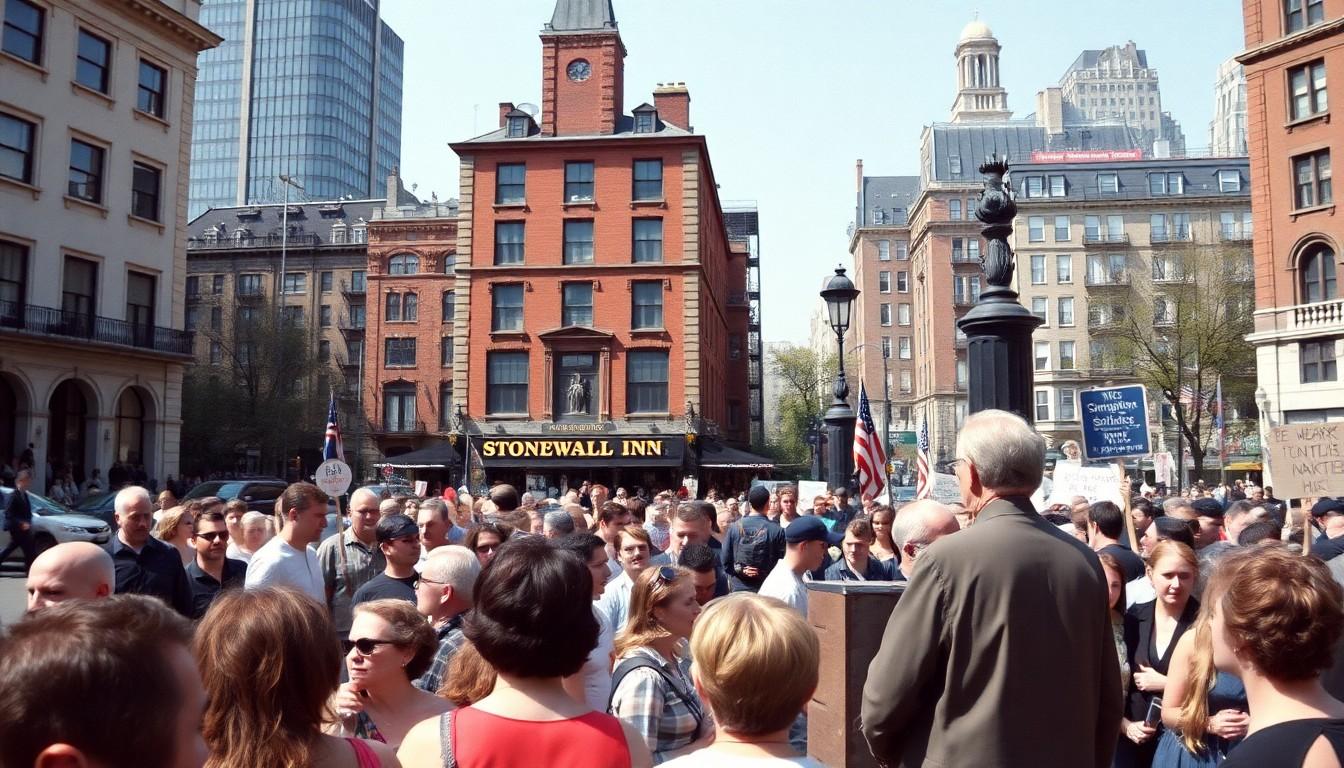
Shoppers and strangers looked on as 500 marchers chanted “Gay Power” from Washington Square to the Stonewall Inn, a small but vivid moment that helped crystallise a movement. This piece revisits that July 1969 vigil, explains why it mattered, and points to what readers should know about the early gay liberation pulse in New York.
Essential Takeaways
- What happened: A crowd of roughly 500 marched from Washington Square to the Stonewall Inn chanting “Gay Power,” marking one of the earliest public demonstrations after the Stonewall riots.
- Who led it: Activists from groups like the Daughters of Bilitis and the Mattachine Society spoke and organised on the spot, giving speeches and galvanising the crowd.
- How it felt: The event mixed defiance with humour and ritual , lavender ribbons, spirited chants, and moments of solemn song , creating a lively public display of pride and grievance.
- Why it mattered: It signalled a shift from private resistance to organised, visible activism demanding rights and an end to police harassment.
- Practical note: For modern readers, this is a reminder that grassroots protest, even small and theatrical, can seed lasting movements.
A vivid moment on a hot summer afternoon
The scene was almost theatrical: lavender ribbons fluttering, a chorus of chants, an apricot halter and pin-striped trousers catching the sun. According to contemporary dispatches, the march began in Washington Square and flowed toward Sheridan Square and the Stonewall Inn, turning a street-side gathering into a public assertion of identity. The sensory details , laughter, applause, a tourist’s bemused question , give you a real feel for how striking it was to see queer people claim space then.
Backstory is always useful: this vigil arrived just weeks after the more chaotic confrontations at Stonewall, and it wasn’t a spontaneous party so much as a deliberate showing. Organisers from early homophile groups used the moment to hand out ribbons, make speeches and argue that harassment and laws criminalising intimacy needed to end. The tone mixed anger with camp and levity, which helped people feel safe enough to show up.
From private grief to public power
The rally’s speakers named what people had known in daily life: flashlights, peeping toms, sting operations and stingier marriage laws. Marty Robinson of the Mattachine Society urged organisation and threatened the economic leverage of a united community. That kind of talk , boycott, newspaper, precinct marches , shows how quickly activists started thinking beyond a single night’s outrage toward sustained pressure.
Historians now connect those early pickets and vigils to the broader gay liberation movement. The Washington Square-to-Stonewall walk is often cited as a pivot, where theatre and protest blended into something strategic. If you’re comparing activism then and now, notice how small, theatrical actions became templates for larger, coordinated campaigns.
Why the language “Gay Power” mattered
Shouts of “Gay Power” were more than a slogan; they were a deliberate borrowing of language from other civil-rights struggles, reframed to demand dignity and protection. Hearing a crowd chant it in public , and with humour, too , helped demystify queerness for passers-by while giving participants a shared, energising identity.
While some contemporaries treated the march as a mildly comic spectacle, the participants clearly felt emboldened. They sang “We Shall Overcome” alongside raucous chants, signalling both moral seriousness and a willingness to fight. That duality , earnestness wrapped in defiant play , would characterise much gay liberation activism to come.
What this tells us about protest and culture
Small protests can seed big changes, especially when they mix emotion with organisation. This July demonstration illustrates how community rituals , ribbons, songs, mock-mayoral jokes , help people bond and move from grievance to action. For activists today, it’s a reminder that creativity matters: theatricality attracts attention, seriousness wins allies.
Context helps too. The late 1960s saw a surge of social movements across the US, and New York’s queer communities were tapping the same currents. Local groups used the visibility of a city park and a neon-bar backdrop to demand rights in a way that straight passers-by couldn’t ignore.
Where to look next and why it still matters
If you want to explore further, seek contemporary coverage and archival collections that preserve the voices of those who organised , pamphlets, speeches and oral histories bring texture that summaries can’t. Museums and online archives often digitise flyers and photos that make the era palpable.
The takeaway is simple: what began as a 500-strong march under a lavender banner helped move a movement from the shadows into streetlight. That move reshaped public conversation about civil rights, sexuality and policing , and it still echoes in how communities organise today.
It's a small change that helped make every later march possible.
Source Reference Map
Story idea inspired by: [1]
Sources by paragraph: