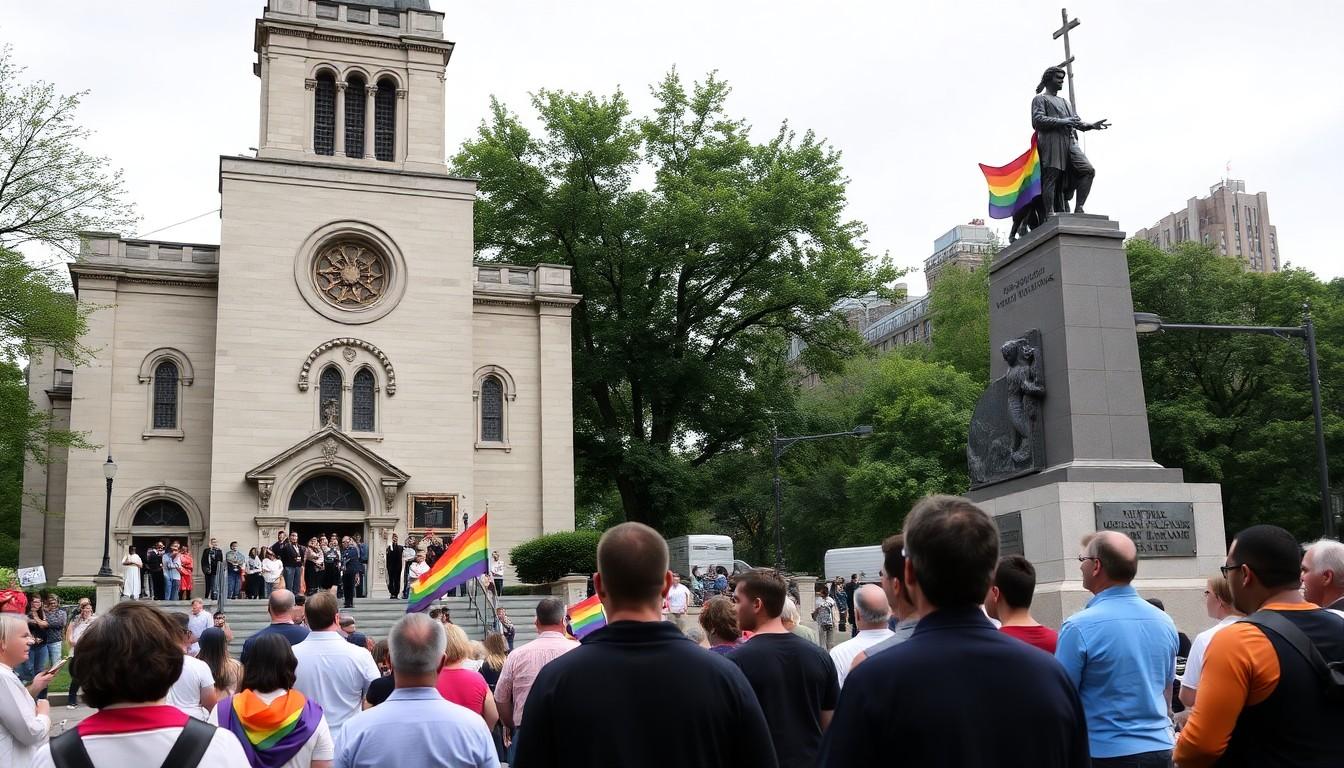
Shoppers of sacred and civic space gathered as Catholics, allies and visitors turned Christopher Park into an open-air sanctuary at the start of New York’s Pride weekend; the 2026 Pride Mass at the Stonewall National Monument offered a visible message of faith, inclusion and remembrance that matters to LGBTQ+ Catholics and the wider community.
- Large, intimate turnout: About 150 people packed Christopher Park, shoulder to shoulder, for an outdoor Eucharist framed by dozens of rainbow flags and the Stonewall Inn nearby.
- Warm, pastoral tone: The Mass openly apologised for past church harms and named transgender and nonbinary people, offering a heartfelt welcome and quiet regret.
- Place matters: Holding the liturgy at the Stonewall National Monument linked Catholic worship to a site central to modern LGBTQ+ civil rights and public memory.
- Community and service: Organisers from Out at St. Paul emphasised spirituality, community and service as the event’s core, with prayers that also lifted migrants, racial justice and care of creation.
- Personal journeys visible: New Catholics and parish leaders spoke of welcome and belonging; the atmosphere felt both celebratory and reflective, with tourists pausing to watch.
A Mass on hallowed ground , what it felt like
The strongest image from the gathering was simple: rainbow flags fluttering around a small park, voices raised in prayer beneath summer light. According to reporting, roughly 150 worshippers , Catholics, allies and passersby , gathered at Christopher Park for the Annual Pride Mass organised by Out at St. Paul. The scene was equal parts church picnic and civic witness, a tactile reminder that faith can unfold outside four walls.
Organisers set the liturgy steps away from the Stonewall Inn, deliberately placing Catholic ritual where the modern LGBTQ+ rights movement began. That choice made the Mass feel like both celebration and testimony, a way of remembering past struggles while insisting the church can be part of a hopeful future.
Past hurts named, apologies given
One of the most notable threads through the liturgy was candour. The presider spoke directly about the pain many LGBTQ+ Catholics have endured, offering an explicit apology and singling out transgender people for special recognition. That apology wasn’t a headline grab , it landed as a pastoral gesture, meant to acknowledge harm and begin repair.
For participants who’ve felt excluded, this kind of language matters. It doesn’t solve systemic issues overnight, but it signals a pastoral willingness to reckon with the past and to say aloud that those who have suffered are seen and grieved by church leaders in that moment.
Why Stonewall? History, memory and public witness
Placing the Mass at the Stonewall National Monument did more than provide a picturesque backdrop; it placed Catholic worship into the story of civil rights. The park’s status as a national monument anchors the event in a wider civic narrative about dignity and protest, and organisers leaned into that symbolism.
As people prayed for justice and inclusion, the location modelled how religious observance and public memory can intersect. It’s a reminder that faith communities often participate in civic life not only through charitable work but through visible, symbolic acts that align worship with social movements.
Community, welcome and ongoing work
Out at St. Paul framed the event around three pillars: spirituality, community and service. Those pillars were visible in small ways , a friendly handshake at the park’s edge, a new Catholic baptised this year, organisers reminding attendees they belong. Leaders stressed that welcome is an active project, not merely a slogan.
That emphasis on service and inclusion also came with practical notes. Organisers and parishioners are clearly working to make parish life accessible, whether through sacramental preparation or outreach ministries. For Catholics who have felt isolated, events like this provide a concrete entry point into parish life.
The wider moment: context and continuation
The Mass took place amid a mixed national picture on LGBTQ+ rights, with public support for issues like same-sex marriage shifting in recent polls. Even so, faith leaders in some places continue to offer pastoral outreach, and the Stonewall Mass felt like part of that pattern , small, local acts that push for belonging even when public opinion or policy feels unsettled.
For anyone watching, the gathering offered both consolation and a nudge: consolation to those who find welcome, and a nudge to communities to keep working, apologising when needed, and creating visible spaces of belonging.
It's a small change that can make every welcome feel more real.
Source Reference Map
Story idea inspired by: [1]
Sources by paragraph: