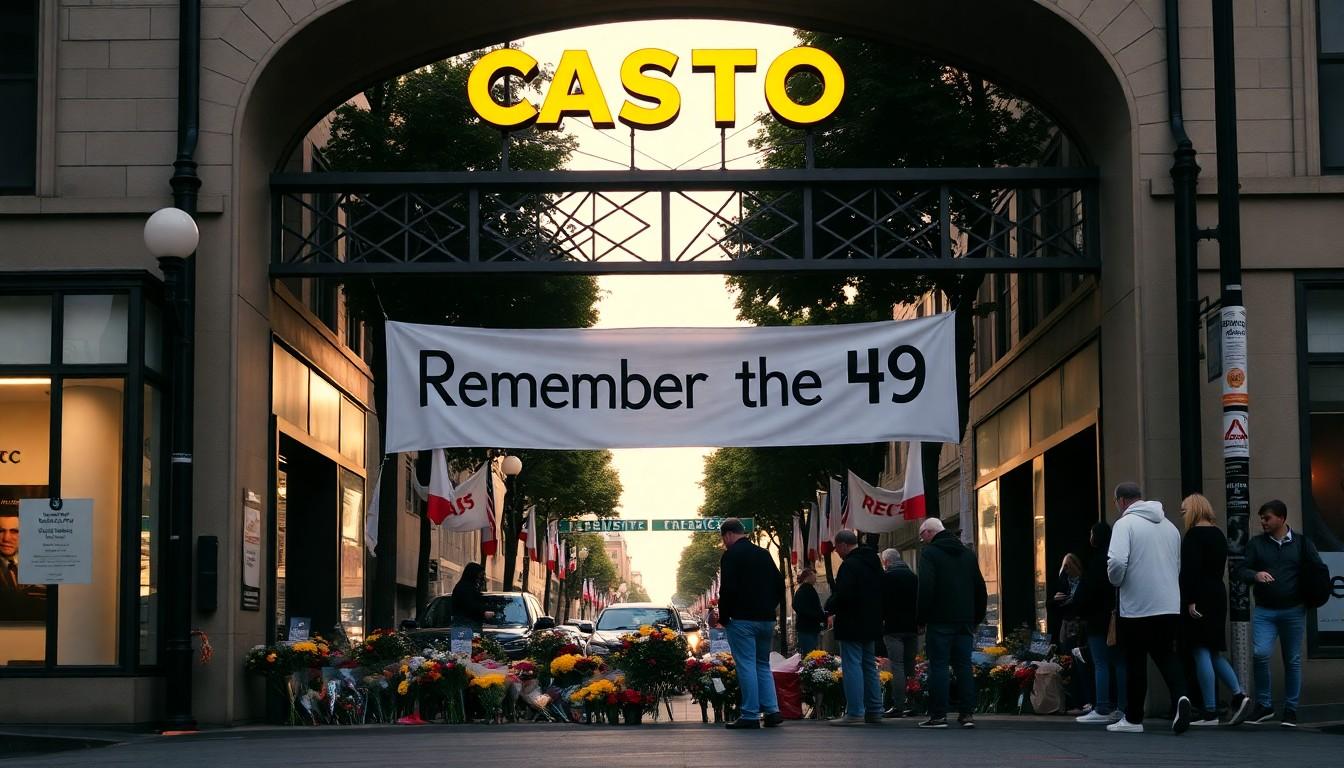
Shoppers and neighbours paused as the Castro gathered to remember Pulse’s victims, with a candlelit vigil, a march and floral tributes that brought community, grief and resilience to Jane Warner Plaza , here’s what happened, who organised it, and why these local remembrances still matter.
Essential Takeaways
- When and where: A community vigil and march took place at Jane Warner Plaza in the Castro on June 12, 2026, marking the 10th anniversary of the Pulse shooting.
- Who spoke and organised: Orlando native Christopher Vasquez helped lead the event alongside local speakers and the Castro LGBTQ Cultural District.
- Visual tributes: Attendees displayed a “Remember the 49” banner and laid flowers and candles; the mood felt reflective and determined.
- Partner organisations: The SF AIDS Foundation, Galería de la Raza and Acción Latina took part, showing a cross-section of San Francisco’s civic and cultural support.
- Broader context: The memorials in San Francisco echoed ceremonies in Orlando and other cities, blending local solidarity with national remembrance.
A quiet plaza, a loud memory: the opening scene in the Castro
The strongest image from the evening was simple and human , candles glowing against the Castro’s familiar facades, faces lit in the warm flicker. Reporters from KTVU described a steady turnout of neighbours, activists and visitors who gathered to listen and to remember. The combination of intimate ritual and public witness made the plaza feel both like a living room and a town square. For anyone who’s been to a vig il, the hush and the hum together are telling: grief is private, but remembrance is collective.
The ceremony in San Francisco didn’t happen out of nowhere. Organisers emphasised the link between local queer safety efforts and national memory, reminding attendees that Pulse wasn’t just an Orlando tragedy , it reshaped conversations about violence, solidarity and policy nationwide. That framing helped create a ceremony that looked backward and ahead at once.
Speakers, survivors and organisers: who took the mic
Orlando native Christopher Vasquez was a central voice at the event, bringing a personal connection to Pulse while standing alongside local leaders and artists. Other speakers included community advocates and entertainers, each offering a short, pointed testimony. As coverage in several outlets noted, survivor-centred remarks were balanced with calls to action , from improved safety resources to more robust mental health support.
Events like this tend to mix the ceremonial with the pragmatic. Expect organisers to keep survivor privacy and agency front and centre, especially as some remembrance gatherings in Orlando opted for survivor- and family-only ceremonies to protect those still healing.
Visuals and rituals: banners, flowers, and the power of small gestures
The “Remember the 49” banner became a focal point for photos and social posts, while people placed bouquets and single stems at the makeshift memorial. Visual cues matter: they translate grief into a form anyone can understand, and they create a shared language for those who couldn’t travel to Orlando. Local nonprofits , including the SF AIDS Foundation, Galería de la Raza and Acción Latina , helped steward those rituals, offering a sense of institutional care alongside grassroots feeling.
If you attend a memorial, bring something small and considerate: a single flower, a note, or simply your presence. These modest acts are what carry forward collective memory and support survivors.
How San Francisco’s event fit into a national pattern of remembrance
Coverage from regional and national outlets showed a clear pattern: cities marked the anniversary in ways that reflected local character. In Orlando, there were private memorials for survivors and families, while communities elsewhere staged public vigils and educational programming. San Francisco’s Castro, with its deep LGBTQ history, offered both mourning and an insistence on ongoing community protection.
Organisers in many cities have used these anniversaries to press for concrete changes: reminders about gun safety legislation, calls for mental health funding, and renewed emphasis on safe-space initiatives. Remembering Pulse remains a way to keep those conversations alive rather than let the trauma become a closed chapter.
Practical ways to take part, support survivors and stay informed
If you want to show solidarity beyond attending a vigil, consider practical steps: donate to verified survivor funds, support local LGBTQ health services like the SF AIDS Foundation, and look for survivor-led organisations when volunteering. Check official memorial websites for accurate guidance and lists of needs; these sources help avoid well-meaning but intrusive gestures.
Also, remember privacy: survivors and families sometimes request private moments, so follow event guidance and respect boundaries. Small, thoughtful gestures, regular donations, advocacy, and education, often have the most lasting impact.
It's a small change that can make every remembrance more respectful and more useful.
Source Reference Map
Story idea inspired by: [1]
Sources by paragraph: