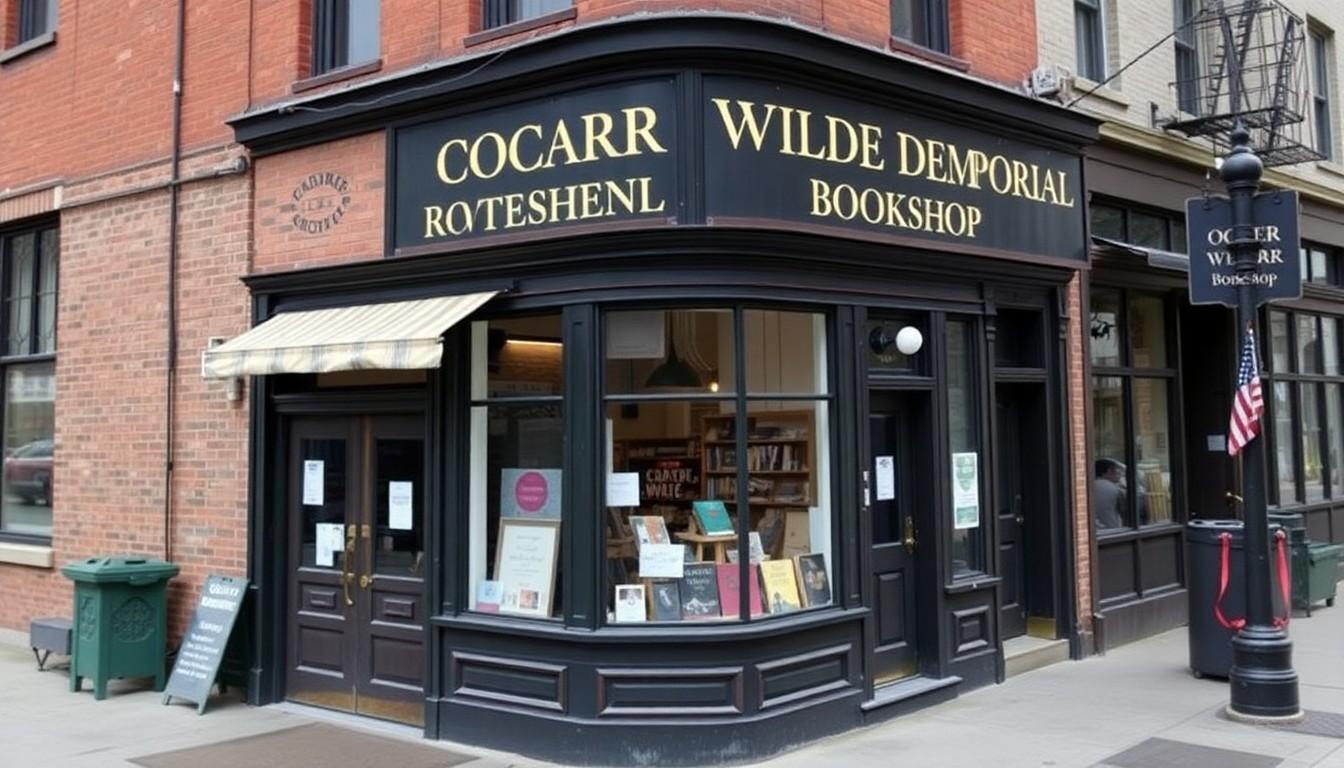
Shoppers are returning to queer bookshops as beacons of community and history; the story of Craig Rodwell’s Oscar Wilde Memorial Bookshop in 1967 New York shows why these small, sturdy spaces still matter for culture, politics and queer visibility.
Essential Takeaways
- Historic first: The Oscar Wilde Memorial Bookshop opened in November 1967 as the first dedicated lesbian and gay bookshop, offering serious queer literature and periodicals.
- Community hub: Rodwell’s shop became a meeting place for organising, education and cultural life, not just a retail outlet.
- Stonewall link: Craig Rodwell played a direct part in the Stonewall uprising and organised Christopher Street Liberation Day, the template for modern Pride.
- Enduring legacy: Though the original shop closed in 2009, its model inspired queer bookshops worldwide and helped normalise LGBTQ+ publishing.
- Practical note: Visiting a queer bookshop today offers curated titles, local history, friendly staff and a social space you won’t find online.
Why one tiny bookshop made such a big noise
The Oscar Wilde Memorial Bookshop was a pocket of warmth and defiance in a cold and often hostile city, and you could almost feel the paper scent and murmured conversations when you imagine stepping through its door. Rodwell designed it deliberately as a public-facing space , no coded names, no masked windows , and stocked only works that treated queer people with dignity. That choice was radical then and still feels meaningful now.
Back in the late 1960s many states criminalised or pathologised same-sex desire, and queer people had few safe institutions. According to preservation and historical sites in New York, Rodwell modelled the shop on Christian Science reading rooms but inverted the purpose: where those rooms centred doctrine, his centred queer lives, books and organising. That flip helped create a cultural centre that did more than sell books.
How a bookseller helped spark Pride
It’s almost cinematic: Rodwell runs to a payphone during the 1969 uprising, types up five thousand flyers overnight and helps call the wider city’s attention to what’s happening on Christopher Street. Those flyers and subsequent organising from the bookshop helped turn a night of resistance into a movement. Christopher Street Liberation Day, organised the following year, was the world’s first Pride march , a direct line from a shopfront to a global tradition.
Historic sites note that Rodwell shouted “Gay power!” during the riots, a phrase that captured a new, uncompromising tone for activism. The shop’s role as a communication hub made it more than a retail space; it was where strategy and solidarity met literature and personal stories.
What it taught publishing and bookstores everywhere
The Oscar Wilde Memorial Bookshop insisted on respectability in its shelving and staffing: no pornography, no euphemism. That editorial stance mattered. Village Preservation and other cultural historians credit the shop with creating a national market for queer-focused titles and periodicals, and with giving lesbians and gay men a place to find each other and their ideas.
This model inspired shops across the US and beyond, and even influenced legal and cultural battles elsewhere. In London, Gay’s The Word followed a similar path and went on to reshape UK obscenity law. The lesson is clear: bookstores can be cultural infrastructure, not just commerce.
Threats, resilience and what we lost
Being visible painted a target on the bookshop. It suffered vandalism, organised harassment and sustained doxxing from right-wing foes, and staff sometimes needed security. Yet the shop persisted for decades, proving how determined community-run spaces can be.
Still, the pressures of chain stores and the rise of online retail took their toll; the Oscar Wilde Memorial Bookshop closed in 2009. Preservation groups and cultural historians argue that the closure is a reminder to support independent queer spaces , once they’re gone, a unique archive of local life and resistance vanishes with them.
Visiting, supporting, choosing queer bookshops today
If you want to feel that same hum of community, pick a local queer bookshop and go in. Look for curated staff picks, events, zines and back-catalogue titles you won’t easily find elsewhere. Buy a book, attend a reading, or volunteer; small donations and purchases keep these spaces alive.
For collectors or gift-buyers, ask staff for vintage or out-of-print recommendations , queer bookshops often know their local literary lineages and can connect you to titles that shaped movements. It’s not just shopping; it’s stewarding memory.
It's a small change that can help preserve spaces where culture, politics and people meet.
Source Reference Map
Story idea inspired by: [1]
Sources by paragraph: