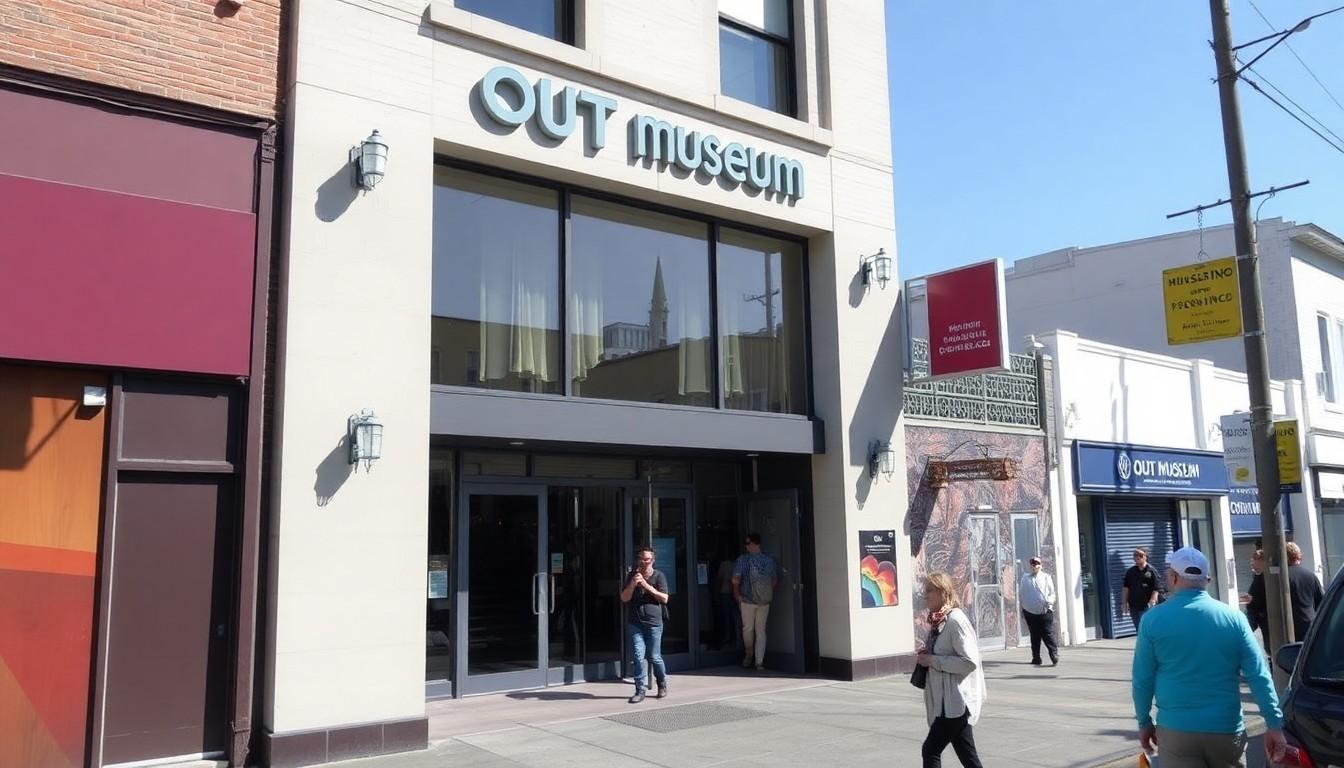
Shoppers and sightseers alike are noticing a fresh cultural beacon , San Francisco’s new bilingual OUT Museum in Chinatown , the world’s first museum focused on Chinese LGBTQ+ art, offering a tiny but potent space where diaspora stories, zines and delicate porcelain can finally be seen and heard.
Essential Takeaways
- Historic first: OUT Museum is billed as the world’s first museum dedicated to Chinese LGBTQ+ art, located in San Francisco’s Chinatown and open to the public on Saturdays.
- Intimate exhibit: The inaugural show fills one room with under a dozen works , photography, zines and an interactive thread installation , creating a tactile, personal experience.
- Community impact: Visitors include long-term Chinese immigrants and families; staff report emotional reactions such as reunions, coming-out conversations and gratitude.
- Founder’s journey: Xiangqi Chen launched the idea while in China, moved to the US on a J-1 visa, and built the museum with strong local institutional support and crowdfunding.
- Broader context: The museum arrives as LGBTQ+ rights face political challenges in the US and tight restrictions in mainland China, making its visibility both symbolic and practical.
A small room with a big, personal feel
Step inside and you notice the hush of attention, plus the tactile pull of a thread-based interactive piece that asks visitors to trace gender and identity journeys. That intimate scale is deliberate , the museum begins modestly, open one day a week and showcasing fewer than a dozen works, but those pieces are chosen to speak directly to Chinese and Chinese American experiences. According to local reporting, the space sits opposite the Chinese Historical Society of America Museum, a location that makes the OUT Museum’s presence particularly resonant in a neighbourhood with deep roots. Visitors describe the show as quietly powerful; it’s the kind of exhibition that rewards close looking and conversation.
From Kickstarter to Chinatown: how the museum was built
The museum’s creator, Xiangqi Chen, started the idea years earlier with a Kickstarter while still in China, where public queer organising and art face increasing limits. She later came to the US on a visiting scholar visa and gained visibility through exhibitions and a residency that helped incubate the museum prototype. Local organisations provided space, and community support , including donations and artist collaborations via social platforms , pushed the project forward. The path shows how grassroots funding, institutional partnerships and personal resilience can convert an online campaign into a physical cultural home.
Why Chinese-language queer stories need their own room
Mainstream narratives often flatten Asian LGBTQ+ lives, so the museum’s bilingual programming matters: it makes work accessible to both recent immigrants and younger, US-born Chinese audiences who speak different cultural languages. Artists like Dixon Ngai use tradition-inflected media , for instance, a hand-painted porcelain piece inspired by Cantonese opera , to retell queer histories in recognisable forms. That specificity lets visitors recognise themselves in art, which scholars and activists say is crucial for representation and intergenerational dialogue. For anyone choosing what to see, seek exhibitions that put culturally specific symbols front and centre rather than shoehorned into a general queer-curatorial frame.
Emotional responses show the museum’s real-world effect
Curators and volunteers report surprising, moving feedback: a 60-year-old trans man recalling his immigration for gender-affirming care in the 1970s, or a mother who used the museum’s events to reconnect with her gay son. Those individual encounters underline a larger point made by museum advisors and local commentators: visibility here isn’t just political, it’s relational. Events and artworks are functioning as bridges between generations and between private experience and public acknowledgement. If you visit, expect to see art that invites conversation and could prompt family members to open new lines of communication.
The political backdrop makes the museum’s opening timely
The OUT Museum’s arrival comes amid contrasting pressures: restrictions and rollbacks affecting LGBTQ+ rights in parts of the US, and far tighter limits on public queer life in mainland China. That context gives the museum a double importance , a safe exhibition space for diaspora artists, and a statement about artistic freedom that wouldn’t be possible in many other places. Organisers and artists alike describe San Francisco’s relative freedom as a lifeline, even as they acknowledge the work ahead. For supporters, that means visiting, donating or sharing the museum’s programme can be as meaningful as the art itself.
What to do if you want to support or visit
Plan for a Saturday visit and expect a compact but thoughtfully curated experience; many exhibits are interactive or fragile, so bring curiosity rather than crowds. If you’re an artist or donor, the museum’s early-stage model suggests your support , whether financial, volunteer time, or outreach , will have tangible impact. For families and allies, attending public programmes or guided talks is an easy way to learn and show solidarity. Small gestures here have outsized returns: they help a fledgling institution expand its hours and exhibitions.
It's a small change that can make every conversation about belonging a little louder.
Source Reference Map
Story idea inspired by: [1]
Sources by paragraph: