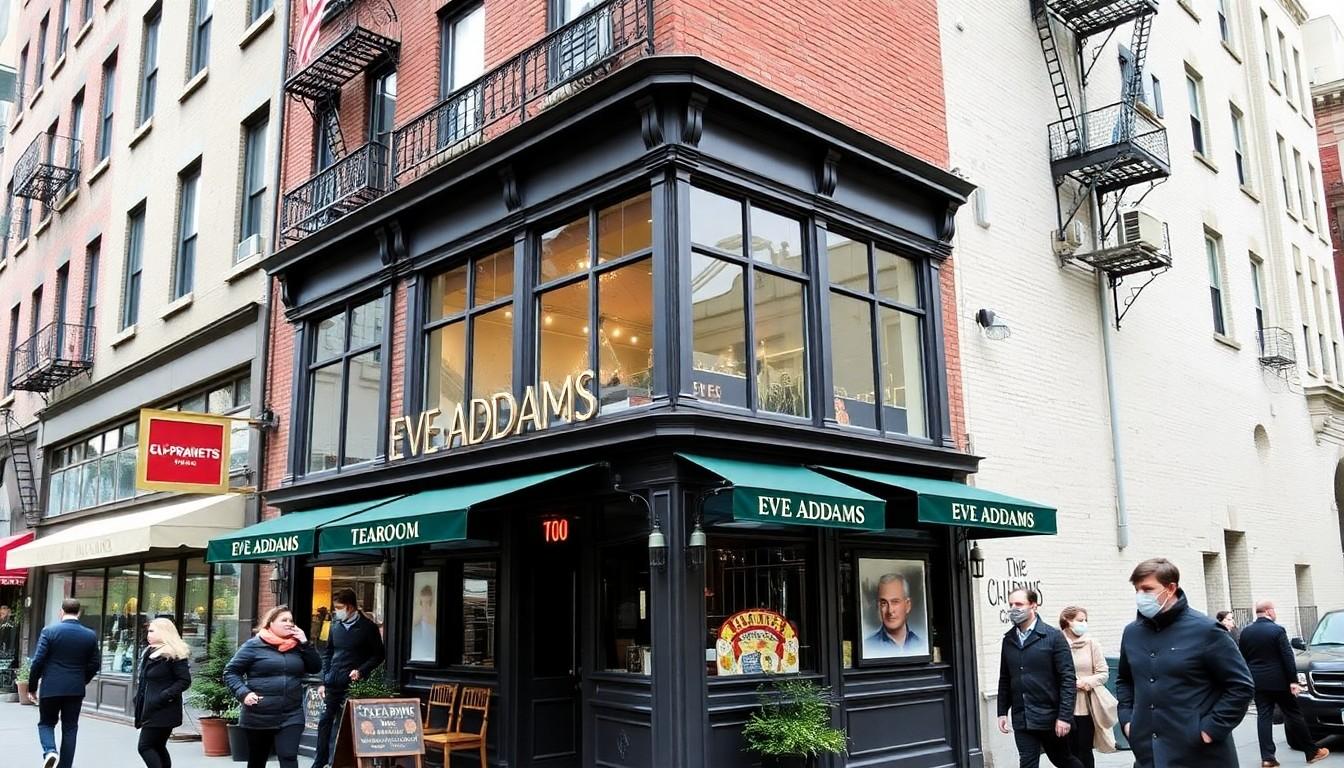
Shoppers and history-lovers are rediscovering the South Village’s quiet queer past, where intimate clubs and tearooms gave LGBTQ+ people refuge a century ago; this tiny Manhattan pocket , between Washington Square and Houston Street , mattered because it offered meeting places, art, and resistance long before Stonewall.
Essential Takeaways
- Historic hubs: The Slide at 157 Bleecker and Eve Addams’ tearoom at 129 MacDougal were early, visible gathering spots for gay and lesbian communities.
- Mixed streetscape: The district’s Federal and Greek Revival rowhouses hide a lively bohemian past, with theatres, cafés and clubs that fostered queer culture.
- Police danger: Both venues faced raids and closures, highlighting how social life for LGBTQ+ people was frequently criminalised.
- Cultural support: Eve’s Hangout hosted readings, music and salons, offering emotional as well as social shelter.
- Lasting legacy: Landmark designations and maps now help locals and visitors trace these once-hidden stories.
The Slide: a notorious refuge with a shabby, human heart
The Slide at 157 Bleecker was loudly condemned in its day, but its reputation was only one side of the story , inside, men who dressed beyond convention found company and counsel. Contemporary reports painted the place as depraved, yet those same accounts confirm it was a rare, public space where queer men met and formed networks. According to New York LGBT historic records, the club operated in the late nineteenth century until a police closure in 1892. For visitors today, the building’s modest Federal shell belies the loud social life that once pulsed there, and it’s a reminder that visibility often came with risk.
Eve Addams’ tearoom: salon culture, soft rebellion
Eve Kotchever’s tearoom at 129 MacDougal became shorthand for a different kind of refuge , quieter, cultural, salon-like, and explicitly welcoming to women who loved women. The tearoom staged poetry readings, music and conversation, and it drew artists and radicals as well as lesbians seeking each other out. Village Preservation’s research and New York LGBT site notes that Eve hung a sign saying men were “admitted but not welcome,” a small act of boundary-setting that meant a great deal then. Kotchever’s later arrest and deportation underline how fragile such spaces were, but her tearoom also shows how cultural life and political conscience often overlapped.
How the South Village became queer-friendly , and why it mattered
The South Village’s cramped streets and mix of tenements, workshops and small theatres created a dense social ecology where outsiders could mix, trade ideas, and perform. As Village Preservation and related histories point out, the area shifted from affluent to working-class and then into a bohemian hub; that evolution made it fertile ground for queer networks. Nightlife, cafes and low-rent rooms let people experiment with identity and form communities. That practical proximity mattered: it gave people safety in numbers, and it let creative scenes flourish in plain sight.
Police raids, surveillance and the cost of gathering
Both The Slide and Eve’s Hangout illustrate a wider reality , public queer life was routinely policed, sensationalised and criminalised. Reports from the period and later research show raids, press denunciations and legal trouble were common responses to venues that challenged sexual norms. Eve Kotchever’s deportation after an obscenity charge over a book in her possession is a stark example. Those crackdowns forced queer people to adapt: they developed codes, private events and quieter venues, tactics that shaped the modern movement’s early rhythms.
Why these sites still matter today
These addresses are more than plaque fodder; they’re evidence that LGBTQ+ community-building predates Stonewall by decades. Preservation efforts and mapped trails from Village Preservation and New York LGBT history projects let us walk a lineage of activism, art and everyday life. For locals and visitors, spotting the unassuming façades that once held loud, defiant gatherings is a kind of living history , tactile, human and surprisingly close. If you’re planning a visit, look for architectural details that survive and bring a sense of the neighbourhood’s layered past.
It's a small but powerful reminder: history is often tucked away in narrow streets and quiet doorways.
Source Reference Map
Story idea inspired by: [1]
Sources by paragraph: