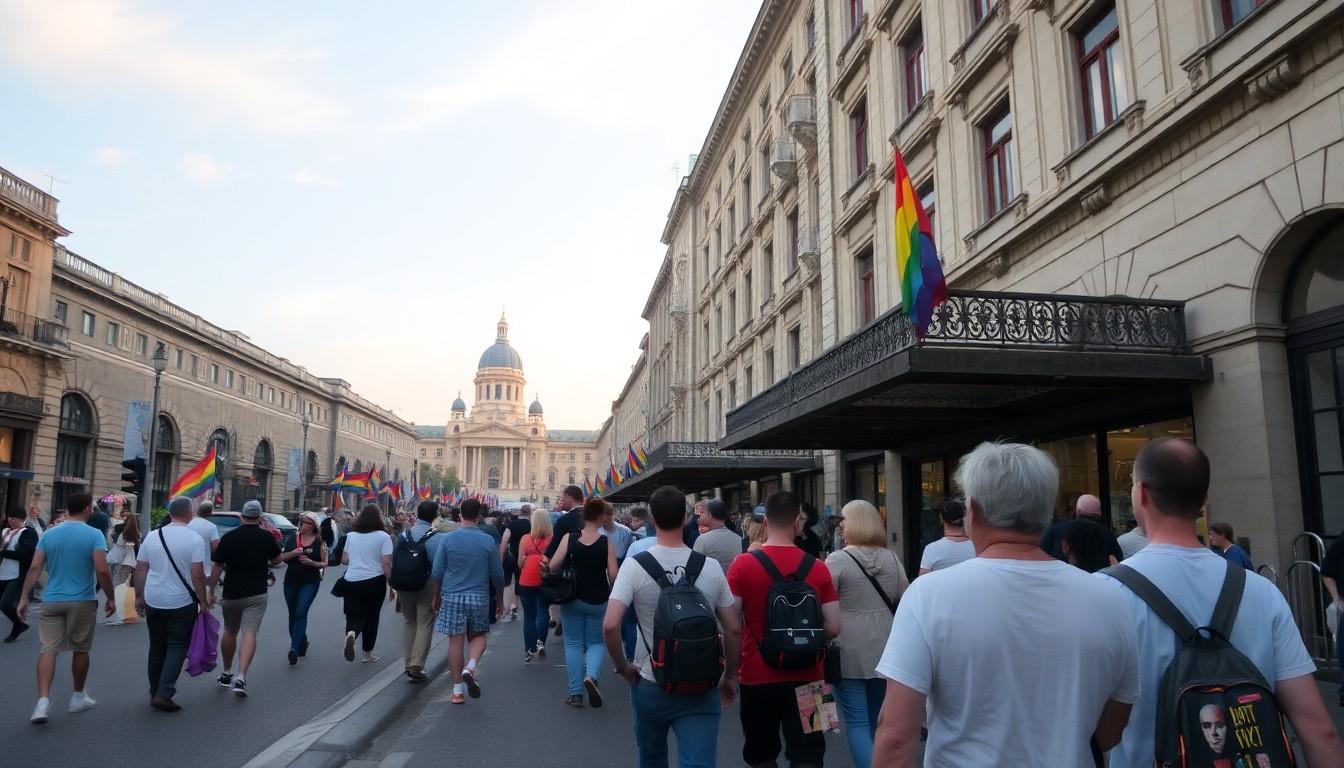
Shoppers and allies are paying attention as Pride organisers across Europe reveal the pressures behind the parades; a new EPOA report surveys 112 organisers to map trends in funding, safety and volunteer fatigue, and explains why this snapshot matters for LGBTQ+ advocacy and the future of Pride.
Essential Takeaways
- Big sample: The European Pride Organisers Association surveyed 112 Pride organisers across Europe, creating the first broad baseline for comparison.
- Volunteer backbone: More than half of Pride events are run entirely by volunteers, leaving organisers stretched and vulnerable.
- Safety concerns: Around 81% reported online hate, a quarter said they’d received death threats, and almost 14% experienced physical attacks.
- Funding gap: Less than half get financial or public support from government, though roughly 56% describe their government as friendly.
- Resilience: Despite hostility and funding cuts, participation can grow , Budapest’s record turnout shows defiance still draws crowds.
Why this report matters right now
The opening finding is stark and tactile: most Pride events are powered by volunteers, which explains the tired faces behind joyful parades. According to the European Pride Organisers Association, surveying 112 organisers gives us a first-ever continental snapshot of how Pride is run, financed and threatened. That baseline matters because without data, advocacy and policy responses tend to be reactive rather than strategic.
Journalists and policymakers will notice the emotional weight running through the numbers , organisers reporting burnout, death threats and online harassment , and that makes the report more than a management audit; it’s a safety check for a movement that’s still very public-facing.
Volunteers, burnout and why sustainability is fragile
The report finds volunteers are the lifeblood of Pride, yet that same reliance creates fragility. When committees are unpaid and stretched, continuity and institutional memory suffer; burnout isn’t just an HR problem, it risks the future of events that campaign for rights year after year. Practical advice here is obvious: diversify funding, professionalise core roles where possible, and build volunteer rotation to prevent attrition.
Organisers we’ve heard from say small operational grants or pooled insurance schemes could make a big difference. If local councils can’t fund everything, targeted support , for safeguarding, security or mental-health resources , would go a long way.
Threats are online and on the streets , the numbers that shock
The safety picture is grim: roughly four in five organisers report online hate, and a quarter say they’ve faced direct death threats or physical violence. Nearly half reported direct hate speech and about 14% experienced physical attacks. Those figures echo wider reporting on spikes in anti-LGBTQ activity during Pride seasons and beyond, and they turn abstract hostility into measurable risks for people on the ground.
That mix of online harassment and real-world danger changes how events are planned. Expect more risk assessments, closer liaison with police and emergency services, and a heavier focus on volunteer training for de-escalation and trauma response.
Funding and political context , friendly governments, mixed support
There’s a curious split in the data: 55.9% of organisers say their government is friendly and helpful, yet under half receive financial or public backing. That suggests political goodwill doesn’t always translate into cash or concrete support. In more hostile environments, organisers deal with explicit bans or subtle restrictions , and the report notes many restrictions are informal, which makes them hard to monitor or challenge.
For organisers choosing locations or planning scale, the practical takeaway is to map both formal policy and informal local signals. A friendly statement from a ministry won’t protect you from permitting delays or venue refusals.
Growth amid repression , why turnout still surprises
One of the more hopeful threads is resilience. Even after a statutory ban in Hungary, Budapest Pride attracted a record crowd of 200,000 people, showing how direct repression can galvanise participation rather than quiet it. That dynamic is important for activists and funders: when visibility is dangerous, it can also be energising and politically powerful.
Still, growth doesn’t erase the cost on organisers. More participants often mean more logistics and higher security bills, so increased turnout can amplify strain unless funding and planning keep pace.
What organisers and supporters can do now
If you want to help behind the scenes, practical options include volunteering with manageable shifts, donating to local Pride funds, or lobbying councils for focused grants for safeguarding and mental-health services. Event insurance and legal support funds are another area where pooled resources would help groups facing threats or bans.
For policymakers and funders, the report is a reminder that supportive statements are welcome but insufficient. Targeted, sustained funding and clearer protections for the right to assemble would stabilise many grassroots events.
It's a small change that can make every Pride safer and more sustainable.
Source Reference Map
Story idea inspired by: [1]
Sources by paragraph: