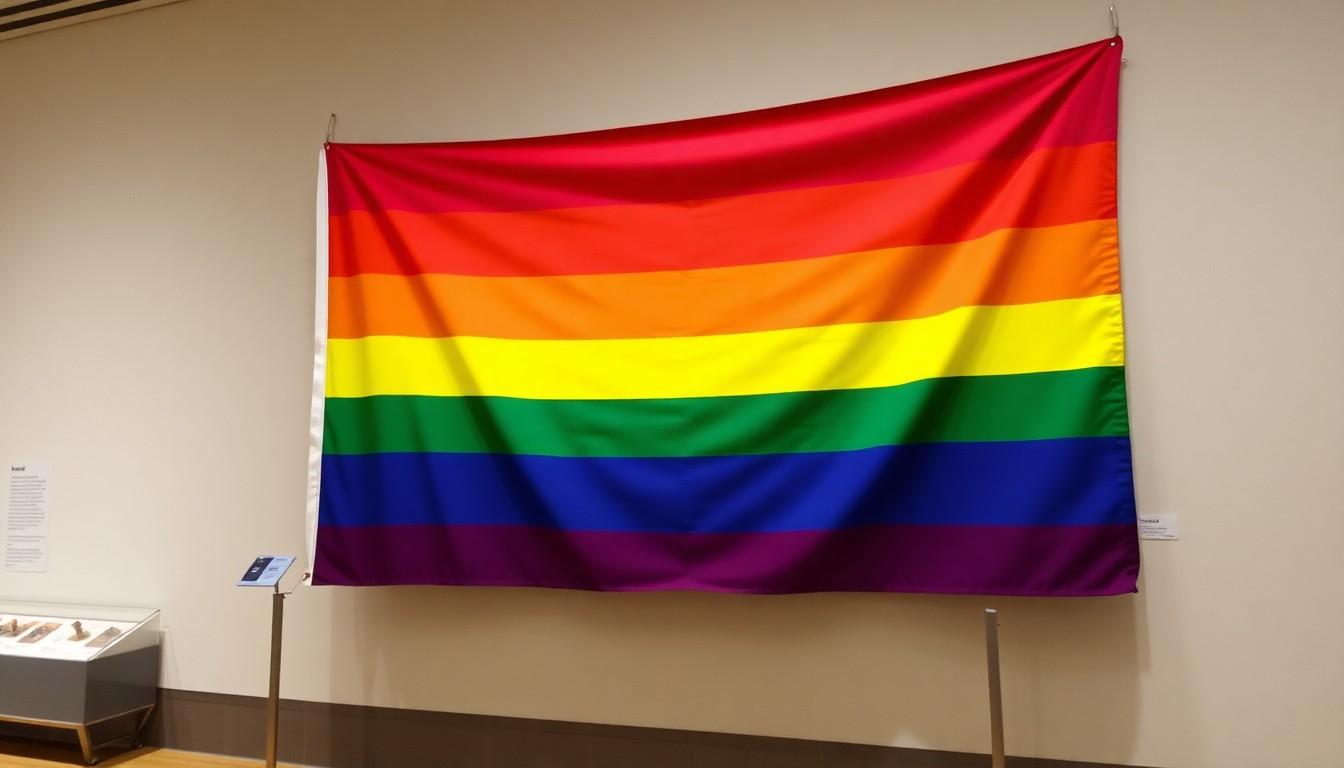
Buzzing with history, a surviving fragment of Gilbert Baker’s original eight-striped Pride flag is travelling from San Francisco to Cork this summer , the first time the artefact will leave the United States and a timely centrepiece for the Cork Public Museum’s new permanent LGBTQ+ display.
Essential Takeaways
- Historic fragment: A piece of one of the two 30' by 60' flags first flown in San Francisco in 1978 is on loan to Cork Public Museum for four months.
- First international loan: This is the first time the original Pride flag fragment will be exhibited outside the US.
- Symbolic timing: The arrival coincides with Cork’s inaugural permanent LGBTQ+ exhibition and linked community programming.
- Human touch: The first flags were hand-stitched and dyed by Gilbert Baker and a circle of volunteers, giving the fragment a tactile, handmade feel.
- Living legacy: The original eight-colour design inspired later versions, including the Progress Pride Flag, yet it still carries the emotional weight of early activism.
Why Cork is getting a piece of Pride history now
The striking fact is simple: a fragment of the very first Pride flag is coming to Cork for the first time outside the United States, and it arrives with a soft, storied history attached. According to the GLBT Historical Society, that cloth was part of the two giant flags raised in United Nations Plaza on 25 June 1978, and its journey to Cork marks a cultural milestone. For locals who see fabric as memory, the fragment will probably smell faintly of age and museum textiles, and feel like a direct link to the people who made it.
The move grew from an agreement between San Francisco’s GLBT Historical Society and Cork Public Museum earlier this year. Cork’s curator Dan Breen framed the loan as a way to anchor the museum’s first permanent LGBTQ+ exhibition, stressing that the display is part of collecting stories often left out of local histories. It’s a neat example of how objects travel to tell new, local stories once they leave their original context.
The story behind the stripes , who made the flag and why it mattered
Gilbert Baker designed the original eight-striped rainbow after activists, including then-City Supervisor Harvey Milk, asked for a symbol for Pride. The flag’s colours carried meanings such as sex, life and healing, and the first large flags were hand-stitched and dyed by Baker and more than two dozen friends and volunteers. That hands-on process gives the surviving fragment a particularly human backstory , it’s not a factory-made relic but something made in community.
Over time Baker adjusted the design for practical reasons, dropping hot pink and later teal when certain fabrics weren’t widely available for mass production. But even with those changes, the original colour logic still echoes today in many flags and adaptations. Museums like San Francisco’s have treated the piece as a stewardship responsibility, aiming to preserve its legacy while sharing it with communities abroad.
What the Cork exhibition will mean for the city and visitors
For Cork the arrival is both symbolic and practical: it anchors a permanent LGBTQ+ gallery at the public museum and offers a focal point for outreach and education. Lord Mayor Cllr. Fergal Dennehy, who took part in the signing ceremony in San Francisco, framed the loan as a catalyst for a “comprehensive programme of community engagement.” Expect school visits, talks and perhaps workshops that use the flag as a starting point for conversations about local LGBTQ+ histories.
If you’re planning to visit, this is one of those exhibits where the contextual material matters as much as the cloth itself. The fragment sparks broader questions about visibility and memory, and the museum’s programming will likely make that clear, showing how a single object can map international solidarity.
How the original flag influenced what we see today
The rainbow’s visual language has been reworked many times: from Baker’s eight stripes to the six-colour version most people recognise, and more recently to the Progress Pride Flag that adds chevrons for trans and marginalised communities of colour. Encyclopaedic accounts and museum notes link these shifts to both practical fabric choices and evolving political conversations, so the fragment in Cork will help visitors trace that visual evolution.
Seeing an original piece on display puts those changes in perspective. It’s one thing to scroll images online; it’s another to stand in front of cloth that helped rally a community. For collectors or anyone curious about design history, the exhibit is a small but vivid course in how symbols adapt.
Practical tips for visitors and communities
If you want to see the flag, check the Cork Public Museum’s schedule and any related events; community programmes often sell out. Museums usually control lighting and distance for fragile textiles, so you’ll get a close but protected view; bring a camera but expect restricted flash. And if you’re involved in local LGBTQ+ organising, consider using the visit as a springboard for your own storytelling projects , oral histories, school outreach, or community art that links Cork to wider histories.
The fragment’s visit is more than a loan: it’s an invitation to reflect on how global movements travel through local lives.
It's a small change with a big meaning , see the flag, and think about the people who stitched the story together.
Source Reference Map
Story idea inspired by: [1]
Sources by paragraph: