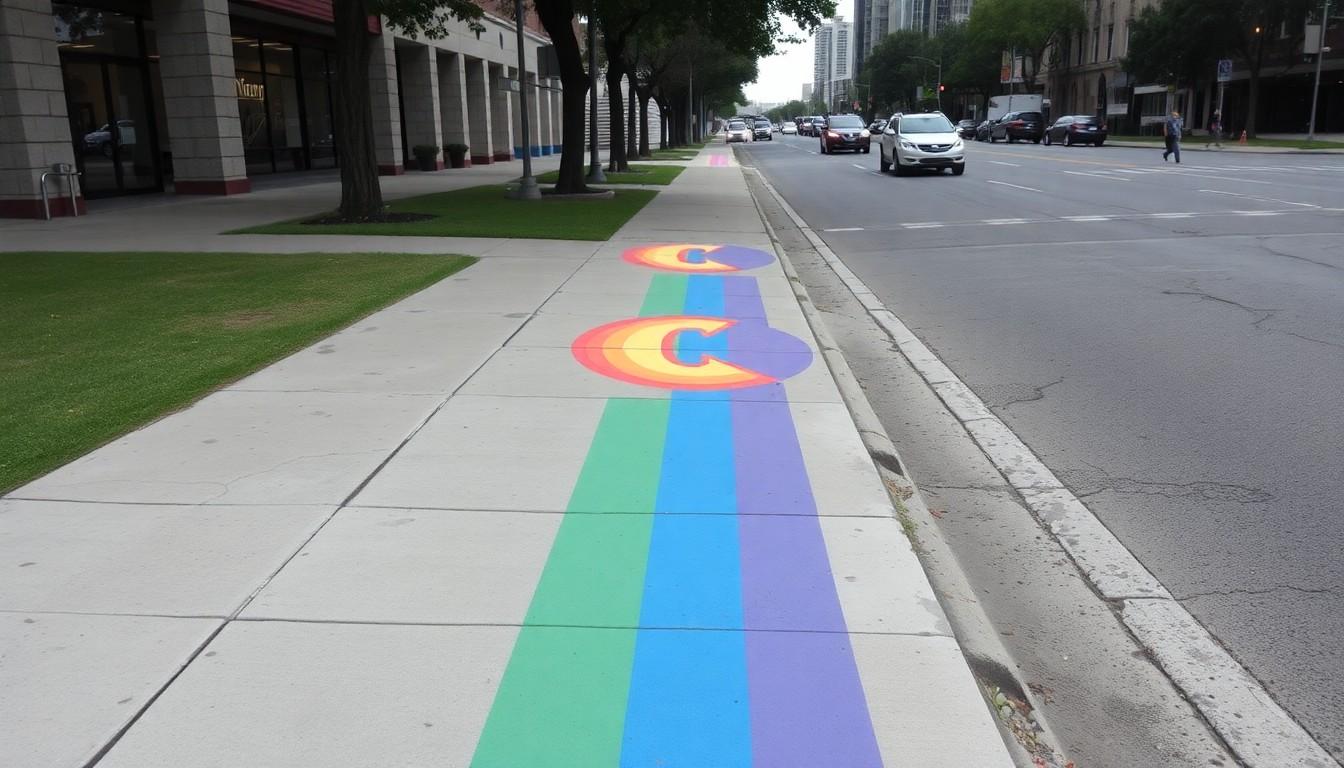
Shoppers, residents and activists are quietly reintroducing colour to American streets as states clamp down on rainbow crosswalks and flags; city councils, transit agencies and planners are finding creative workarounds , from painted sidewalks to official flag changes , that keep Pride visible where it matters most.
Essential Takeaways
- Local workaround: Cities can’t control state highways but they can repaint sidewalks, curb strips and other municipal assets to preserve public expression.
- Tangible installs: St. Petersburg installed multiple Pride-inspired bike racks and a mural, offering durable, low-maintenance visibility.
- Official flags as strategy: Salt Lake City and Boise made Pride displays official to dodge state bans on "unofficial" flags.
- Practical benefit: Painted sidewalks and street furniture are less likely to trigger state funding threats than crosswalks, while feeling bold and accessible.
- Community impact: These measures signal inclusion visibly and daily , they’re cheap, immediate and emotionally resonant.
Why cities are choosing colour over confrontation
When state officials threatened funding or ordered removals, many municipalities looked around and realised they still controlled a surprising amount of public space , benches, sidewalks, bike racks and murals. That means the struggle shifted from legal trench warfare to inventive placemaking. According to reporting in Planetizen, San Antonio’s gay city councillor chose the sidewalk, not the crosswalk, to keep rainbows in neighbourhoods. It’s a smart, sensory approach: a painted pavement feels immediate and welcoming, not like a political placard.
Beyond symbolism, the choice makes practical sense. Sidewalk paint or colourful street furniture lasts and cleans easily, and it’s cheaper than litigation. City officials and community groups are using these lower-risk, high-visibility projects to preserve daily reminders of inclusion without endangering infrastructure budgets.
St. Petersburg’s small, colourful interventions that add up
St. Petersburg took a quietly civic route: instead of fighting state edicts over painted crosswalks, the city funded and installed Pride-themed bike racks and a mural along a busy corridor. Local outlets and advocacy reporting noted 11 bike racks along Central Avenue and a larger mural project nearby. These metal racks have a sturdy feel and don’t smell like fresh paint after the first week, but they do give residents tangible, photo-ready symbols of welcome.
This kind of intervention is useful because it’s multipurpose: it serves cyclists, supports local commerce and doubles as a visible statement. For planners, the takeaway is clear , small capital projects funded through routine public-works or arts programs are an effective way to reclaim civic space.
When "official" becomes the workaround: flags in Boise and Salt Lake City
Faced with bans on unofficial flags, Boise and Salt Lake City took a different legal tack: they made Pride flags official municipal symbols. Boise added the traditional Pride flag to its roster of official flags, while Salt Lake City approved three variations tying the sego lily to Pride, trans and Juneteenth designs. That pivot demonstrates how municipal policy tools , proclamations, flag-adoption processes and city council votes , can blunt state-level restrictions.
From a planning perspective, formalising a symbol removes ambiguity for municipal staff and avoids the patchwork enforcement that can chill local expression. It’s also a reminder that policy design can be as creative as murals: a council vote can be louder than a protest.
How to choose the right visible interventions for your city
If you’re a local official or community organiser wondering what will work best, start small and think multifunctional. Painted sidewalks and curb extensions are good where pedestrian flows are high; bike racks and benches are ideal for commercial strips; murals and public art work where temporary installations would otherwise be vandalised. Consider maintenance regimes , weather and foot traffic matter , and pick durable paints and finishes.
Also, pair installations with modest outreach. A simple plaque, neighbourhood map or social post explaining the project’s purpose keeps residents informed and can head off complaints. And don’t underestimate partnerships: local businesses or arts groups can sponsor racks and murals, stretching tight city budgets.
What this means for the future of civic design
These acts of resistance show that urban design is political by nature, and that small-scale street changes can accumulate into a visible civic identity. According to planning coverage, the removal of crosswalk art sparked these makeshift solutions, but the result may be a more considered approach to how cities express values in everyday places. Expect more hybrid interventions that combine utility with symbolism , colourful seating, dedicated lanes with subtle rainbow trims, and officially sanctioned flags in municipal pockets.
Planners and residents alike are learning that the built environment doesn’t have to be neutral to be public; it can be inclusive, local and resilient. It’s also a good reminder that the next time someone tries to sweep colour away, a can of paint and a council vote can be surprisingly effective.
It’s a small change that makes every block feel a bit more like home.
Source Reference Map
Story idea inspired by: [1]
Sources by paragraph: