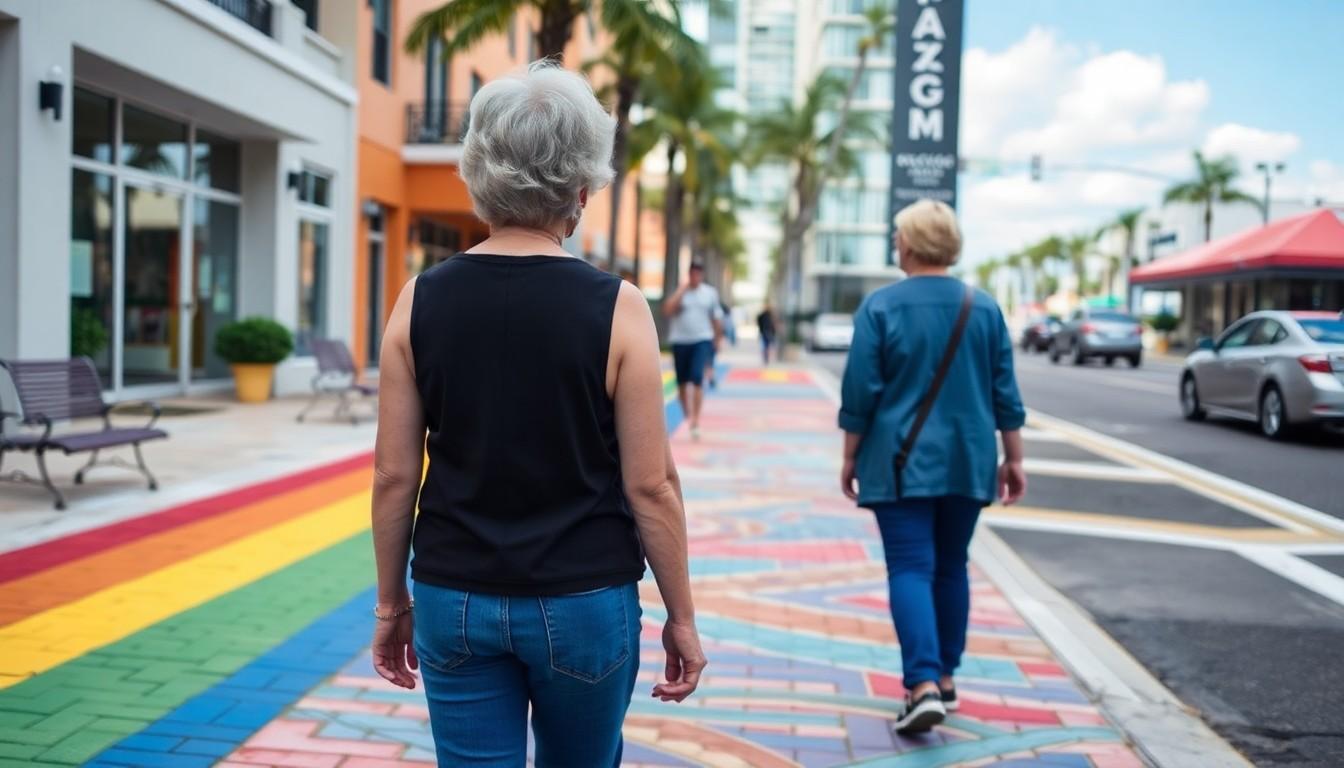
Shoppers and visitors are watching a pastel rebirth in Miami Beach, where city leaders rebuilt a rainbow tribute on the sidewalk after state crews ripped the crosswalk out of the street; the move keeps a cherished symbol in place, protects it from transportation rules, and spotlights why small public gestures still resonate.
Essential Takeaways
- What happened: Miami Beach recreated its removed rainbow crosswalk as a permanent sidewalk installation, using many of the original pastel bricks; it opened ahead of the city’s big Pride events.
- Why it mattered: The original crosswalk was removed under a state directive targeting street art with social or political messaging, sparking community protest and grief.
- Design detail: The new installation mirrors the original at Ocean Drive and 12th Street but uses rounded corners and reclaimed pavers for a more permanent look.
- Practical win: Being on the sidewalk keeps the tribute outside the state Department of Transportation’s jurisdiction, offering legal insulation.
- Feel of the place: The installation restores a visual, emotional gateway for locals and visitors, with a calm, pastel finish that reads as both historic and celebratory.
A jarring night, a big reaction
The demolition of the original pastel-brick crosswalk drew a crowd who filmed, cried, and protested as crews tore up the intersection late one evening. The scene felt raw and almost violent to residents who’d come to treat the colourful paving as part of Miami Beach’s civic fabric. According to local reporting and city accounts, the removal followed a state directive aimed at eliminating political or social messaging from roadways, and people who watched felt it was more than a traffic decision; it was a cultural erasure.
How Miami Beach turned grief into a plan
City leaders moved fast after the loss, deciding that preserving the bricks and the symbol mattered more than ever. Designers and commissioners debated options before choosing to relocate the tribute adjacent to the original spot, on the sidewalk at Ocean Drive and 12th Street. The plan had unanimous support at city hall and met the timing goals for Pride celebrations, underlining how local officials chose solidarity and speed over concession.
Design, history and a softer rainbow
The new installation keeps the pastel art deco aesthetic tied to Miami Beach’s restoration era, and designers reused many of the original pavers to keep continuity with the 2018 work. Freed from the functional constraints of a road crosswalk, the piece gained rounded corners and a slightly more sculptural feel, making it read as a gateway to the park and the beach. For locals, the reclaimed bricks are a tactile link to the city’s queer history and to the artists and activists who helped shape it.
Politics, safety claims, and the wider fight
State officials framed the removal as a neutral safety policy, but critics saw the directive as part of a broader anti-“woke” push that has targeted LGBTQ visibility across Florida. Observers noted the policy’s timing and scope fit a larger national agenda that has put cultural symbols in the crosshairs. City leaders chose the sidewalk location precisely because it lies beyond the Department of Transportation’s reach, a small but practical legal workaround against future removals.
Why this small victory still matters
Symbols anchor communities, and for Miami Beach the pastel rainbow was both an artwork and a public recognition of a long local queer history. Restoring the tribute was more than an aesthetic fix; it was an act of defiance and of memory-making. Locals say the new installation feels deliberate and permanent in a way the first did not, and that matters when higher-level politics keep shifting the rules around public expression.
It's a small change that helps keep a city’s welcome visible.
Source Reference Map
Story idea inspired by: [1]
Sources by paragraph: