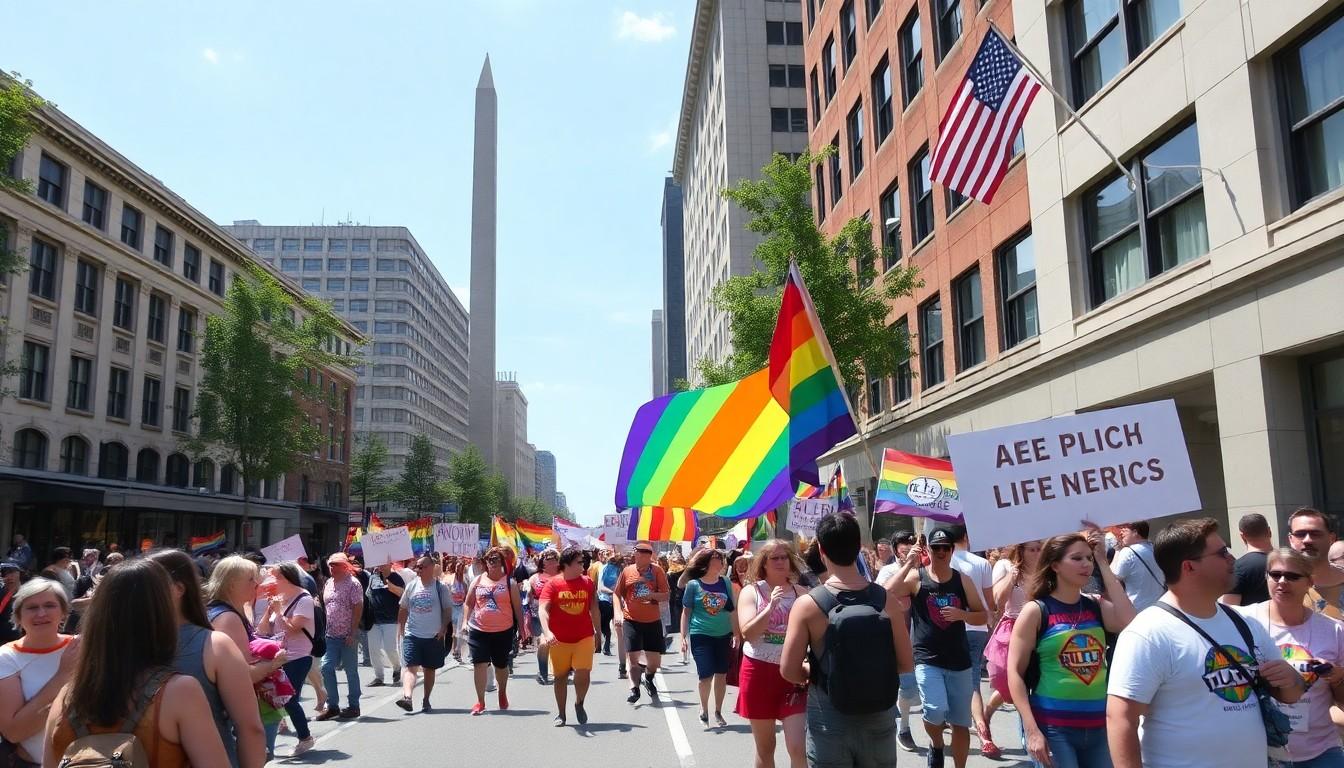
Bursting with colour and purpose, tens of thousands lined 14th Street in Washington, D.C., for the Capital Pride Parade , a reminder that visibility remains a powerful political and personal force as laws and public debate swirl. This celebration blends history, joy, and activism in a way that still matters for young people and service members alike.
Essential Takeaways
- Historic roots: Capital Pride traces back to a 1975 block party organised by bookstore owner Deacon Maccubbin, and the event has continued annually since.
- Big turnout: Tens of thousands turned out on 14th Street to watch marching bands, churches, community groups and political leaders.
- Visibility matters: Organisers and participants say Pride gives young LGBTQ+ people a chance to see they’re not alone, offering hope and connection.
- Diverse voices: From transgender service members to families with schoolchildren, the parade showcased a wide range of communities and causes.
- Political backdrop: With ongoing national debates over LGBTQ+ rights, Pride remains both a celebration and a public statement of solidarity.
A vivid tradition that started as a block party
The Capital Pride Parade still carries the same grassroots spark that lit it in 1975, when Deacon Maccubbin organised a block party outside Lambda Rising. That soft, neighbourhood beginning now looks enormous: the parade draws huge crowds and a soundtrack of brass bands and cheers. Wikipedia notes the event’s long arc from a single gathering to a major annual festival, and you can sense the continuity in the faces and banners along Pennsylvania Avenue. If you enjoy local history with your confetti, this is a living example of how small civic acts can become citywide traditions.
Why visibility is more than colourful outfits
Parade-goers and speakers kept returning to one simple line: seeing people like you matters. Organisers and activists told reporters that Pride gives young people permission to imagine different futures, and that emotional lift is tangible on the route. According to on-the-ground coverage, parents walked with children so they’d grow up used to diversity, while veterans in uniform marched to change narratives about service and belonging. Visibility is both celebratory and strategic , a way to humanise issues that otherwise get reduced to headlines.
From churches to policy: unexpected allies and local leaders
This year’s parade included more than floats and glitter; it also featured faith groups like the Washington National Cathedral and elected officials who have long attended Pride events. The presence of civic leaders underlines how the event has woven itself into D.C.’s public life. Longtime attendees reflect on decades of change, and their memories map the city’s political shifts. For anyone choosing which Pride events to attend, look for gatherings that combine celebration with community institutions , they tend to be both welcoming and substantive.
Service members marched for recognition and benefits
Groups representing transgender active-duty service members and veterans took to the route to draw attention to policy harms and lost benefits. Marchers spoke about the real consequences of recent military decisions and how public visibility can pressure lawmakers and the military to reassess exclusions. For advocates, marching is a public testimony: seeing uniformed people in Pride colours challenges assumptions and builds empathy. If you want to support service-member causes, donate to vetted advocacy groups, write to your representatives, or join visibility actions at parades.
Families, kids and the next generation of Pride
One striking scene was parents walking with elementary-age children, pointing out rainbows and explaining inclusion in simple terms. That kind of everyday exposure is exactly what many participants said they hoped for , a normalised view of diversity that makes growing up safer and happier for LGBTQ+ youth. For families who want to attend, aim for earlier parade slots and family-friendly sections; bring water, sun protection and a plan for crowded streets. These moments of joy and education are as much part of the parade’s purpose as protest or policy.
Closing line It’s a small change that can make every march, flag and conversation count , visible support still shifts the story.
Source Reference Map
Story idea inspired by: [1]
Sources by paragraph: