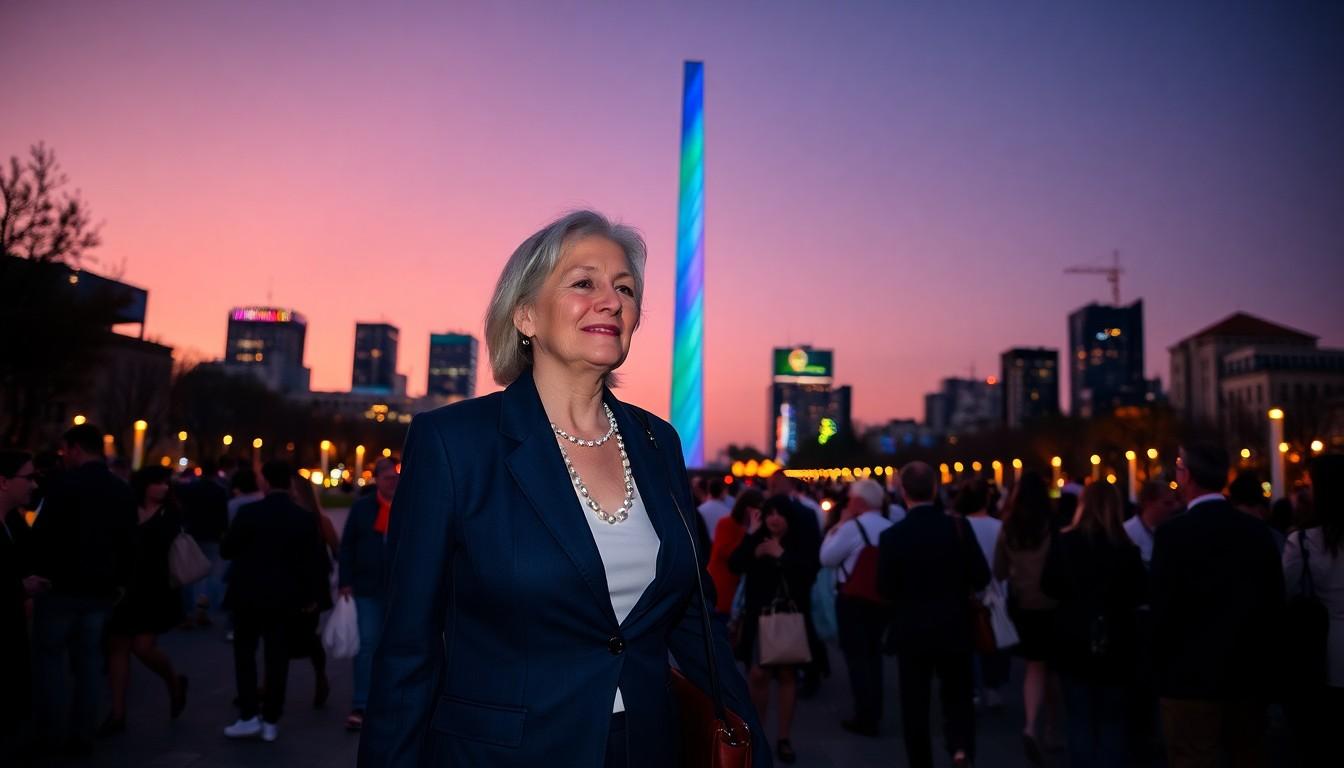
Catch the Global Rainbow in Mexico City this Pride: colourful, communal and free to view, the large-scale light work by Yvette Mattern will beam from the Monumento a la Revolución toward the Zócalo from 19–29 June, making it easy for locals and visitors to join in the celebrations.
Essential Takeaways
- Dates and times: The installation runs 19–29 June, lighting nightly between roughly 19:00 and 23:00.
- Location: Main launch at Monumento a la Revolución with beams extending toward Zócalo Centro Histórico, giving wide visibility.
- Artist and purpose: By Yvette Mattern, the Global Rainbow is a laser-based public artwork meant to celebrate and make visible LGBTQ+ diversity.
- Experience note: Expect dramatic, high-reaching coloured beams that read well from open plazas and elevated viewpoints; it’s best seen outdoors with minimal light pollution.
What the Global Rainbow looks and feels like in the city
Think dramatic bands of coloured light slicing the night sky , sleek, luminous and surprisingly emotive. Yvette Mattern’s Global Rainbow uses laser and projection technology to create long, arching stripes of colour that unite different city points visually. Audiences often describe the effect as hopeful and communal, a bright, shared moment against the urban skyline.
The work is scaled for open-air civic spaces, so it reads best from broad plazas, rooftops or elevated walkways. If you’re nearby, you’ll notice how the lights change the atmosphere: noisy traffic softens, people pause, and the city feels momentarily rearranged around a rainbow.
Where to stand for the best view in Mexico City
The launch point at Monumento a la Revolución gives you a strong frontal view, while the beams stretching toward the Zócalo create a corridor of colour that’s visible across surrounding neighbourhoods. For photos, choose a spot with a clear line of sight and limited foreground clutter , rooftops, park edges and pedestrian bridges all work well.
Arrive early if you want a prime spot, and bring layers; the evening can be cooler and you’ll be standing outside. If you prefer a quieter experience, pick a vantage a little away from the main congregation points and enjoy the sweep of light with a gentler crowd.
Why the project matters this Pride
Public light art like the Global Rainbow does more than dazzle , it amplifies visibility for LGBTQ+ communities in a form that’s accessible to everyone, regardless of whether you attend march events. It transforms shared civic space into a symbol of inclusion and celebration, and it connects cities around the world through a single visual idea.
Organisers and cultural authorities say installations like this help broaden Pride beyond parades: they invite passers-by, late commuters and families to recognise the month of celebration in everyday life. That symbolic reach is part of the artwork’s power.
Practical tips for families and first-time viewers
If you’re going with children, explain what the installation represents and plan a comfortable viewing window , short visits work well. Avoid bringing pets if they’re sensitive to bright lights or crowds. For photographers, use a tripod and longer exposures to capture the full sweep of colour; smartphone slo‑mo or night modes can work surprisingly well from steady positions.
Check local transport and crowd updates before you go. The installation spans central areas, so expect heavier foot traffic and plan your route home in advance.
Looking beyond Mexico City: a global conversation
The Global Rainbow is designed as a transnational artwork, staged in different cities to build a visual conversation about diversity. Each hosting city adds its own civic context and audience, which means the piece doesn’t just repeat , it resonates differently depending on where it’s sited. That global-local play makes the work feel both celebratory and timely.
If you can’t make it in person, many past presentations have been covered by local press and cultural platforms, and organisers sometimes share images and time-lapse footage online that capture the installation’s scale.
It's a small change to the skyline that helps make Pride visible across the city.
Source Reference Map
Story idea inspired by: [1]
Sources by paragraph: