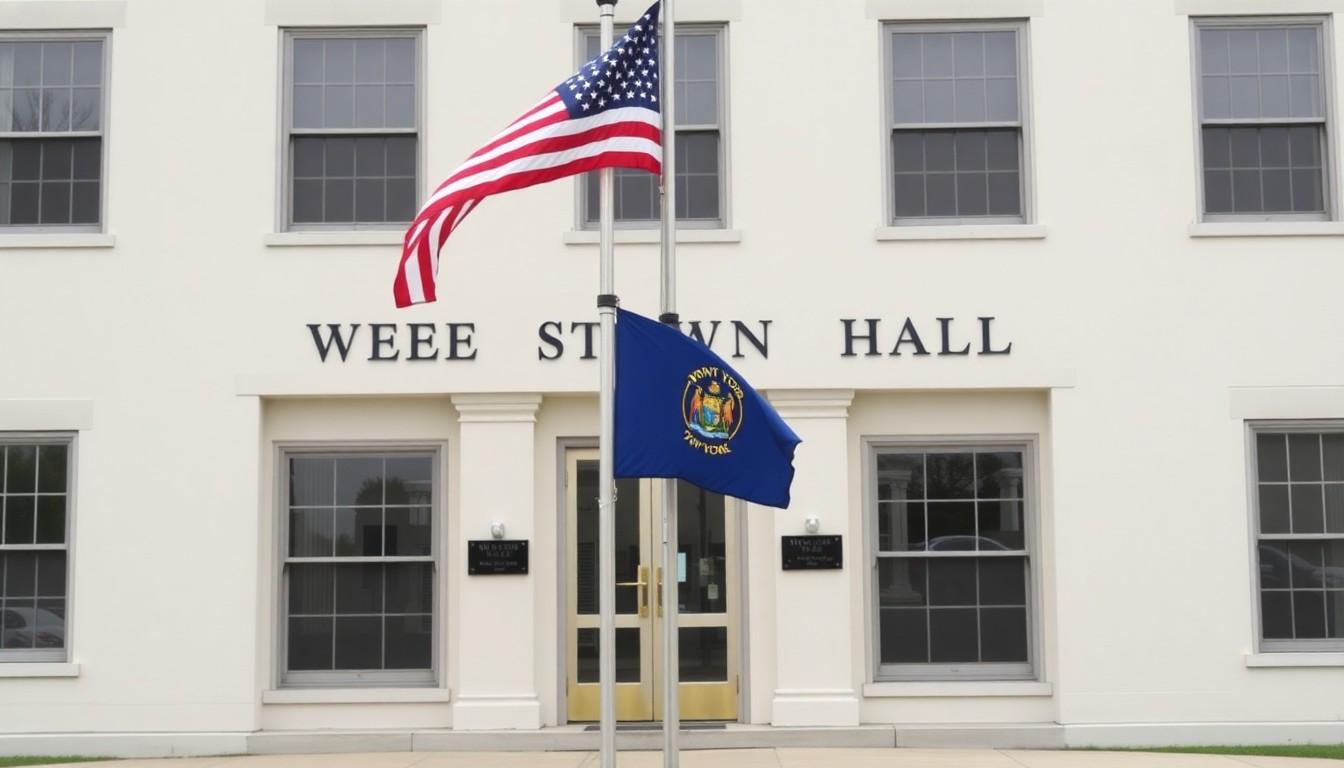
Watchers noticed a small town suddenly at the centre of a larger culture fight: Webster, New York, where a town board vote to remove the Pride flag from Town Hall touched off protests, flag-tampering and a debate about symbols, speech and community norms. Here’s what happened, why residents are talking about it, and what to watch next.
Essential Takeaways
- What changed: Webster’s town board adopted a new policy limiting flags on municipal property to the U.S. and New York state flags, and the Pride flag was taken down within days.
- Emotional response: Protesters gathered outside Town Hall, chanting and confronting officials; video of the scene circulated online and amplified tensions.
- Rule of the flagpole: An LGBT flag was later raised above the American flag on the Town Hall pole, prompting a U.S. Flag Code concern and a police inquiry that was reportedly closed.
- Political ripple: The decision and aftermath have entered local campaigns; an independent supervisor candidate framed his position in religious and cultural terms.
- Broader pattern: Similar disputes over Pride flags and library books have surfaced across the region, feeding a larger national conversation about visibility and schooling.
What actually happened at Webster Town Hall
A routine flag decision turned into headline news almost overnight, and the scene had a raw, noisy feel , people screaming, chanting and waving rainbow colours. According to local reporting, the town supervisor initially raised a Pride flag at Town Hall to mark Pride Month, and soon after the newly elected GOP-majority board adopted a policy restricting flags to the American and New York state banners. The Pride flag was removed within days, and protesters descended on the lawn. The dispute is small in scale but vivid in emotion, and it shows how symbolic gestures can mobilise residents quickly.
Why the flag mattered more than it might seem
Flags are shorthand for values, and in Webster the Pride flag acted as a visual signal that prompted strong reactions on both sides. Supporters saw recognition and safety; opponents framed the display as political or inconsistent with town policy. That tension is familiar: municipalities often wrestle with whether to allow specialty flags on public property, and decisions get judged as either inclusive gestures or partisan acts. For locals, the immediate impact is social , neighbours arguing, meetings becoming battlegrounds , and it can shape voter sentiment ahead of municipal elections.
The flagpole episode and the U.S. Flag Code question
Things escalated when someone later raised a Pride flag higher on the pole than the American flag, a move that runs counter to traditional flag etiquette and drew swift public comment from the town supervisor. The police opened an investigation into the unauthorised tampering, which local sources later said had been closed without publicly disclosed outcomes. Whether as protest or provocation, putting a second flag above the American flag lit another fuse in a story that was already emotionally charged.
Politics, campaigns and the local culture war
This row isn’t happening in a vacuum. Candidates and activists have used the episode to make broader points about culture, faith and local control. An independent candidate for town supervisor framed his stance around Christian beliefs and community values, saying he wants reconciliation but also pledging to stand for principles he finds important. That mix of faith language and municipal policy is common in local races, and when symbolic issues are on the table they can become headline-grabbing campaign themes.
How this fits into a larger pattern in the region
Neighbouring districts have seen similar skirmishes: last year in Penfield, parents protested an elementary school book display about a Pride parade that some said included inappropriate imagery for young children, prompting a walkout by school board members and national attention. Across the state and country, disputes over Pride flags, school libraries and curriculum reflect a broader debate about visibility, age-appropriateness and community standards. These incidents often feed each other: what starts as a town policy change becomes part of a national narrative about rights, education and public space.
Practical takeaways for residents and officials
If you live in a town facing this kind of debate, a few simple steps can help cool things down. Towns can adopt clear, transparent flag policies with community input so decisions don’t appear arbitrary. Officials should communicate the reasoning behind changes and offer forums for civil discussion. Protest organisers on either side benefit from clear ground rules to keep events peaceful. And for voters, these episodes are a reminder to look beyond soundbites and ask candidates how they’ll manage conflict in office.
It's a small policy decision with outsized feelings attached , one worth watching if you care about how communities negotiate identity, respect and public space.
Source Reference Map
Story idea inspired by: [1]
Sources by paragraph: