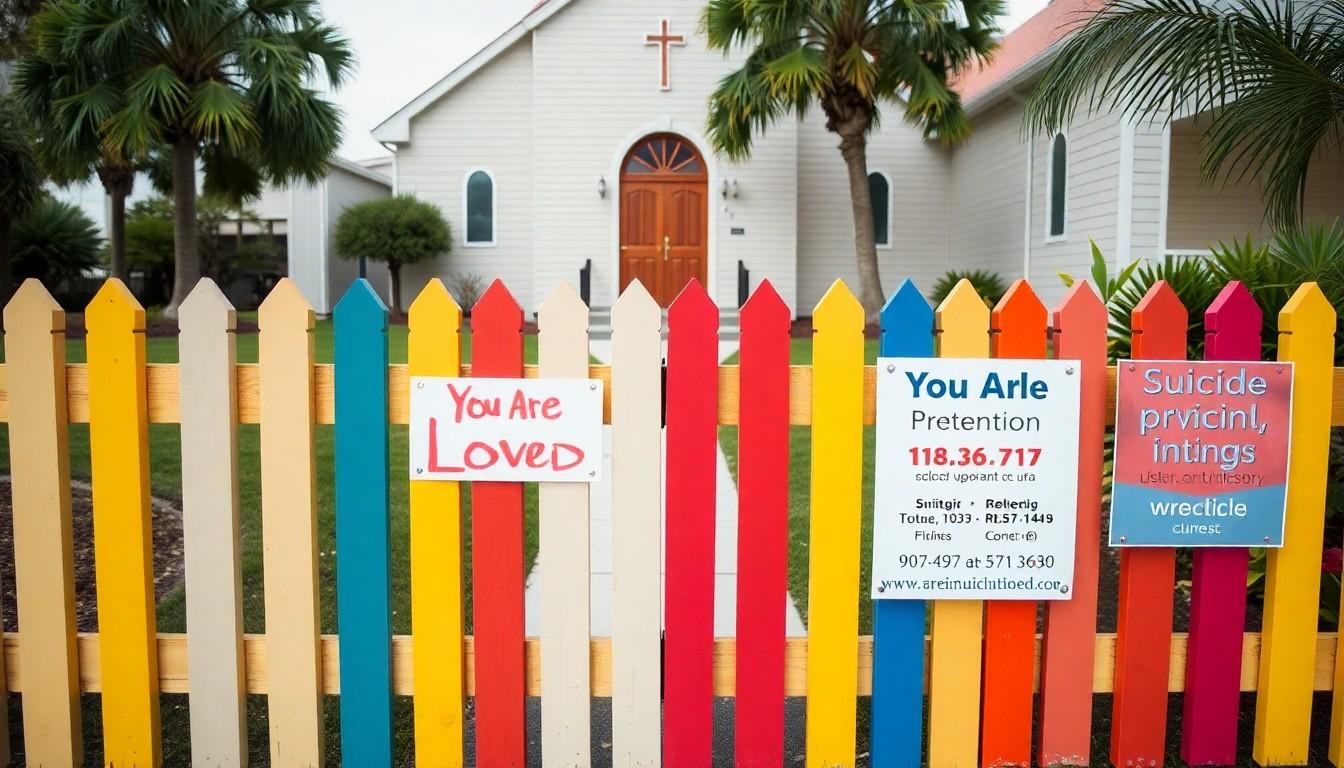
Shoppers and residents are noticing a splash of colour at Coral Isles Church , a new art piece made from a locally painted white picket fence that’s meant to say, plainly and boldly, you belong. It’s a small, visible act of solidarity in the Upper Keys and a gentle invitation to anyone seeking an affirming faith space.
Essential Takeaways
- Visible message: A refurbished picket-fence art piece at Coral Isles Church reads “You Are Loved,” serving as an open sign of welcome for LGBTQIA+ people.
- Local roots: The pickets were reclaimed from artist Amy Collier’s own fence, painted after Key West’s rainbow crosswalk was painted over, giving the piece personal, neighbourhood scale.
- Practical help included: Two signs include suicide prevention hotlines, reflecting the church’s intent to offer tangible support.
- Community event: Coral Isles Church will hold a Pride service on 21 June at 10am, where the congregation will review its open-and-affirming covenant.
- Warm reception: The piece doubles as both art and outreach , a quiet but sturdy statement that faith and queerness can coexist.
A splash of paint that says something real
The first thing you notice is the colour , cheerful, hand-sprayed pickets lined up like a little parade. It’s an emotive, neighbourhood-scale gesture that reads as both art and welcome. The pickets came from artist Amy Collier’s own fence after she repainted a section in rainbow hues once the rainbow crosswalk in Key West was covered over, and the result now greets anyone at Coral Isles Church with the words “You Are Loved.”
This wasn’t a corporate campaign but a neighbourly protest-turned-promise. Collier told local reporters she painted the fence out of sadness at the painted-over crosswalk and a conviction that symbols of hope matter. The pieces were literally falling off her fence, so turning them into a public, communal statement felt both practical and poignant.
Why reclaiming fence pickets matters
There’s a pleasing thriftiness to the story , damaged pickets become an exhibit of welcome , but it’s also symbolic. Collier has framed the reuse as a moral choice: those who have more share with those in need. The material origin of the art makes the message feel authentic and rooted in the Upper Keys community rather than imposed from outside.
Beyond the symbolism, this is also visible pastorally. The art includes two signs , one declaring love, another listing suicide-prevention hotlines , a reminder that support isn’t just rhetorical. For people struggling with faith and identity, small, clear signs like these can make an outsized difference.
Churches and Pride: a growing, complicated conversation
Coral Isles Church’s decision to display the fence and host a Pride service on 21 June places it among a minority of religious spaces that explicitly welcome LGBTQIA+ people into full life and ministry. While many denominations and congregations still wrestle with inclusion, a growing number are making public commitments and covenant statements to be affirming.
The church plans to review its open-and-affirming covenant during the Pride service, which is both a celebration and a practical reaffirmation. For visitors wondering what to expect, services are held Sunday mornings at 10am followed by lunch , an inviting, low-barrier way to join in. The church even mentions that pets are welcome, which says something about the casual, community-focused vibe.
How a small gesture can have big effects
There’s a broader lesson in how neighbourhood gestures ripple out: a painted picket, a public sign, a timed service. According to advocates and those with lived experience, visible affirmations in familiar places , shops, churches, streets , can reduce isolation and even be lifesaving when they direct people to crisis resources.
If you’re thinking of supporting a local affirming space, practical moves matter. Attend a service, bring a friend, share information about the Pride event, or volunteer. Even small actions help normalise welcome in places where it’s not always expected.
What to expect at the Pride service
The Pride service on 21 June will be a public celebration of the church’s commitment to welcome people of all sexual orientations, gender identities and expressions. Expect a casual morning worship, conversation about the covenant, and a shared lunch , church members have said they want the event to be inclusive and unthreatening.
For anyone nervous about attending, the visual message on the fence and the inclusion of support hotlines make the church’s stance clear before you even step through the gate. It’s an invitation as much as an announcement.
It's a small change that can make every visitor feel safer, seen and welcome.
Source Reference Map
Story idea inspired by: [1]
Sources by paragraph: