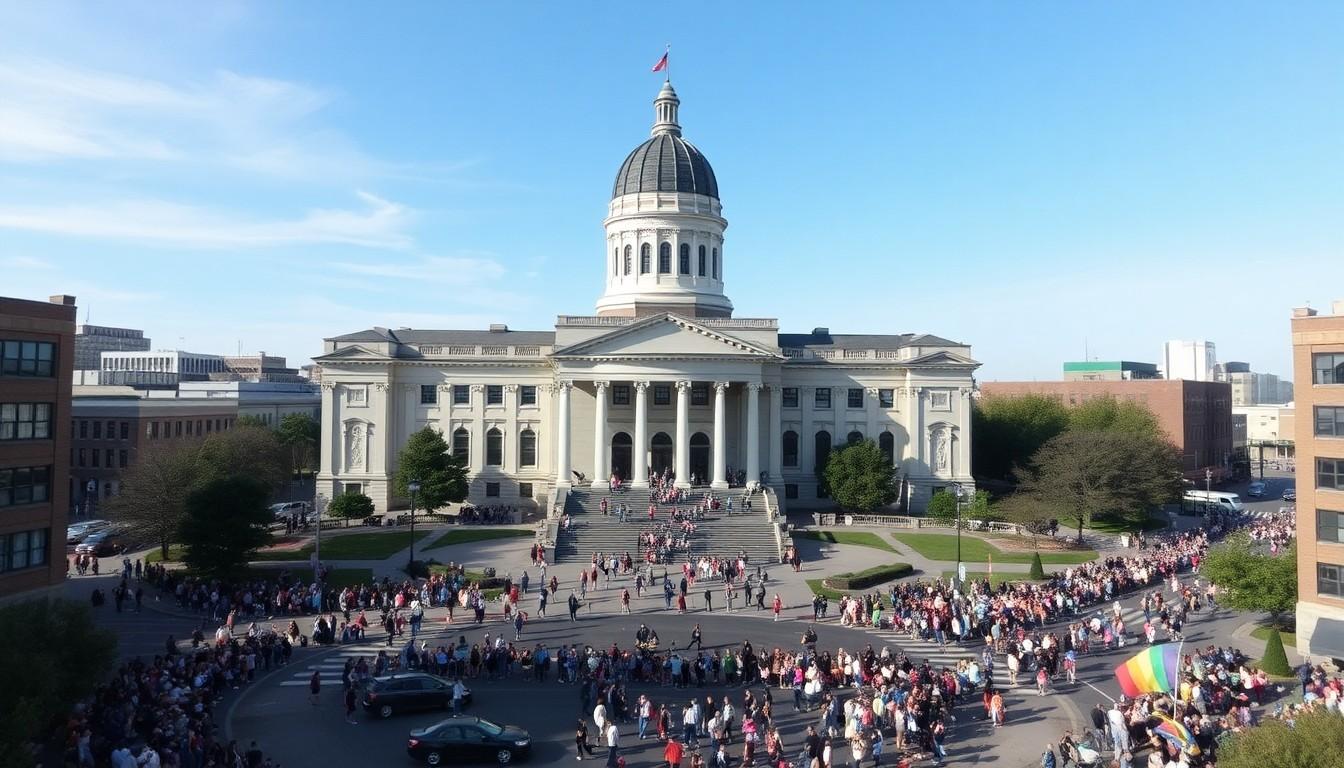
Shoppers, families and community groups poured into downtown Salem on Saturday, turning a sweltering afternoon into a colourful celebration , the Pride parade and block party drew thousands, showcased local talent, and gave the city a vivid reminder of visibility and joy.
- Huge turnout: Thousands attended the parade and block party, even as temperatures climbed into the low 90s, with crowds lining State Street near the Oregon State Capitol.
- Lively programming: Drag performers, local bands and community groups provided continuous entertainment; volunteers offered crafts, activities and a sign-language interpreter.
- Family-friendly vibe: Kids and adults tried circus trapeze demos, made pride wands at community booths, and used umbrellas and folding fans for shade.
- Local groups on show: Roller derby teams, flag performers and community organisations marched and staffed booths, creating a neighbourhood feel.
- Practical scene: Street closures and event guides helped direct traffic and keep the celebration focused downtown.
A surge of colour and heat , the opening scene
The parade began by the Oregon State Capitol and flowed down State Street, a bright, noisy procession against a backdrop of classical stone and summer sky. Photographs show crowds waving flags and using handheld fans and umbrellas for shade, giving the day a tactile, almost humid feel. Salem Reporter captured the packed sidewalks and the energy of people cheering marchers as they processed toward the block party.
Organisers had warned about the forecast, but the turnout speaks to how many locals treat Pride as a civic moment. According to Salem Capital Pride’s event page, the parade and block party are intentionally centred downtown to maximise visibility and accessibility. For visitors, the combination of civic backdrop and grassroots spirit made the scene both celebratory and rooted.
Entertainment that kept the crowd moving
Drag performers and local musicians rotated through stages and street corners, keeping a steady hum of performance throughout the afternoon. Acts such as Rivers Larson , billed as PGO , and groups like Miss Smith’s Queertet brought vocal and theatrical energy, while smaller booths offered crafts and quieter participation.
The event’s programming felt deliberately mixed: loud, flashy performances for the main crowd, alongside hands-on activities like circus demos and pride-wand making for families. That mix is exactly the trend you see in modern local Pride events, where visibility and accessibility work together to broaden who feels welcome.
Community booths, accessibility and family-friendly fun
Volunteers from PFLAG and other community groups staffed booths where attendees could make wands, ask questions, and connect with local services. An interpreter translating entertainment signalled conscious accessibility, and circus groups from local centres offered safe, supervised tries at trapeze and tricks.
If you’re planning to attend next time, bring a refillable water bottle, a hat and a small folding fan , those little comforts made a big difference on a hot day. Also, check community pages for early schedules so you can catch quieter activities before the crowds peak.
Logistics: how the city kept things moving
City planners and event organisers coordinated street closures to keep parade routes clear and to focus the block party in the heart of downtown. Local coverage and event listings flagged which streets would be affected and suggested alternate routes, an important heads-up for anyone driving or relying on public transport.
Those closures are a double-edged sword: they concentrate foot traffic, which helps vendors and performers, but they also mean planning ahead for parking and drop-offs. For drivers, arriving early or parking a short walk away kept the experience stress-free.
Why this mattered, beyond the spectacle
Beyond the sequins and speakers, the parade and block party were a visible statement about community presence and civic belonging in Salem. Local organisations, performers and families stood together in a setting framed by the State Capitol , a symbolic backdrop for a day about rights and recognition.
Events like this also show how Pride in smaller cities is evolving: less exclusively a parade and more a multi-generational festival with outreach, accessibility and civic engagement baked in. It’s a reminder that visibility is both celebratory and practical.
It's a small change that can make every Pride celebration safer, more welcoming and more fun for everyone.
Source Reference Map
Story idea inspired by: [1]
Sources by paragraph: