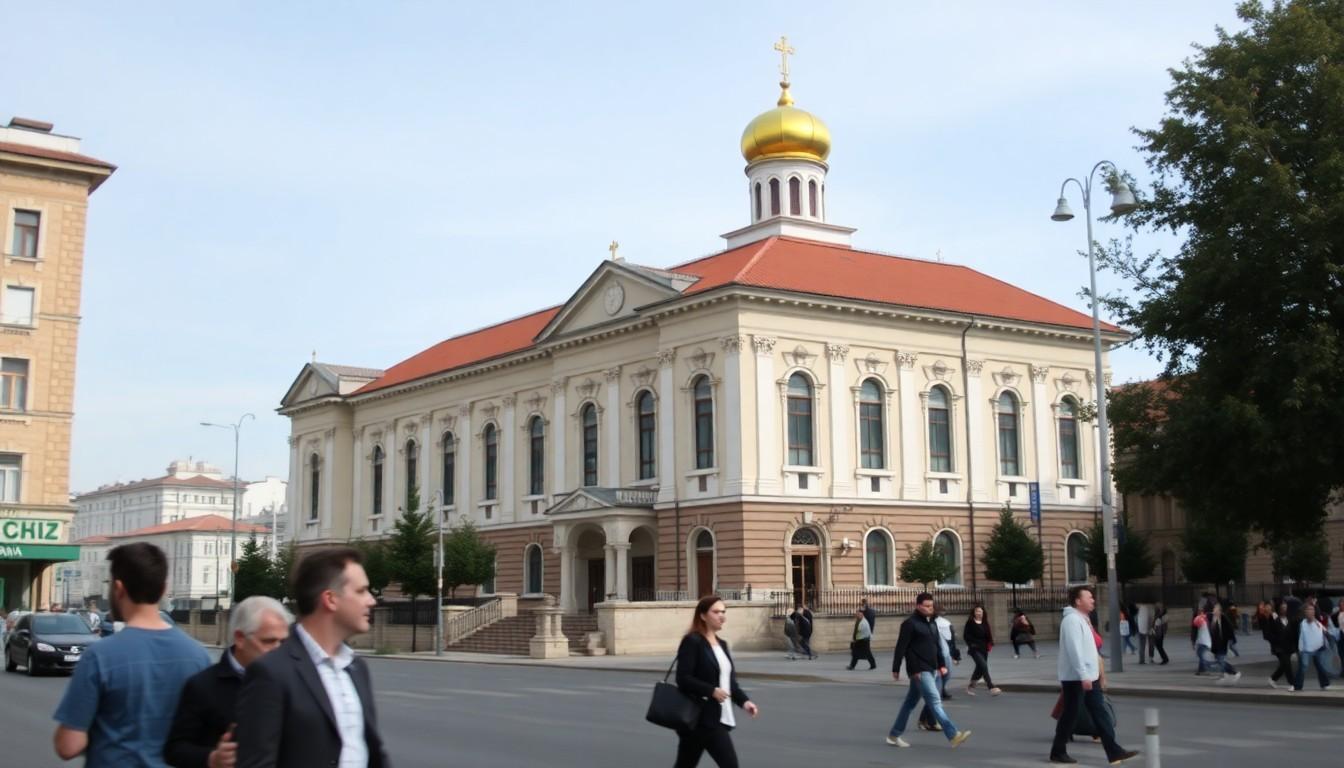
Shoppers and passers-by noticed a rare public intervention this week as the Orthodox Churches in Bulgaria and Romania stepped into debates over Pride events; church leaders led marches and issued statements in Sofia and Bucharest, arguing for traditional family values and urging peaceful, prayerful responses.
Essential Takeaways
- Public action: The Bulgarian Patriarch led a visible March for the Family in Sofia with a vespers service beforehand, attracting supporters of traditional family values.
- Official stance: The Bulgarian Holy Synod and the Romanian Patriarchate formally opposed Pride parades, saying such events clash with Christian teaching and risk influencing youth.
- Tone urged: Both churches called for peaceful, respectful conduct, rejecting offensive speech and violence while reiterating doctrinal positions.
- Family focus: Statements emphasised marriage between a man and a woman as the foundation of family, and urged parents and institutions to guard children’s moral formation.
- Cultural timing: Bulgaria framed its action around the feast of All Bulgarian Saints, giving the protest a liturgical as well as political feel.
Church leaders took to the streets , what happened in Sofia
Patriarch Daniil led Vespers at St. Nedelya Church before stepping out into Sofia’s boulevards for a March for the Family that ended at Alexander Nevsky Square with a concert and speeches. The scene felt deliberate and ceremonial, a mix of incense, hymn-singing and a crowd wearing the neat, earnest expression of a public demonstration of belief. According to local reporting, the event drew those who prefer to see family policy framed through tradition rather than the language of Pride activism. For many attendees it was both a spiritual act and a civic statement; for observers, it made a church position unmistakably visible in public life.
What the synods said , doctrine meets civic debate
The Bulgarian Holy Synod issued a formal statement opposing Sofia Pride, arguing that messages presented at Pride are incompatible with what it called the divine order for human life. The Romanian Patriarchate issued a similar warning in Bucharest, tying its concerns to wider social issues such as demographic decline and social instability. Both institutions set out a clear doctrinal line, that family is founded on a man-woman marriage, while also trying to frame their opposition as principled, not personal. The language mixes moral teaching with public-policy implications, signalling that these churches see cultural events as matters of national importance.
Peaceful posture, firm message , the churches’ balancing act
Despite the firmness of their rejection, both churches explicitly cautioned the faithful against violence or demeaning speech, urging behaviour “illuminated by peace, prayer and respect for the dignity of each person.” That choice of words is notable: it aims to prevent clashes and to keep the moral argument in a spiritual register. Still, insisting that certain inclinations mustn’t be normalised carries social weight, particularly when institutions with broad followings step into debates over rights and visibility. Expect continued emphasis on pastoral care alongside public statements.
Why youth and children were central to the argument
A recurring worry in the synodal statements was the exposure of children and young people to messages the churches call morally incompatible with Christian teaching. The Bulgarian Synod framed the moment as one to “watch over the spiritual and moral growth of their children,” reflecting a broader cultural anxiety about education, identity formation and social media influences. From a practical standpoint, this line of argument is aimed at parents and policymakers: control what’s taught or presented to young people and you influence future social norms. For families deciding how to discuss these topics, the takeaway is to approach conversations calmly and age-appropriately.
Where this fits into wider trends in the region
Across Eastern Europe, religious institutions remain influential in public life and often mobilise around cultural issues, from marriage laws to education policy. The events in Sofia and Bucharest echo past moments when churches tried to shape legislation or public sentiment on family and sexual ethics. As demographic concerns and questions about social cohesion are highlighted by church leaders, expect more coordinated statements and parish-level activities. For people watching the scene, it’s a reminder that cultural debates here are as much about identity and continuity as they are about policy.
It's a small change that can make every civic conversation more attentive to how faith, family and public life intersect.
Source Reference Map
Story idea inspired by: [1]
Sources by paragraph: