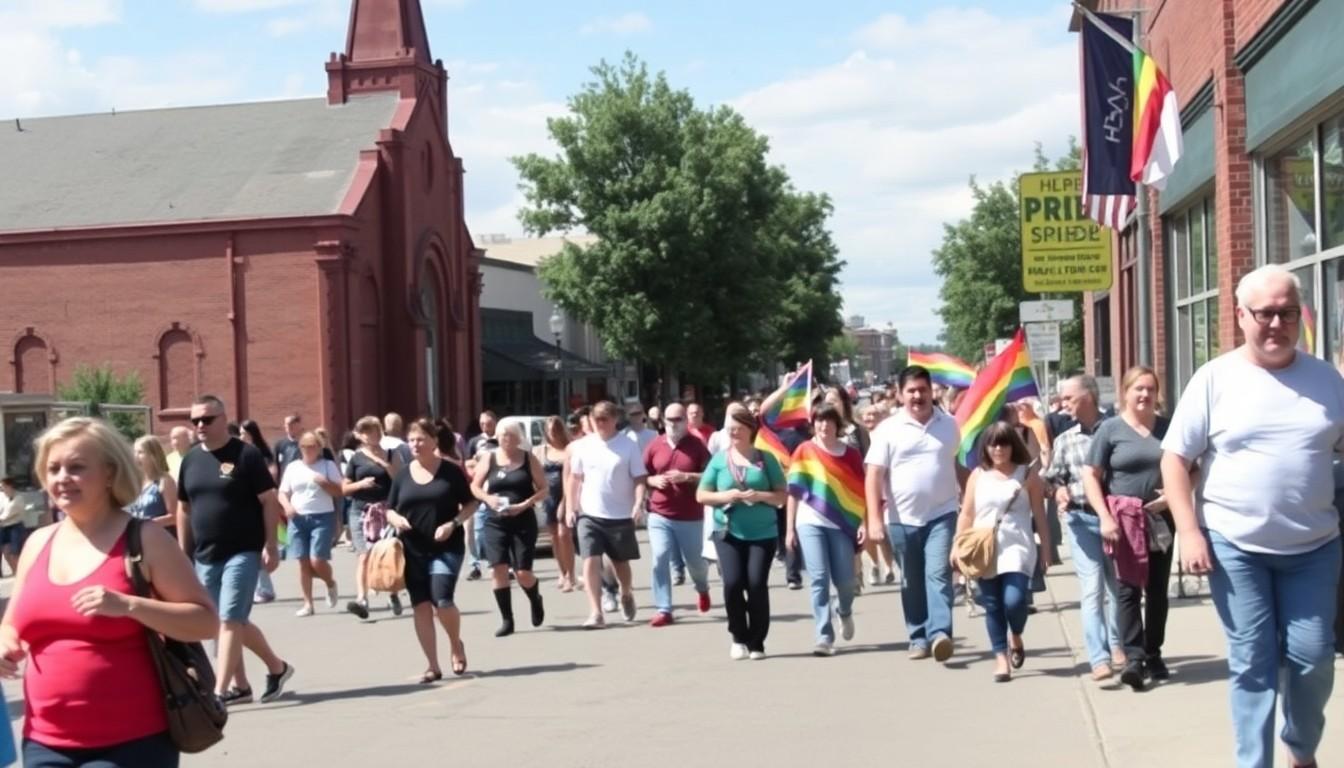
Shoppers, churchgoers and families turned out as Winkler hosted its first official Pride, blending faith, protest and community on a sunny June day , and showing why local acceptance matters for queer and trans residents in small-town Manitoba.
- Big turnout: Several hundred people attended the afternoon Pride march and park celebration, creating a lively, inclusive atmosphere with flags, music and speeches.
- Religious presence: A packed “Rainbow Church” service at Covenant Mennonite Church opened the day, with prayers and communion symbols given in rainbow spirit , warm, solemn and defiant.
- Personal stories: Speakers shared moving, candid accounts , from aroace identity to a trans man’s journey , prompting cheers, tears and visible support.
- Tensions showed: A small group of protesters from local churches voiced objections during the march; marchers responded by blocking signs and draping banners.
- Community meaning: For many, the event marked a turning point , a public claim that “Pride belongs in the Pembina Valley,” and a sign that change can happen in traditionally conservative towns.
A church packed for an unusual Sunday morning
The day began with an intimate, sensory moment: a sanctuary full of people, the soft rustle of rainbow scarves and the quiet of a prayer for queer youth. According to local reporting, Covenant Mennonite Church held what organisers called a “Rainbow Church” service that filled every seat, and people stood at the back. That image feels striking , a familiar steeple hosting an unfamiliar, affirming ritual.
The service’s leaders explained the bread and tiny cups as symbols of community and God’s love for people of all genders and orientations. It’s a reminder that faith isn’t a single story in Winkler; some congregations are opening space for queer people rather than closing it off. For residents wondering whether faith and LGBTQ+ inclusion can coexist, this morning offered a hopeful, tactile answer.
Speeches that made people cheer and cry
Speakers on the park stage brought the human stakes into sharp focus. A young woman describing life after coming out as aroace said she felt her heart “fuller” , and the crowd cheered through her tears. Later, a trans man spoke about decades of trying to be “perfect” in a church culture that didn’t accept him; his declaration of authenticity drew sustained applause.
These moments illustrate why visibility matters in a town where most people identify as Christian and many local churches teach traditional views on sexuality. Sharing personal stories in public parks changes the tone: it moves debates from theology to lived experience, where empathy is harder to dismiss.
Protest, confrontation and a town’s conversation
No small-town Pride would be complete without pushback, and Winkler had its share. Marchers encountered a small group of protesters from nearby congregations holding signs about gender and marriage. According to coverage, one protester shouted “Love the sinner; hate the sin,” while a marcher answered, “Love the believer, hate the belief.”
What stood out was how marchers handled confrontation: people obscured dissenting signs with large rainbow banners, walked around calmly, sang, and kept the procession moving. That interaction captures a community-level negotiation , not a resolution, but a civility that keeps conversation possible.
Why organisers brought Pride to Winkler now
Pembina Valley Pride’s leadership decided to host the festival in Winkler after surveys showed residents wanted it, even though organisers had previously hesitated because of expected opposition. The turnout suggests the decision was the right one; community appetite for local visibility is clear. Organisers framed the day as belonging to everyone in the Pembina Valley , a broad, inclusive claim that matters in towns where neighbours still see each other in church basements and at the market.
For anyone thinking of setting up a similar event, the lesson is simple: local demand, careful planning and partnerships with supportive faith leaders can tip the balance. Visibility grows where people already want to be seen.
What this means going forward
Winkler’s first Pride is both milestone and beginning. It didn’t erase disagreement, nor did it pretend to solve long-standing divisions, but it made a different future imaginable , one where queerness is part of the communal fabric rather than an outside controversy. Expect more local conversations, cautious outreach from churches and, likely, more events next year as people measure what worked and what didn’t.
If you live in a small town considering a Pride or an inclusive faith event, start with relationships: survey interest, find supportive leaders and plan for respectful, visible ways to respond to opposition. It’s a small change that can make daily life safer and more honest for queer neighbours.
Source Reference Map
Story idea inspired by: [1]
Sources by paragraph: