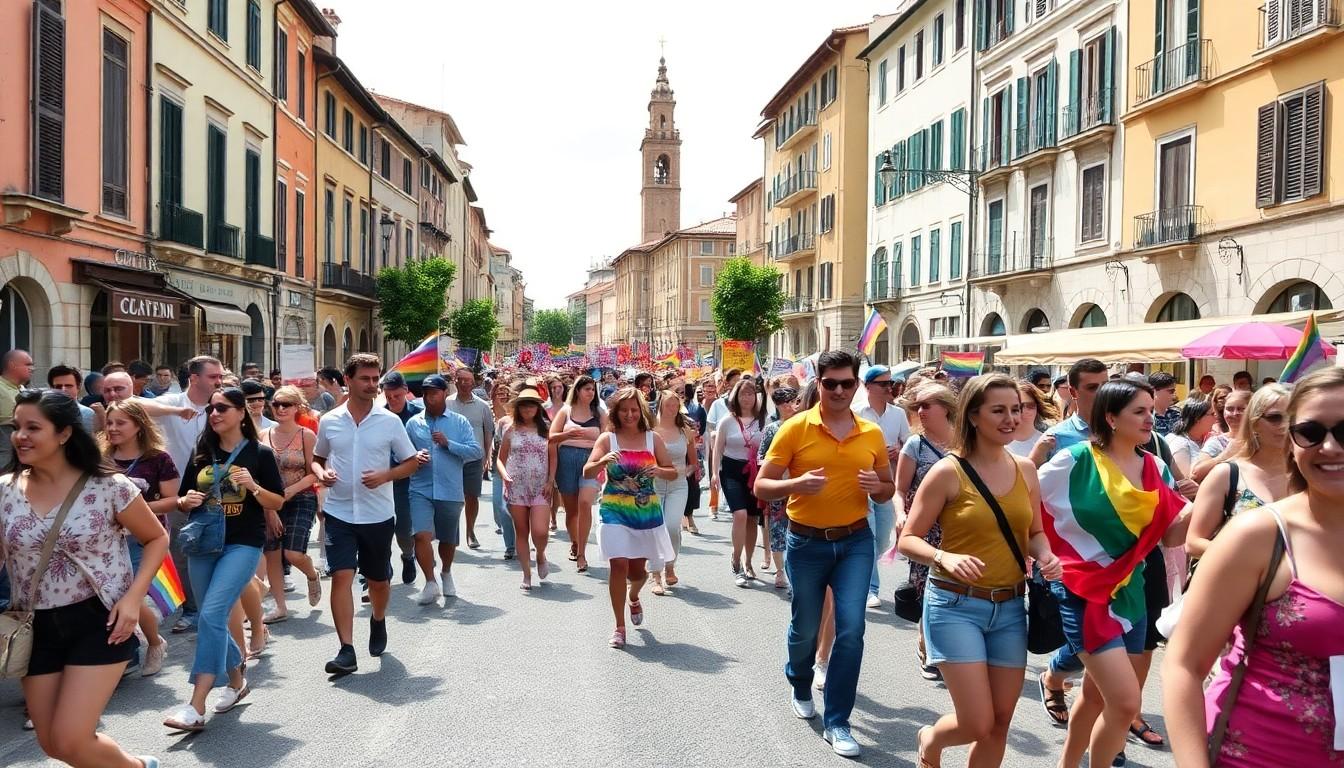
Shoppers, families and activists flooded Grosseto for Tuscany Pride 2026, a colourful, noisy celebration of LGBTQIA+ visibility that also put fresh pressure on lawmakers , and showed that support for equal rights stretches well beyond Florence and the big cities.
Essential Takeaways
- Large turnout: Organisers say about 15,000 people joined the march, creating a lively, music-filled procession through Grosseto’s centre.
- Regional reach: The event moved Tuscany Pride to the southern coast, signalling growing visibility for LGBTQIA+ communities outside major urban hubs.
- Clear demands: Speakers called for legal recognition of same-sex families, anti-discrimination protections and stronger transgender rights.
- Festival vibe: Floats, performances and cultural events followed the march, giving the day a celebratory as well as political tone.
- Organised movement: Tuscany Pride rotates cities annually and is backed by a structured network of associations and activists.
A march with a soundtrack , what it felt like in Grosseto
The first thing many attendees mention is the sound: music, cheers and the steady rhythm of thousands moving together, a physical hum that gives a protest warmth. According to local reports, roughly 15,000 people filled Grosseto’s streets, transforming the city centre into a day-long festival of banners, families and colourful floats. For anyone who’s been to a Pride in a big city, the surprise here was how effortlessly the event felt at home in a smaller coastal town, with seaside light and Maremma heat adding an unexpectedly joyful backdrop.
Organisers framed the day as both celebration and demand. Speakers underlined that visibility matters right now because legal protections remain patchy; that sense of unfinished business gave the festivities an edge. If you’re thinking of going next time, arrive early , the atmosphere builds fast and the best stalls and performances fill up.
Why Grosseto was chosen , a strategic southern pivot
Tuscany Pride picks a different host city each year, and this time the selection of Grosseto was telling. The move emphasises inclusion beyond Florence, Siena or Livorno and puts the spotlight on communities in the region’s south. Local authorities and associations worked together to make it happen, showing Pride’s organisers are keen to rotate visibility and political pressure across Tuscany.
Rotating the event helps knit a broader regional network of activists and supporters, and it’s a reminder that equality campaigns aren’t only an urban story. If your area gets picked next, expect a mix of local culture, community groups and a strong presence from families and smaller organisations.
The political ask , what speakers were demanding
Speakers on the main stage used the platform to list concrete demands: recognition for same-sex families, firm anti-discrimination measures and clearer protections for transgender people. That blend of culture and policy is typical of Pride movements across Europe , celebration draws attention, speeches outline the gaps that still need fixing.
Campaigners argued that public engagement is essential because rights can’t be taken for granted. If you want to get involved beyond attending, look for local LGBT+ groups, volunteer opportunities, or fundraising events that support legal aid and awareness campaigns.
Festival, not just march , performances and community stalls
Once the procession ended, Grosseto didn’t quiet down. The day continued with performances, cultural events and a marketplace of associations offering information and services. That festival aspect makes Pride both accessible and useful: young people can see role models, parents can ask about family law, and older residents can join conversations about local inclusion.
Practical tip: if you’re coming to a Pride as a family, check the programme in advance. Workshops, children’s activities and quieter spaces are often listed and make the day easier for everyone.
What comes next , momentum and local impact
Tuscany Pride’s rotation model means the event leaves a mark in its host city, both in terms of visibility and organisational capacity. Grosseto now has a stronger local profile for LGBTQIA+ issues and more community groups with experience running large public events. That momentum can translate into ongoing local campaigns, school outreach and municipal policy discussions.
Looking ahead, the conversation is likely to stay twofold: keep the celebratory, inclusive spirit alive while pushing for tangible legal changes. For ordinary residents, that means Pride is a chance to celebrate, learn and, if they choose, take part in the long haul.
It's a small change that can make every civic space a bit more welcoming.
Source Reference Map
Story idea inspired by: [1]
Sources by paragraph: