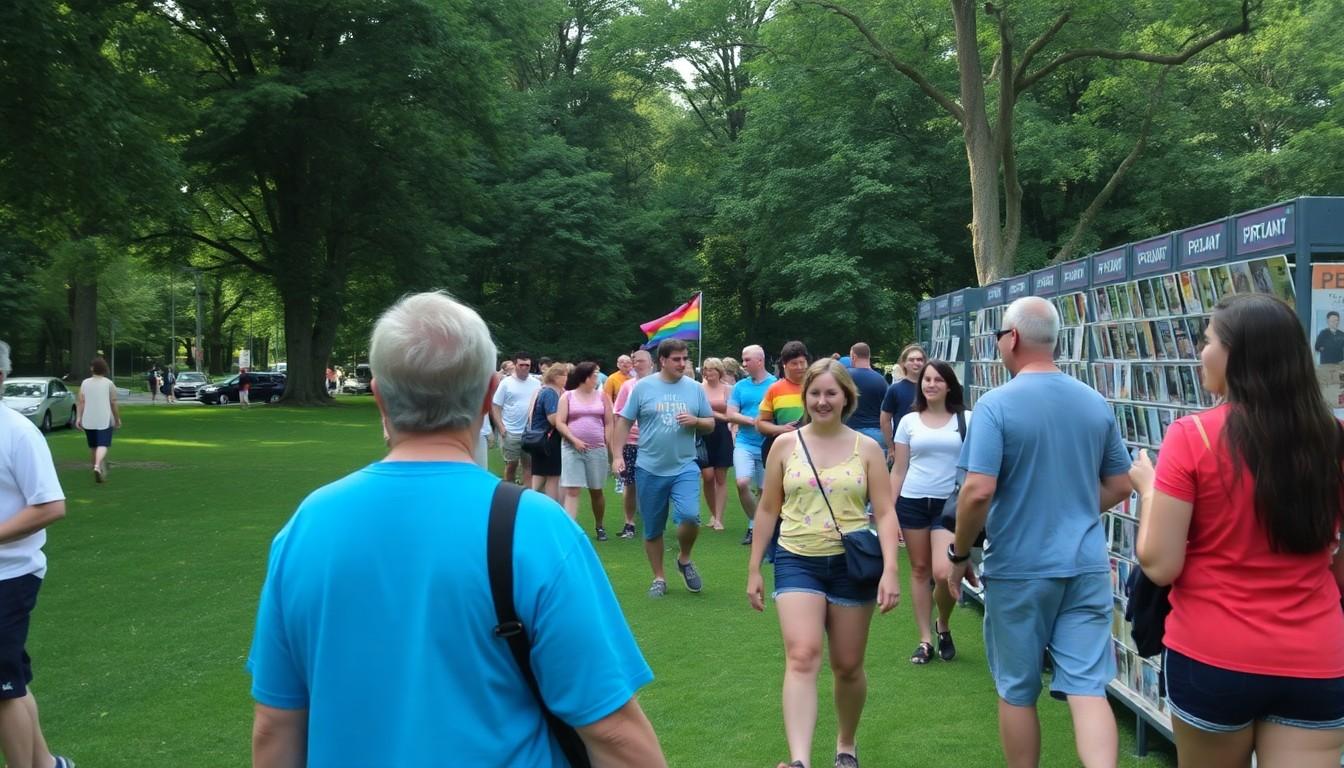
Celebrate the past: volunteers behind Maine’s first queer magazine have produced one last print issue, reconnecting old organisers and giving today’s Pride crowds a vivid reminder of grassroots activism and community memory.
Essential Takeaways
- Historic revival: Mainely Gay, Maine’s first queer magazine, ceased in 1980 and has been resurrected for a single commemorative issue.
- Free distribution: Copies will be handed out at Pride Portland in Deering Oaks on June 20 and discussed at a free USM panel on June 25.
- Hands-on production: Early issues were made on a mimeograph with pastel pages and a professionally printed cover; the archive includes typewriters and stamps.
- Community voice: The newsletter began as the Maine Gay Task Force Newsletter in 1974 and helped knit small local groups into a statewide network.
- Warm, human stories: Volunteers recall emotional moments , a man kissing another in the office, organisers coming out to speak for students , that show the magazine’s real-life impact.
Why this one-off print issue matters now
There’s a tactile satisfaction to holding a magazine that digital archives can’t replace; the paper is soft, the cover glossy, and it carries the smell of history. According to the University of Southern Maine’s collection, Mainely Gay began as a newsletter in 1974 and evolved into a magazine by 1977, becoming a rare public outlet for LGBTQ+ voices in Maine. The new commemorative issue isn’t just nostalgia , it’s a deliberate act of memory, reminding younger generations that organised queer life in Maine didn’t start online, it was handmade, sometimes precarious, and often very brave.
How Mainely Gay helped build a statewide network
Back in the 1970s there was no social media to rally people, so a mimeographed newsletter was revolutionary. Organisers used the Maine Gay Task Force Newsletter to list protests, events and picket lines, and to exchange publications with groups across the country. Steve Bull and others described it as a collective organiser that turned scattered local groups into a statewide movement , a practical lesson in how information can create community.
The personal moments that made it real
Volunteers remember small, vivid scenes: an office painted pink in Portland’s Old Port, people dropping in for conversation, one man kissing another in public because he’d always wanted to. Those candid moments, recounted by contributors like Peter Prizer, show why Mainely Gay mattered beyond politics. It offered a place where people could be seen, which is a reminder that activism often begins with hospitality and warmth.
What’s in the commemorative issue and where to find it
The new cover features a colour photograph and includes both fresh reflections and reprinted pieces from the 1970s, such as reporting on an arson at the Stage Door in Wells and a picket at an Ogunquit restaurant. Copies will be available free at Pride Portland on June 20, and organisers will discuss the magazine’s legacy at a free panel at the University of Southern Maine’s McGoldrick Center on June 25 from 5:30–7pm. If you want to see physical artefacts, the USM Glickman Library’s Jean Byers Sampson Center holds issues, letters and even the IBM Selectric that donors helped buy.
Why younger activists should care , and what they can learn
The revival is a nudge more than a lecture: it shows that committed volunteers can make a lasting cultural imprint, even without big budgets or social platforms. Susie Bock at USM points out that many in today’s generation know little about these newspapers. For organisers now, the takeaway is practical , document local efforts, swap information with neighbouring groups, and keep physical traces of your work; these things build continuity and inspire those who come after.
It's a modest, joyful reminder that small acts of organising can echo for decades.
Source Reference Map
Story idea inspired by: [1]
Sources by paragraph: