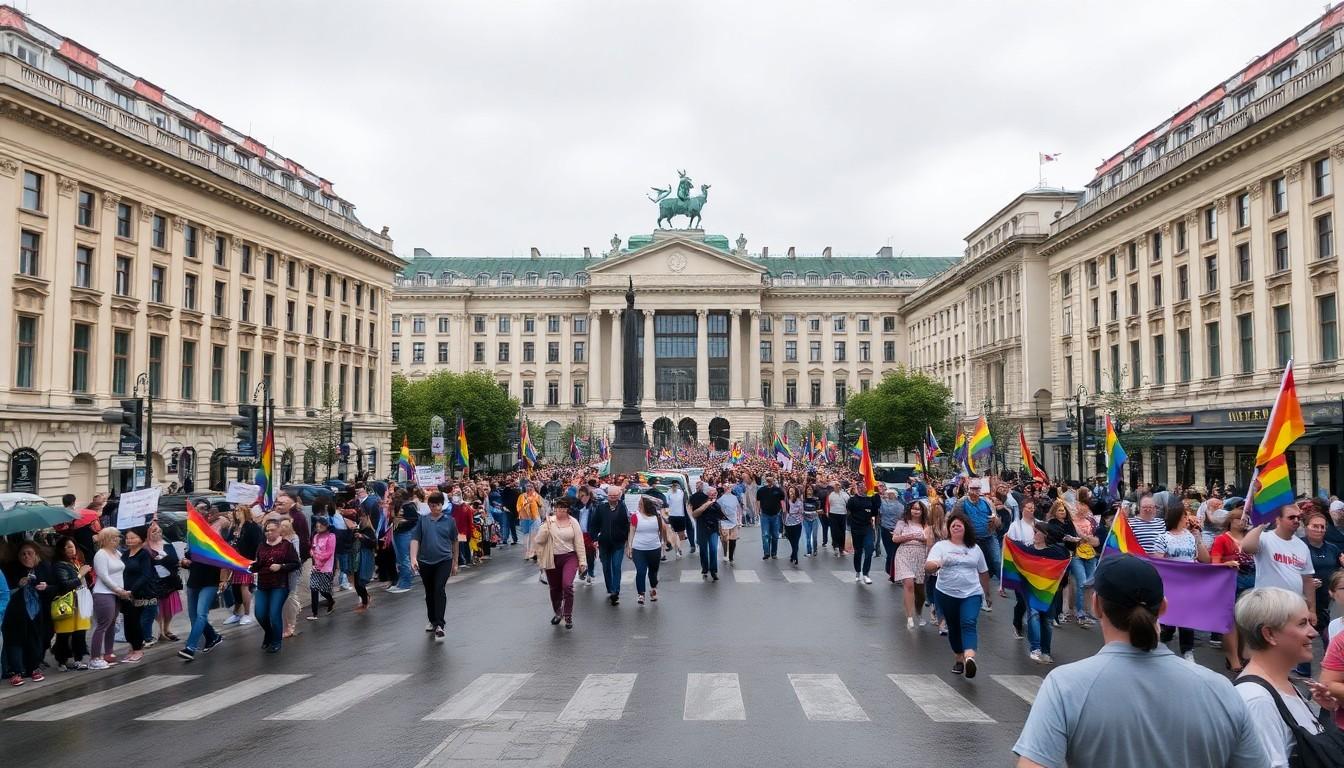
Shoppers and passers-by watched as tens of thousands stuck it out in Vienna: protesters, families and partygoers circled the Ringstrasse under rain, marking the 30th Regenbogenparade and underlining why visible queer rights remain a topical issue in Austria.
Essential Takeaways
- Anniversary milestone: This was the 30th Regenbogenparade in Vienna, using the motto "Visible since 1996" to mark decades of activism.
- Weather-tested turnout: A heavy downpour delayed the noon start by around 20 minutes, but organisers reported that participants largely stayed.
- Route and rituals: The march traced the Ringstrasse from the Parliament past major landmarks and paused for a memorial moment at 15:00.
- Pride programme: Evening Pride Celebration on Rathausplatz featured speeches and performances, including Conchita Wurst and JJ.
- Political debate: City support for queer initiatives was praised by some politicians and criticised by others over public-transport backing.
A soggy start, a resilient crowd
The parade didn’t get off exactly on time , organisers postponed the 12:00 kick-off after a sudden, heavy downpour , but that moment of wet feet quickly turned into a familiar scene of resilience. People huddled under colourful ponchos and umbrellas, yet the atmosphere felt upbeat, the air humid and full of singing and drumbeats. According to local reports, the delay was roughly 20 minutes and most participants stayed for the full route.
What the 30th anniversary meant on the ground
The slogan "Visible since 1996" tied the march to a longer history of queer visibility in Vienna, and you could feel that lineage in the crowds. There were families and long-time activists alongside students and newcomers, which made the parade feel both celebratory and determined. Organisers used the milestone to press for continued legal and social advances, mixing party energy with clear political messaging.
Route, ritual and remembrance
The procession wound from the Parliament along Heldenplatz and the Staatsoper, onto the Stubenring, past Urania and Schwedenplatz, then along Franz-Josefs-Kai toward Schottentor before returning to Rathausplatz. Organisers scheduled a moment of silence at 15:00 to remember those who can no longer join the festivities , a sober, necessary pause amid the colour and sound. The head of the march was expected back at Rathausplatz mid-afternoon, with the tail finishing several hours later.
Pride Village and pop moments: why the evening matters
From about 18:45, Pride Village on Rathausplatz hosted speeches from activists and politicians, and two Eurovision winners, Conchita Wurst and JJ, performed. The evening programme aimed to present a vision of society that sees diversity as strength rather than threat. For many attendees the live music and speeches weren’t just entertainment , they were a reminder that culture and visibility keep pressure on policymakers.
Politics and public services , applause and criticism
City officials praised Vienna’s expansion of queer services: anti-discrimination work, youth support, resources for rainbow families and cultural visibility, all of which the city’s representatives framed as making Vienna a "rainbow capital." Yet the parade also reopened debate: the FPÖ criticised the Vienna public transport operator for supporting the event at its stops, calling it a misallocation of resources. The exchange highlights how public backing for Pride remains both popular and contested.
Safety, security and the wider context
Organisers and authorities worked together to ensure the event ran safely; recent years have also seen reports of planned threats being intercepted, underscoring the importance of security planning. Meanwhile, community groups used the parade to renew calls for full discrimination protections and better services , a reminder that visibility events continue to have a clear policy agenda.
It's a small, bright demonstration of how public celebration and political campaigning can coexist , and how a bit of rain rarely beats a determined crowd.
Source Reference Map
Story idea inspired by: [1]
Sources by paragraph: