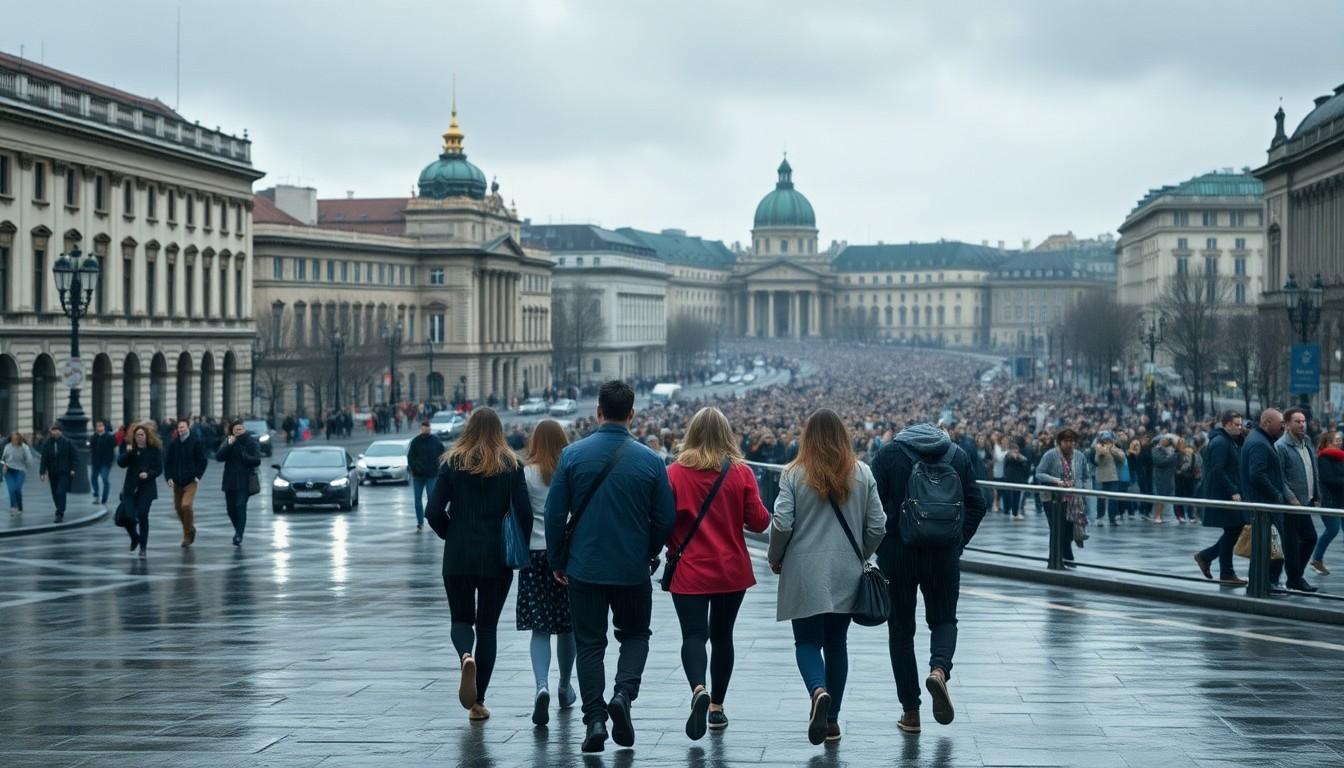
Shoppers, tourists and activists flocked to Vienna's Ringstraße as the city hosted its 30th Pride parade , a raucous, colourful celebration and a pointed political show of force that drew hundreds of thousands and highlighted funding strains, pushback and creative community responses.
Essential takeaways
- Huge turnout: The march around the Ringstraße drew an estimated crowd in the hundreds of thousands and remains Austria's largest Pride event.
- Party with a purpose: Beats, drag, crafts and fetish groups mixed with clear political messaging about rights, visibility and asylum.
- Funding squeeze: City support was reduced this year, forcing a smaller programme and prompting some sponsors to step back.
- Creative activism: Groups repurposed torn flags, staged themed trucks and even built tuk-tuks to make visible statements.
- Weather-tested resilience: A heavy downpour delayed the start but the mood swiftly recovered into sunshine and solidarity.
Opening hook: a wet start and a roaring celebration
A thunderous bassline and bright costumes fought a sudden April cloudburst as the procession gathered on the Ringstraße, with organisers and participants shrugging off rain in favour of danceable energy and high spirits. According to local coverage, the event still managed to pull a vast crowd and read like a moving, joyful manifesto for queer rights. Vienna Pride's own listings and local news describe it as a mix of party and protest , loud, glittering and unmissable.
Why the 30th parade still matters politically
This wasn't just another colourful march; it was a political moment, staged past Parliament, the Hofburg and the Opera to demand legal equality and social recognition. Polling suggests broad public support for same-sex marriage and the inclusion of queer people in society, yet conservative backlash and culture-war rhetoric keep the issues alive. Participants made that plain with slogans and themed trucks, underlining that visibility remains a tool as much as a celebration.
Money, sponsors and a smaller parade programme
This year organisers faced financial headwinds: city funding was reportedly cut roughly in half, and a number of sponsors didn't return, which trimmed the festival's fringe events. That matters beyond aesthetics , fewer resources mean less outreach, fewer safe-space services and a leaner platform for grassroots groups. The community compensated with DIY energy: smaller collectives stitched together projects and fundraising stalls to bridge the gap.
The parade as a patchwork of communities and causes
From a Sadomasochism initiative in leather harnesses to knitting collectives reworking vandalised flags into marketable goods, the march showed the movement's diversity in vivid detail. Refugee and migrant groups used decorated trucks to highlight deportation policies, while faith-based queer networks walked to assert that religion and queer identity can coexist. These juxtapositions made the route feel like a map of intersecting struggles, not just a single narrative.
Visibility, pushback and a culture-war backdrop
Even as streets filled with allies, opposition simmered elsewhere. Political rows over symbolic gestures , like renaming stations on social feeds , and attacks on "wokeness" illustrate how Pride remains a flashpoint. Party leaders from several formations turned up to show support, while critics used the moment to amplify grievances. The parade's scale and theatricality help inoculate participants against small-bore culture-war skirmishes, but they don't erase the deeper work that still needs doing.
Practical tips for future Pride-goers
If you're planning to join next time, expect crowds and bring layers , Vienna's weather can turn fast. Arrive early to find gaps in the procession if you prefer a quieter view, and support grassroots stalls selling crafts or donating proceeds to local organisations. If accessibility matters to you, check Vienna Pride's information pages ahead of the day for routes and services, and consider joining a themed contingent to find like-minded company.
It's a small change that can make every march feel safer, louder and more inclusive.
Source Reference Map
Story idea inspired by: [1]
Sources by paragraph: