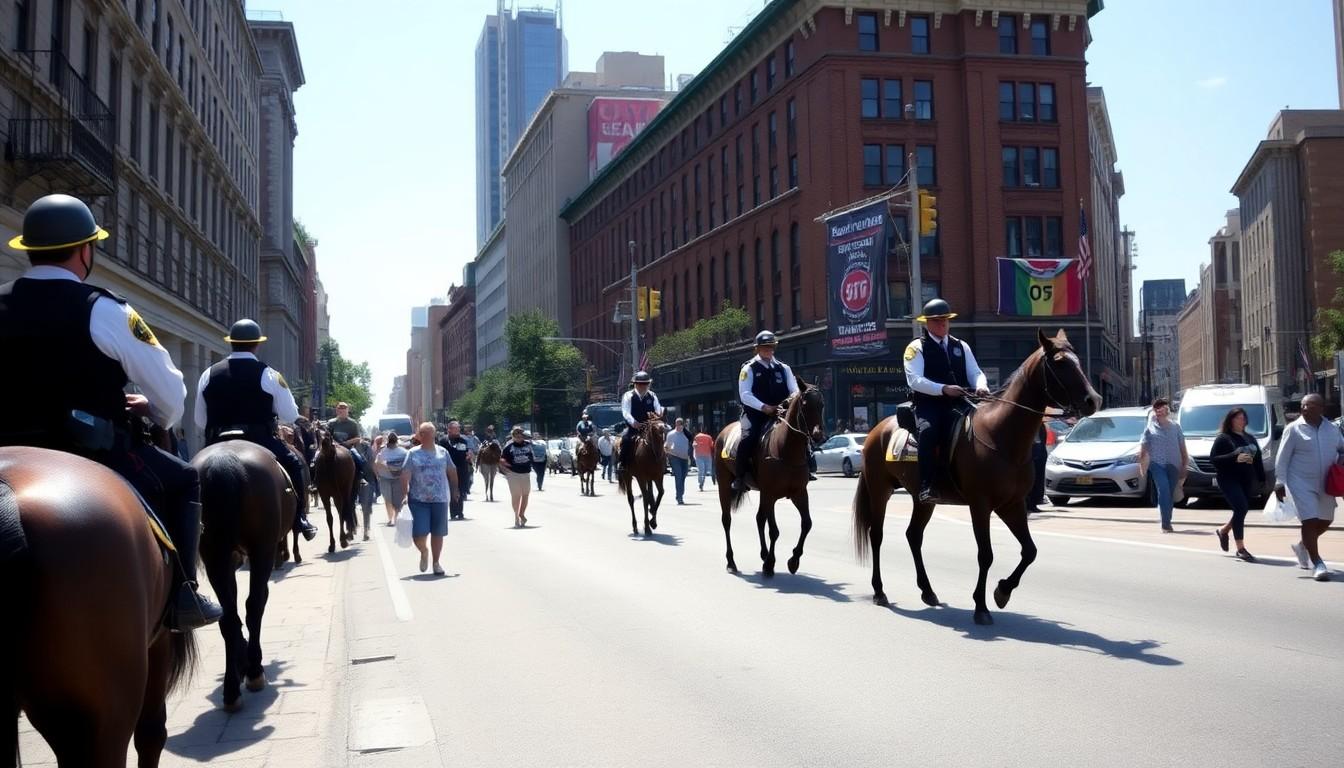
Shoppers and revelers noticed a tense turn at Philadelphia’s Pride weekend, as police closed Gayborhood streets early after clashes and mass gatherings; city leaders and community members want clear answers about crowd control, youth behaviour and how to keep celebrations both safe and welcoming.
Essential takeaways
- Large crowds: Police said roughly 600 officers covered simultaneous Parkway and Gayborhood events, stretching resources thin.
- Teen surge: Commissioners described groups of teenagers arriving en masse, with some fights and people climbing on cars, prompting closures.
- Tactical missteps: Officials now concede sidewalk barricades and moving mounted units into the Gayborhood “might not have been the right decision.”
- Arrests and fallout: Fifteen people were arrested and the street festival was ended earlier than planned, sparking calls for hearings.
- Accountability on the way: City Council is expected to review the response this fall and the commissioner has offered to testify.
What exactly unfolded in the Gayborhood , and why it felt different this year
Police Commissioner Kevin Bethel told reporters the trouble began when city planners shifted the official Pride celebration to the Benjamin Franklin Parkway, creating two competing hubs for people to gather. That split put pressure on officers already tasked with managing big public events, and by evening crowds swelled in both places. Witnesses described a chaotic, noisy scene , the kind of sensory overload that makes it hard for anyone to know where to move or when to leave.
Officials said sidewalks in the Gayborhood were barricaded this year, a break from past practice, and those barriers added to frustration. In a candid moment Bethel admitted the barricades “might not have been the right decision,” acknowledging how small operational choices can change the tone of a celebration. It’s the sort of tweak that seems sensible on a logistics chart, but feels different in the street.
Why police say they were overwhelmed , and what that implies about planning
According to the police account, a “surge” of young people arrived and began congregating in and around popular bars, including parking lots and car tops. That behaviour, they said, crossed into public-safety territory and required decisive action. When officers were moved from the Parkway to the Gayborhood , including mounted units and motorbikes , images of an aggressive response spread quickly and fuelled public criticism.
This points to a predictable event-management problem: staffing and staging for one big crowd aren’t easily reallocated once a second crowd forms. Industry guidance and municipal plans often stress concentrated zones, clear entry and exit routes, and rapid medical and de-escalation teams. If you’re responsible for a city festival, the lesson is clear, don’t split your focus without a contingency that truly scales.
Community reaction and the politics of policing at LGBTQ+ events
The Gayborhood has long been a symbolic and social heart for Philadelphia’s LGBTQ+ community, so any heavy-handed policing there will be read through a political and historical lens. Leaders and activists have pushed back, saying the optics of mounted units and closed streets at Pride send the wrong message, even if the intent was safety.
City officials now face a balancing act: reassure a community that wants welcoming public space, while also accounting for fights, vandalism or other risks. Expect tension in hearings when commissioners and community members recount different experiences; transparency, video evidence and clear after-action reviews will be critical to restoring trust.
Practical steps the city and organisers could take next
First, synchronise planning: keep official events geographically coherent or staff them as distinct, fully resourced operations. Second, rethink physical barriers , temporary fencing and sidewalk barricades ease traffic control but can escalate frustration when crowds are dense. Third, invest in youth engagement and visible, trained de-escalation teams so officers don’t default to kinetic crowd moves.
For residents and visitors, simple tips help too: if you’re going to Pride, travel in groups, designate meeting spots, and leave early if a scene feels volatile. Event organisers should also prioritise clear messaging , signage, PA announcements and social channels , to prevent confusion when plans change.
What to expect at upcoming hearings and the longer view on festival safety
Commissioner Bethel has said he’ll speak to City Council in the fall, and those sessions will likely probe strategy, resource levels, and why mounted and motorcycle units were redeployed. According to city sources, the police department has strategic plans and leadership pages outlining crowd-safety priorities; those documents will be weighed against what actually happened on the ground.
Looking ahead, this episode could be a turning point: either a chance to recalibrate how Philadelphia celebrates Pride, or a lingering sore spot that erodes trust. If the city treats the review as a genuine learning opportunity, and not merely a PR exercise, future Pride weekends can be both safer and truer to the neighbourhood spirit.
It's a small change in planning that can make every celebration safer and more welcoming.
Source Reference Map
Story idea inspired by: [1]
Sources by paragraph: