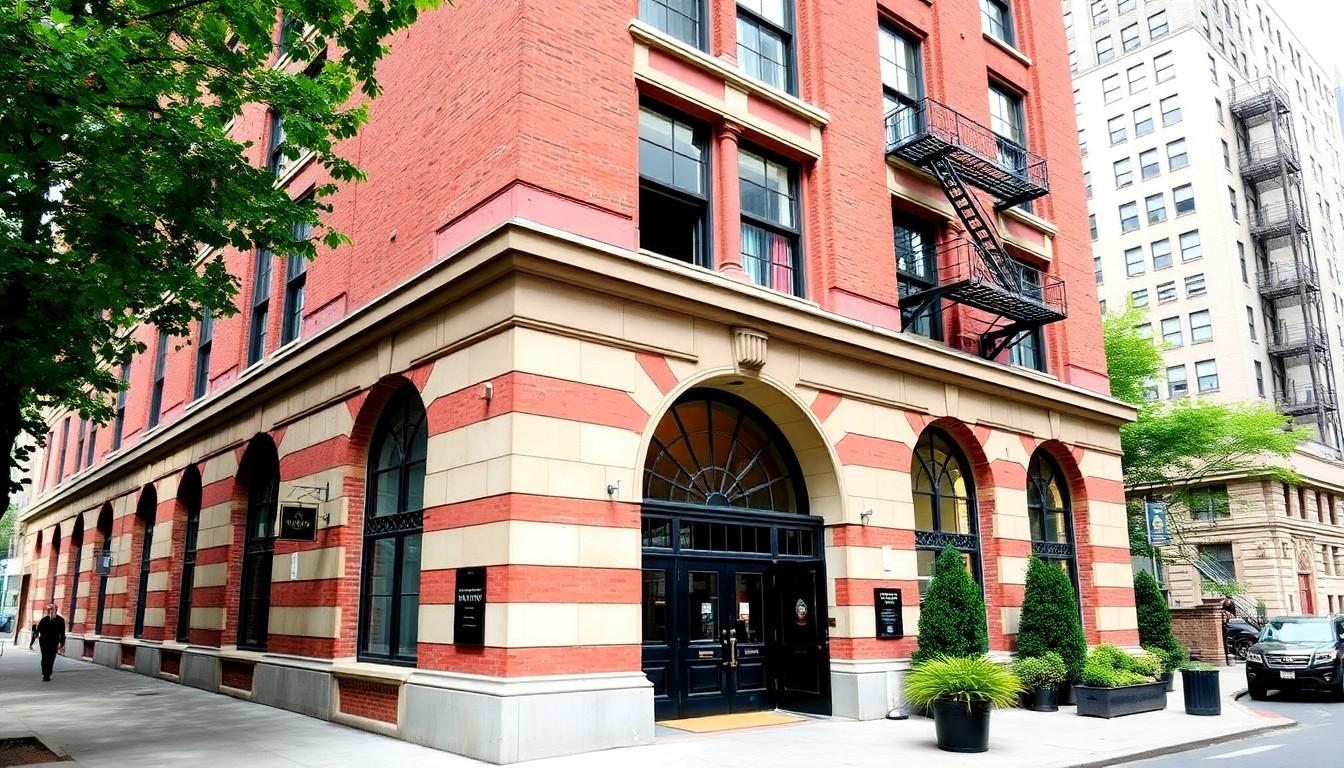
Discover Randy Wicker’s footprints in the Village: who he was, the spots that mattered, and why these modest storefronts and halls still feel charged. Explore Cooper Union, Julius’ Bar, St. Mark’s Place and Hudson Street to see where early gay rights action helped change public life.
Essential Takeaways
- Early pioneer: Randy Wicker was a visible, fearless activist before and after Stonewall who used radio, TV and street action to push rights.
- Key locations: Cooper Union, Julius’ Bar, 28 St. Mark’s Place and 506 Hudson Street are tangible links to his life and organising.
- Historic actions: He helped stage the first public gay-rights protests in the US and helped organise the 1966 sip-in at Julius’ Bar.
- Everyday textures: Sites range from the Great Hall’s echoing wood to Julius’ cosy barroom , there’s a real human scale to the history.
- Practical visit tip: Look for the Village Preservation plaques and the Civil Rights and Social Justice Map to guide a walking route.
Why Randy Wicker still matters, up close and personal
Randy Wicker’s activism feels immediate because he brought argument into public rooms and onto the airwaves, and you can still stand where he stood. According to Village Preservation, he went on the air in 1962 to contest psychiatric dogma, and later faced down a speaker at Cooper Union , a small, noisy act that earned applause. Those sensory moments , the applause, the crackle of a microphone, the press lights , help explain why his work was unsettling and effective. His moves came from a time when visibility could cost you jobs or housing, so changing your name and speaking in public were acts of real risk. That context matters when you walk these streets: they weren’t neutral backdrops, they were battlegrounds for dignity. If you want to feel the history, start at Cooper Union’s Great Hall and imagine a microphone passed to an openly gay man in the 1960s; it makes the courage tangible.
Cooper Union: where public debate met gay rights
Cooper Union’s Great Hall has hosted presidents, strikers and reformers, and it also hosted a critical early confrontation about homosexuality as pathology. Village Preservation recounts how Wicker and allies protested a lecture in 1964, handing out literature and demanding rebuttal time. The protest was small but symbolically large: it staged gay people as public interlocutors instead of private problems. Trends in civic protest , from sit-ins to counter-lectures , show how tactics migrated between movements in the 1960s. If you visit, note the building’s hushed, civic atmosphere; Wicker’s protest cut through that stillness. Practical tip: check Cooper Union’s event listings before you go, because the Great Hall still hosts talks and the sense of public debate is alive.
Julius’ Bar: the sip-in that shifted how bars could serve people
Julius’ Bar at West 10th Street is compact and slightly worn in the nicest way, the sort of bar whose wooden surfaces remember conversations. In April 1966 Wicker and others staged a sit-in-style “sip-in” there, inspired by civil-rights lunch counters, to challenge rules that refused service to openly gay patrons. The National Park Service and history outlets document how that night helped pare back discriminatory liquor-board interpretations and set a precedent for queer people claiming public space. The action was practical and theatrical: they ordered drinks, declared their sexuality, then challenged refusal. When you step inside Julius’ now, look for the plaque Village Preservation helped unveil in 2022. It’s a small marker for a big legal and cultural shift, and the space still feels intimate , a reminder that change often starts in low-lit rooms.
St. Mark’s Place and the head-shop years: activism with a countercultural edge
Wicker’s foray into retail , the Underground Uplift Unlimited at 28 St. Mark’s Place , shows how activism sometimes needs a front. The shop sold protest pins and posters that helped bankroll organising, and it radiated the era’s countercultural look and language. That kind of grassroots fundraising matters; movement infrastructure rarely looks heroic on paper, but selling badges and posters kept people talking and mobilised resources. It’s a reminder that political work often rides on small transactions and cultural signalling. Walk St. Mark’s and you can still sense the East Village’s layered history , punk, protest and everyday commerce , all braided into one street.
Hudson Street and Uplift Lighting: life after the frontline
Wicker later ran Uplift Lighting at 506 Hudson Street with his partner, a quieter chapter but no less telling. These businesses were his life as much as his activism; they tied him to the neighbourhood economically and socially. That continuity , from pickets to shop counters , reflects a broader pattern: activists who create livelihoods in their communities build durable ties that outlast headlines. For visitors, Hudson Street offers a calmer counterpoint to the Great Hall’s solemnity and Julius’ bustle. Practical tip: combine stops on a short walk , Cooper Union, Julius’, St. Mark’s and Hudson , to get a rounded sense of the person and the era.
What the map shows us and why it still matters
Village Preservation’s Civil Rights and Social Justice Map pins these locations together and turns scattered memories into a readable route. Mapping helps us see activism as geography: choices about where to protest, where to meet, and where to live mattered strategically. It’s also a gentle corrective to stories that treat queer history as only big moments. Seeing Wicker’s plaque at Julius’, the Great Hall protest site and his shops in one stroll reminds you that movements grow through dozens of small, stubborn acts. If you care about history or simply like a layered walk, use the map, bring sensible shoes and let the neighbourhood’s textures tell the story.
It's a small change in how you move through the Village that makes the past feel present.
Source Reference Map
Story idea inspired by: [1]
Sources by paragraph: