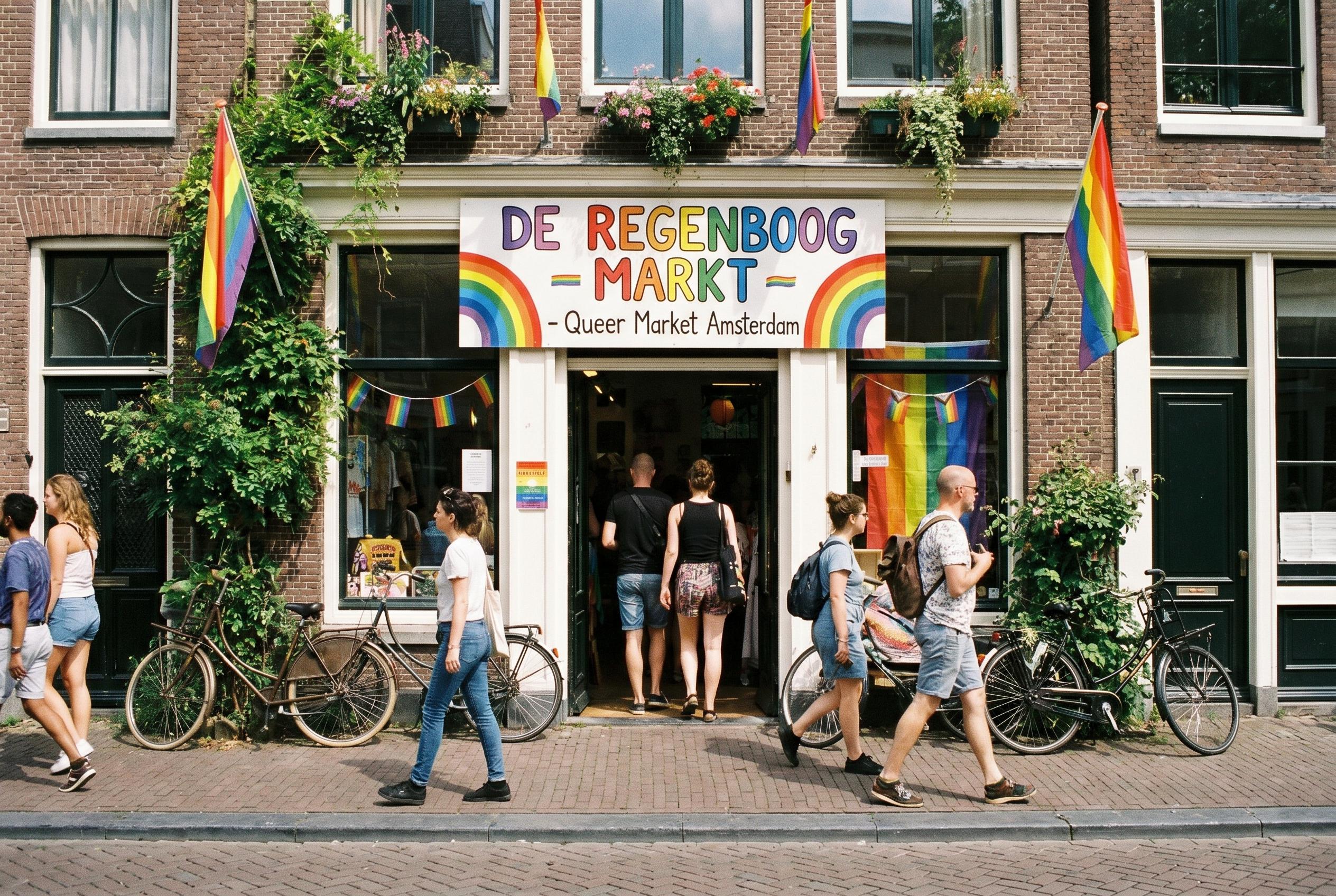
Shoppers are discovering a bright, welcoming hub on Haarlemmerdijk where queer makers sell jewellery, ceramics, art and even sex toys , and where visibility, safety and fair pay matter as much as the products. Here's why the Queer Market is becoming a go-to for locals and visitors.
Essential Takeaways
- Inclusive atmosphere: The shop welcomes everyone and feels intentionally safe , families, older visitors and kids included.
- Curated goods: From hand-poured candles and spicy oils to non-binary earrings and freshly tufted rugs, the range is stylish and tactile.
- Sex-positive selection: Intimacy-focused toys and products are presented as beautiful, not hidden, encouraging connection and pride.
- Support for makers: The market boosts queer creators’ visibility and income, with some vendors reporting rent covered thanks to sales.
- Community ties: The store acts as an events hub and social anchor, with queer-friendly street signage reinforcing inclusion nearby.
A colourful shopfront with a serious purpose
Step inside and the place buzzes with warm colours, soft ceramics and the faint scent of hand-poured candles; it’s instantly comforting. The founder created the space after hearing too many stories of queer makers being turned away by mainstream retailers. According to the market’s origins, that exclusion motivated a storefront that’s both a shop and a platform for underrepresented creatives.
The layout gives everything room to breathe , gifts to the right, visible clothing to the left, art and books at the back , which makes browsing feel relaxed rather than transactional. For shoppers who want to discover makers’ craft and personalities, it’s a relief to find products that invite lingering, not hiding.
Why sex-positive choices matter here
One shelf is deliberately dedicated to sex toys and intimacy products, chosen for beauty and craft rather than anonymity. This isn’t about shock value; it’s about normalising pleasure and connection. Presenting tasteful, well-made options lets people keep these items out in the open, which is a small but meaningful shift.
That approach echoes broader conversations about visibility and safety within queer spaces. When sex-positive items are sold with care and context, they become part of a fuller offering , tools for intimacy rather than curiosities tucked away.
Makers get seen , and paid
Visibility was the initial spark: pop-up markets around Christmas quickly turned into regular events with hundreds of visitors. But organisers soon emphasised fair pricing, too. Many makers start from passion or activism and undercharge, so the market nudges them to value their work.
Practical outcomes follow. One vendor reportedly covered rent thanks to sales at an event, which says a lot about the buying power when a supportive community shows up. If you’re a maker wondering whether a market is worth the table fee, this one demonstrates it can be.
A community hub, not just a boutique
The store doubles as a noticeboard and events space, with a community board listing meet-ups and workshops. That sense of belonging is visible beyond the shop: along Haarlemmerdijk some businesses display ‘You’re welcome’ signs and queer flags, a small but steady reminder of year-round inclusion. Local initiatives and collaborations help knit the market into Amsterdam’s queer ecosystem.
For visitors, that means more than shopping , you might find a talk, a queer beer tasting, or an impromptu conversation that makes the visit memorable.
How to shop and what to expect
Come ready to browse slowly: items are tactile and varied, from spicy condiments your kitchen will remember to non-binary earrings that pop on camera. If you’re exploring intimacy products, staff understand context and can point you toward higher-quality, stylish options. For makers thinking of joining, expect friendly curatorship and a crowd that values craft.
And if you want to support beyond buying, look out for collaborative events and the Queer Beer project, which donates a portion of sales to community causes.
It's a small change that can make every purchase feel more meaningful.
Source Reference Map
Story idea inspired by: [1]
Sources by paragraph: