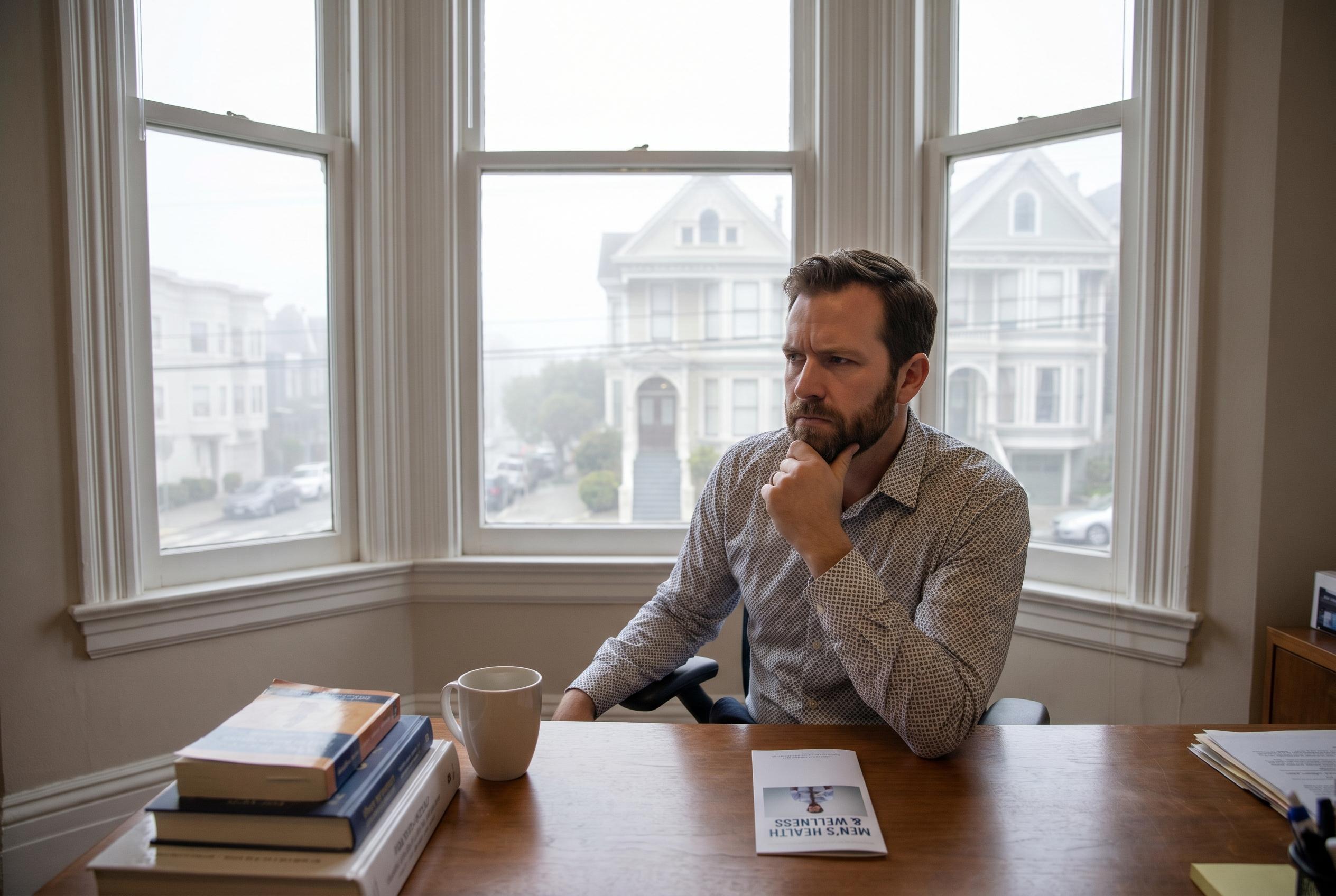
Notice how many men treat a floppy moment as an emergency; therapists are instead advising curiosity, practical strategies, and gay-affirming care that take medical, emotional and relational realities seriously. This piece looks at what helps, from sensible health checks to sex-therapy tools, so you can stop guessing and start adapting.
Essential Takeaways
- Rule out health causes first: cardiovascular, hormonal, sleep and medication issues can all affect erections and are often treatable.
- Mind matters: performance anxiety, shame, grief or trauma commonly disrupt arousal and respond to targeted sex therapy.
- Context counts: hookups, open relationships and ageing change erotic demands, adjusting expectations often restores confidence.
- Supplements aren’t a quick fix: unregulated “testosterone boosters” lack reliable evidence; medical testing and supervised treatment do the work.
- Practical practices help: sensate-focus, communication scripts, paced stimulation and planning for relapses reduce pressure and restore pleasure.
Start with the obvious: check your health before you catastrophise
If your erections change, the first sensible move is a basic medical review; feel the relief when someone explains it may be about sleep, blood pressure, statins, or hormones rather than character. According to mainstream medical guidance, cardiovascular health, nerve function, hormone levels and certain medications are common contributors to erectile changes, so ruling these in or out is practical and often reassuring. A single, focused blood panel and a chat with a gay-affirming urologist or endocrinologist can save months of worry; telehealth makes finding knowledgeable clinicians easier if you don’t live near a centre. Practical tip: bring a concise list of medications, supplements (especially anabolic steroids) and recent life changes to the appointment so the clinician can connect dots quickly.
Don’t believe the hype about over-the-counter testosterone fixes
The internet loves miracle supplements, but the evidence rarely follows the marketing; Cochrane-style reviews and clinical guidance show the benefits of unregulated “testosterone boosters” are inconsistent at best. When low testosterone genuinely contributes to erectile difficulty, it’s diagnosed by blood tests and treated under medical supervision, self‑dosing or black‑market anabolic use can worsen things and complicate care. If you’ve used steroids, seek an anabolic-aware clinician; they’re out there and can discuss safer tapering, hormone restoration and sexual health without moralising. Practical tip: avoid headline-grabbing pills and invest in one good medical consult, knowledge is cheaper and more effective than random supplements.
The mind is not your enemy: performance anxiety and conditioning are common, and fixable
A lot of erectile trouble is about what’s happening in your head: monitoring, catastrophising and the belief that an erection defines your worth switch the nervous system into threat, and that shuts down arousal. Sex therapists and researchers note that “spectatoring” (watching yourself perform) is a major disruptor; therapy, sensate-focus exercises and behavioural retraining can uncouple anxious thought loops from sexual response. Masturbation habits sometimes create highly specific stimulation patterns that don’t translate to partnered sex, but because they’re learned they can be relearned, vary pressure, pace and techniques to recondition response. Practical tip: when panic starts, try a short grounding cue (breath, a touch exercise, or a verbal script) to move attention back to sensation and away from judgement.
Relationship dynamics, hookups and polycules: context shapes erections
Erectile changes often unfold inside messy social scripts, casual encounters, comparison with other partners, and unspoken hierarchies in non‑monogamy can ratchet pressure up fast. Therapists working with gay men emphasise slowing down escalation, normalising non‑penetrative sex, and using calm scripts like “I’m still turned on; let’s slow this down” to interrupt the emergency reflex. If a pattern emerges around a particular partner or setting, that’s useful information, not evidence of failure; honest conversations or strategic boundaries usually help more than avoidance. Practical tip: rehearse two short phrases you can use mid-encounter to redirect intimacy and reduce performance pressure.
Ageing, grief and identity: adapt expectations, don’t mourn them
Erections change with time; spontaneous morning or public erections decline, and erections often need more stimulation and time as you age, but desire and pleasure can remain vibrant if you adapt. Men in midlife sometimes interpret change as irreparable loss; therapists suggest reframing the goal from replicating youth to cultivating satisfying sexual lives now, with creativity and new repertoire. Grief, whether from losing a partner, body changes, or past trauma, can also block arousal; targeted therapy often uncovers buried prohibitions and slowly restores permission to enjoy sex. Practical tip: experiment with longer foreplay, varied positions and toys; planning for a slower cadence often yields better results than tensing to perform.
What actually helps in therapy and coaching
Good therapeutic work blends practical exercises with exploration: sensate-focus tasks, behavioural experiments, communication coaching, relapse planning, and trauma‑informed care for those who need it. A gay‑specialist clinician brings cultural context, body ideals, bodybuilding culture, dating apps and conversion‑therapy trauma, so recommendations fit your life rather than feeling generic. Medication has its place and can support progress, but when anxiety, relationship issues or shame are driving the problem, pills alone usually don’t produce lasting change. Practical tip: set a small, measurable goal for therapy (e.g., “I’ll practise two sensate-focus sessions this week”) so progress is visible and anxiety deflates.
It's a small change in approach that can make each encounter less of a test and more of an experience worth remembering.
Source Reference Map
Story idea inspired by: [1]
Sources by paragraph: