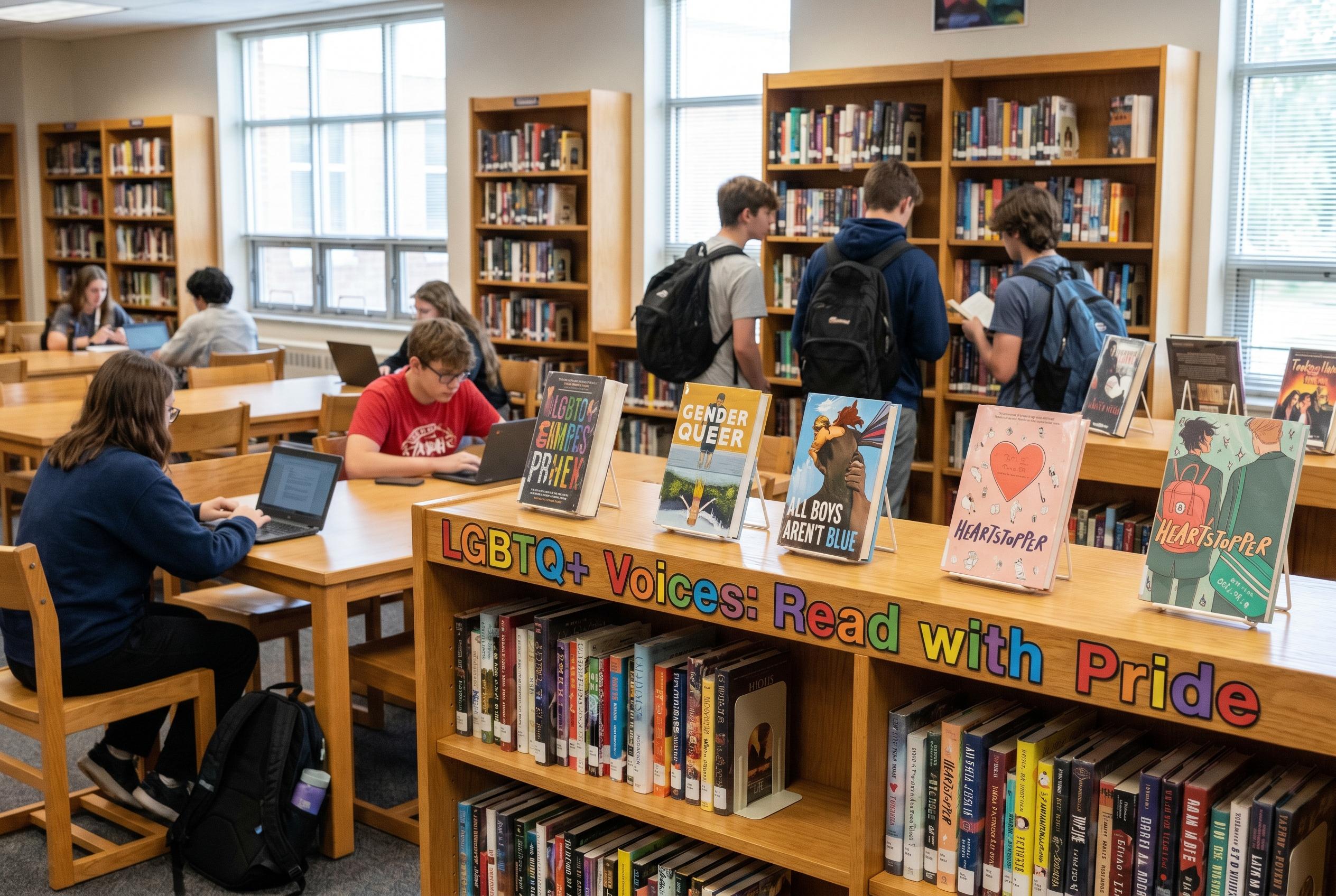
Shoppers are returning to libraries and activists are organising , because who gets to read what isn’t merely a retail question but a civic one. Authors, librarians and advocacy groups are urging readers to visit shelves, support policies, and vote, as book bans escalate and strip young people of queer stories that help them learn and belong.
Essential Takeaways
- Scale of the problem: PEN America documents thousands of bans and challenges in recent years, with numbers rising each school year, affecting access nationwide.
- Who’s driving it: Most challenges now come from organised pressure groups and officials rather than individual parents, and several states have passed restrictive laws.
- Why it matters: Removing queer books harms literacy, civic engagement, and kids’ mental health by erasing identities and lived experience.
- Simple actions that work: Visit your local library, attend school-board meetings, donate to library funds, and support pro-access candidates.
- What to read aloud for clarity: Reading whole books, not clips, helps counter misleading snippets that fuel outrage.
Why the fight over books feels bigger than books
This isn’t just about a title on a school shelf; it’s a cultural fight over which stories belong in public life, and that feels tangible and worrying to parents and teens alike. According to PEN America, the sheer scale of removals in recent years is unprecedented, and that trend has only hardened into coordinated campaigns. The result is kids who can’t find mirrors of their own lives and classmates who miss out on learning how diverse our communities are. For readers, the emotional toll of being told you don’t exist is immediate; for communities, the civic cost shows up later in ignorance and intolerance.
Who’s organising the bans , and why they’ve been effective
The surge in challenges is frequently less grassroots than well-funded and well-organised, with advocacy groups, elected officials and national pressure campaigns leading the charge. That shift explains why local disputes can quickly become national headlines and why isolated book removals snowball into policy proposals. It’s easier for some politicians to rally culture-war energy than to address practical problems like school funding or public services, and the result is that censorship becomes a convenient distraction. Understanding this helps voters hold decision-makers to account rather than letting outrage dictate school policy.
Libraries and librarians: frontline defenders with practical strategies
Librarians have long been the stewards of access, but they’re also stretched thin and increasingly under fire. The American Library Association and library leaders encourage people to stop treating excerpts as verdicts: read the whole book, visit the branch, and participate in programming. Practical steps include joining “Friends of the Library” groups, donating to replacement funds, and simply checking out challenged books to increase circulation stats, these everyday actions change local decision-making. Libraries are designed to be safe, quiet places to explore ideas, and turning up there is a small but powerful vote for intellectual freedom.
What authors and creatives are experiencing , and how they respond
Writers of LGBTQ+ books are feeling both the personal sting of being targeted and the financial squeeze when schools and libraries cancel orders. But many authors say they won’t self-censor; instead they’re more cautious about events and online exposure while doubling down on storytelling. High-profile writers have been using their platforms to guide readers toward civic action: sign petitions, support literacy groups, and back organisations that defend access. That mix of creative defiance and practical mobilisation keeps stories in circulation and signals to young readers that adults will protect the right to be seen.
How parents, teachers and voters can make a real difference
You don’t need fame to be effective. Show up to school-board meetings, vote in local races, and ask candidates where they stand on school libraries and curricula. Encourage your school or local library to adopt clear review policies so challenges go through an established, transparent process rather than being decided by political pressure. If you’re worried about content, read with your child and use vetted books as vehicles for conversation instead of banning them outright. Simple civic actions , attending meetings, supporting pro-access candidates, donating , compound into community resilience.
Looking ahead: the uphill climb and the small wins to celebrate
Bans are spreading, and there’s even been legislation proposed at the federal level that could chill access nationwide. Still, communities win fights by organising early and persistently: litigation, public pressure, and increased circulation have reversed removals in countless districts. The work is both defensive and constructive , building stronger local policies, funding libraries, and normalising queer stories so they’re less easy to weaponise. Keep reading, keep voting, and keep bringing friends to the library: progress rarely feels dramatic, but it accumulates.
It's a small change that can protect a kid’s right to read and a community’s right to know.
Source Reference Map
Story idea inspired by: [1]
Sources by paragraph: