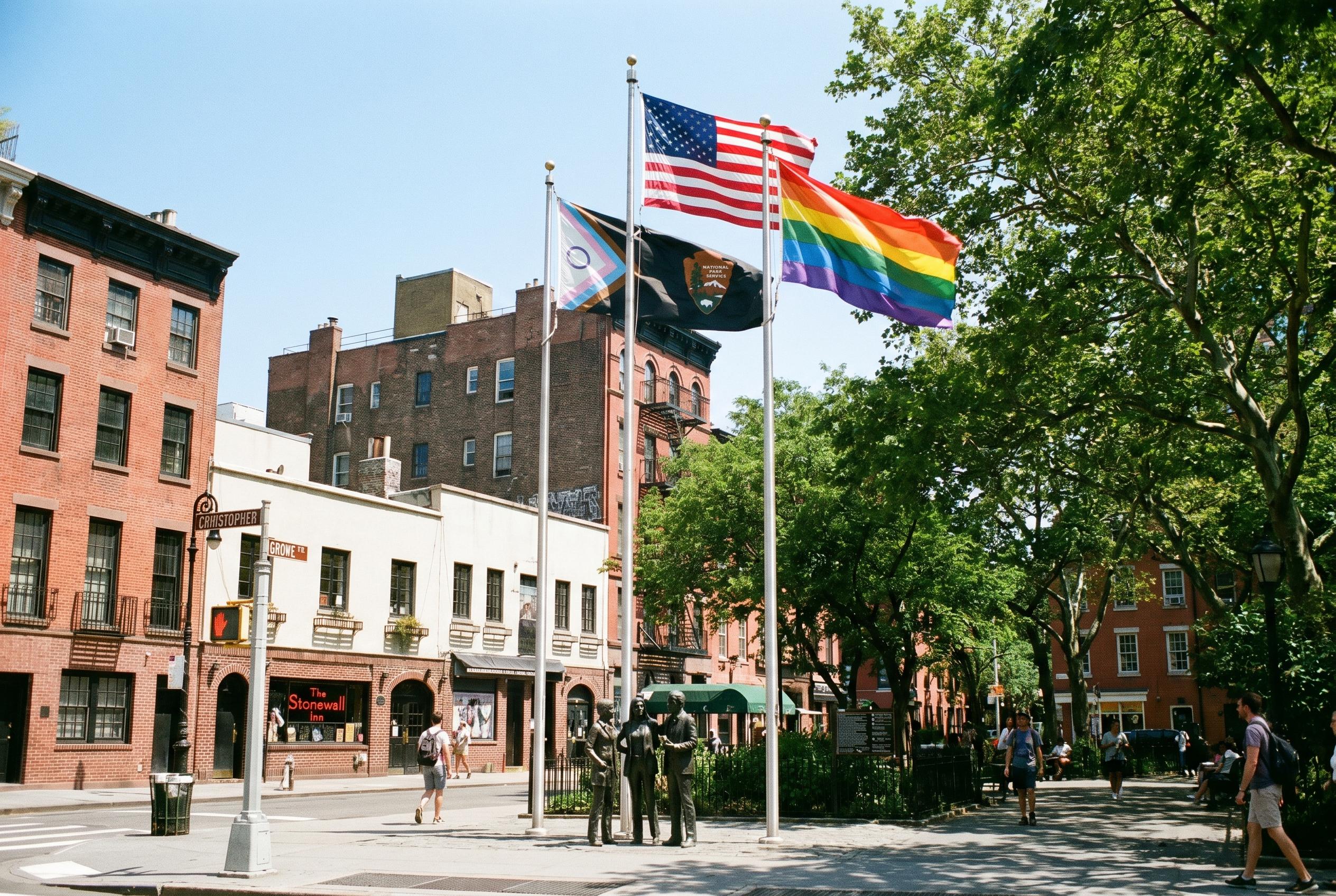
Celebrate: a federal agreement will let the rainbow Pride flag fly again at the Stonewall National Monument in Manhattan, a symbolic win for LGBTQ+ rights that matters to visitors, activists and the city’s history. The deal restores the flag to the site’s official pole and settles a lawsuit over whether Pride can be treated as legitimate historical context.
Essential Takeaways
- Flag restored: The federal government agreed to return the Pride flag to Stonewall’s official flagpole within seven days, to fly alongside the US and National Park Service flags.
- Legal basis: Plaintiffs argued the Park Service policy allows “non-agency” flags that provide historical context; the settlement accepts that reasoning.
- Symbolic impact: Stonewall’s flag is seen as central to LGBTQ+ memory; the decision reverses a high-profile order to remove it.
- Broader precedent: The case touches on how federal sites handle contested symbols, from Confederate flags to community commemorations.
- Local reaction: New York officials and activists hailed the move as recognition of LGBTQ+ history and rights.
A clear win at the symbolic heart of the movement
The most striking thing about this settlement is how visible it is: a bright, familiar rainbow flag once again flying over Greenwich Village feels almost visceral. According to coverage in The Guardian and PBS, the government agreed the Pride flag belongs at Stonewall as part of the monument’s historic narrative. For many visitors the return is emotional , the flag isn’t just fabric, it’s an affirmation that the site’s story is officially recognised.
This development began after an earlier order to remove the flag sparked national backlash and a prompt lawsuit by nonprofits. Metro Weekly and ABC News reported activists framed the removal as a direct attack on LGBTQ+ people, and the settlement acknowledges that the Park Service policy allowing contextual flags applies to Pride at Stonewall.
How the law and policy carried the day
The legal argument here was straightforward and, in many ways, clever: the Park Service has a doctrine permitting non-agency flags that illuminate a place’s history. Plaintiffs said the rainbow flag does exactly that at Stonewall, and the Justice Department’s decision to settle effectively accepts that position. Washington Post analysis notes this wasn’t a narrow PR move , the settlement commits the government to a permanent, enforceable return.
Why that matters beyond Stonewall: the same policy has been used to justify flying Confederate flags at battlefield parks, so this outcome implicitly recognises that symbols tied to fraught histories can be displayed to explain and interpret those histories, not merely to celebrate them.
Politicians, protesters and the public: reactions and meaning
Local politicians in New York made their feelings plain, and newspapers captured the scene: relief, cheers and a sense of having defended a civic memory. PBS and ABC News detail how state and city officials, plus LGBTQ+ groups, pressured the federal government and helped shape public opinion.
There’s a wider political reading too. The settlement is an unusual instance where the administration backed down after a high-profile push to curtail diversity-related displays. For activists it’s vindication; for opponents it’s a reminder that courts and public pressure can shape federal behaviour.
Choosing symbols at federal sites: why context matters
This case spotlights an awkward truth about national monuments , they don’t just preserve architecture, they curate meaning. Stonewall is a living memorial for civil rights activism, and the Pride flag helps visitors connect emotionally and historically. The Guardian’s reporting points out that interpreting contested symbols requires nuance, and this ruling leans toward including community perspectives.
If you’re curious how this plays out elsewhere, watch for similar fights at parks and memorials. Practical tip: if a site is central to a recent social movement, look for whether flags or markers are framed as “contextual” rather than celebratory; that framing often decides disputes.
What to expect next and why it matters locally
The settlement requires the flag to fly permanently, and the court will enforce that promise if necessary, according to the plaintiffs’ lead counsel quoted in coverage. So the change is not temporary theatre; it’s intended as lasting recognition. For Greenwich Village businesses, tourists and parade-goers, it restores a familiar skyline and a touchstone for Pride ceremonies.
And on a human level, the flag’s return is a small but powerful reassurance: institutions can be nudged to reflect communities’ lived histories, even amid national culture wars.
It's a small change that can make every visit to Stonewall feel a little more like coming home.
Source Reference Map
Story idea inspired by: [1]
Sources by paragraph: