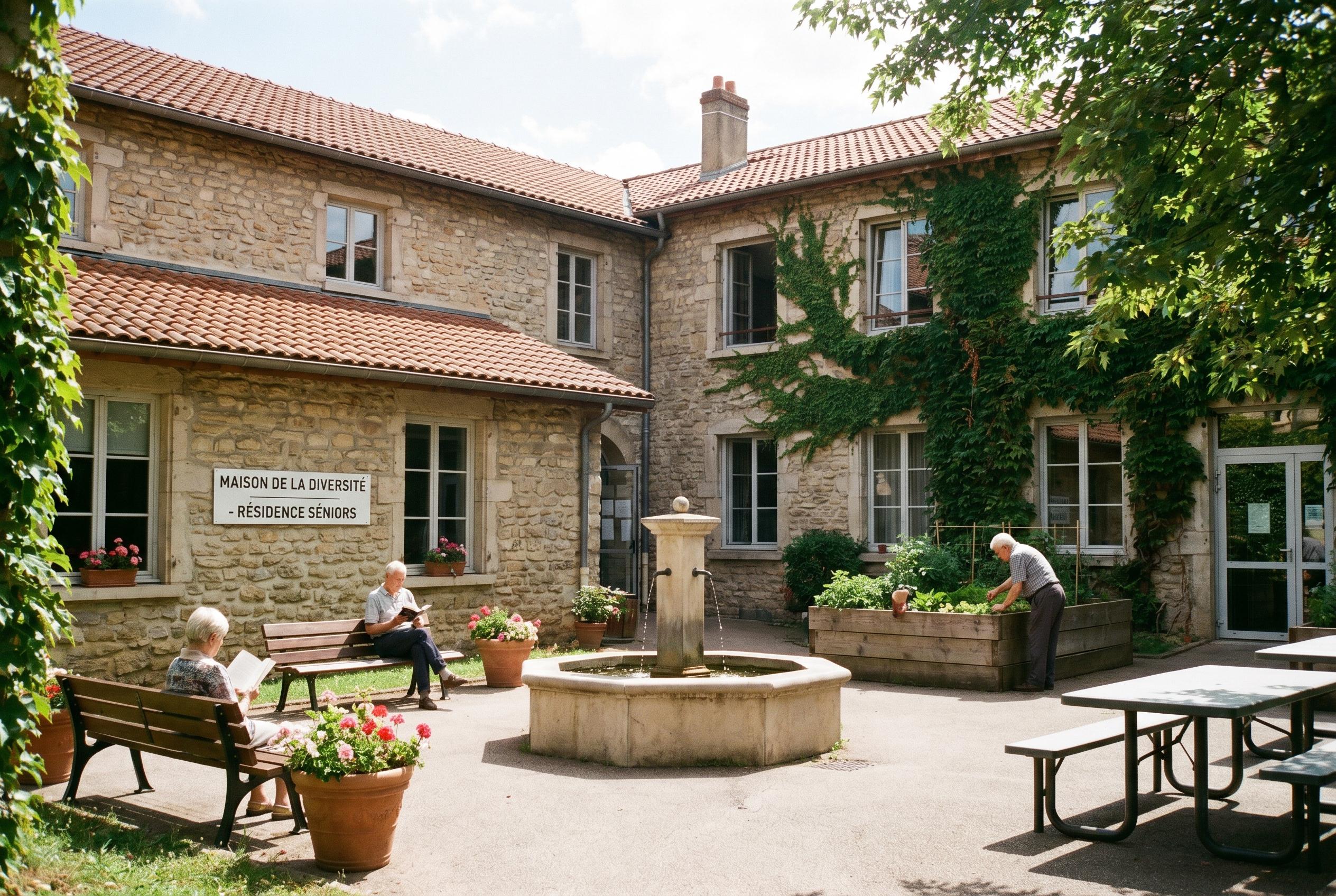
Shoppers for safer, kinder senior housing are finding it in Lyon: France’s first dedicated LGBTQIA+ senior residence, Maison de la Diversité, offers 15 private apartments, shared lounges and a garden where residents , aged 55-plus , regain social life, dignity and a sense of belonging.
Essential Takeaways
- New model: Maison de la Diversité is France’s first non-medical senior residence aimed at LGBTQIA+ people, combining private flats with communal spaces and support services.
- Comfort and scale: Apartments range from about 24–42m² with kitchens and bathrooms; there’s a 120m² communal area and a 230m² garden with terraces.
- Community rules: Residents must be at least 55, join the associated collective, follow house rules, and take part in community activities and training such as non-violent communication.
- Social benefits: Residents report reduced loneliness and greater freedom to socialise, while activities include film nights, games and karaoke , a lively, low-pressure social scene.
- Expansion plans: Local organisers and city sources say around ten similar projects are planned across France over the next decade.
Why Maison de la Diversité matters now
Lyon’s new residence nails a simple but powerful need: a place where older LGBTQIA+ people can be themselves without shrinking away. The building smells faintly of coffee and the garden is easy on the eyes; residents talk about relief rather than relief with a caveat. According to local coverage, people here say they feel less alone and more free to welcome guests or head out in the evening without hiding who they are. That emotional relief is the project’s central selling point.
Behind the initiative sits a recognition that mainstream care settings can leave LGBTQIA+ older people feeling invisible or doubly isolated. Reports in Lyon and regional outlets outline how Maison de la Diversité was developed as a community-led alternative: not a care home in the clinical sense but a residence that meets accessibility standards and offers ambulatory care services when needed. For anyone choosing where to spend later life, that blend of autonomy and accessible support matters.
What the building offers , small flats, big communal life
The residence contains 15 apartments designed for single occupancy or couples, each with a compact kitchen, bathroom and living-sleeping area. Shared spaces include a lounge used for film evenings, games and karaoke, and a substantial garden with terraces where people can sit in the sun. The accommodation mix keeps living costs and communal life manageable, while the garden gives a quiet, tactile place to meet neighbours.
Practical tip: if you’re looking at similar projects, check flat size and accessibility, and ask how communal life is organised , some people want a busy social calendar; others prefer quieter, smaller gatherings. Maison de la Diversité seems to strike a middle ground with regular, optional events.
Who can live there and what’s expected
Residents must be at least 55 years old and a member of the association that runs the project. There are income limits and an expectation of active participation in community life; newcomers are asked to commit to house rules and take part in training such as non-violent communication and regular practice groups. Those rules are designed to keep the atmosphere respectful and to equip residents and staff for the interpersonal dynamics that come with shared living.
That might sound formal, but organisers argue it’s what keeps the place warm rather than fraught. If you’re considering a move, ask about required trainings and community commitments up front so you know whether the culture fits you.
How this fits a wider trend in senior housing
Lyon’s example reflects a growing movement to create niche, identity-focused housing for older people. City announcements and local charities are already promoting open days and plans for further sites, and organisers say several similar projects are in the pipeline across France. The trend is part practical , meeting specific care and accessibility needs , and part cultural, responding to decades of older LGBTQIA+ people who often missed safe community spaces earlier in life.
Policy watchers will note this is community-led rather than a state-run care model; that hybrid approach could be a template elsewhere, especially in cities with active LGBT+ networks and supportive local councils.
Everyday life inside , quieter dignity, louder friendships
Residents describe a mix of quiet mornings with coffee on the terrace and noisier, fun evenings in the lounge. People who once felt they had to hide their lives in mainstream homes now host friends, join activities and form friendships with neighbours. Local reporting highlights that many occupants call their neighbours “friends” rather than just co-residents , a small semantic shift that signals a big social change.
For families and supporters, the takeaway is simple: this kind of residence can restore everyday dignity and social connection, not just provide a roof. If you’re exploring options for an older relative, visit during an activity to feel the atmosphere , it’s the quickest way to tell if a place will fit.
It's a small change that can make every later-life day feel more like home.
Source Reference Map
Story idea inspired by: [1]
Sources by paragraph: