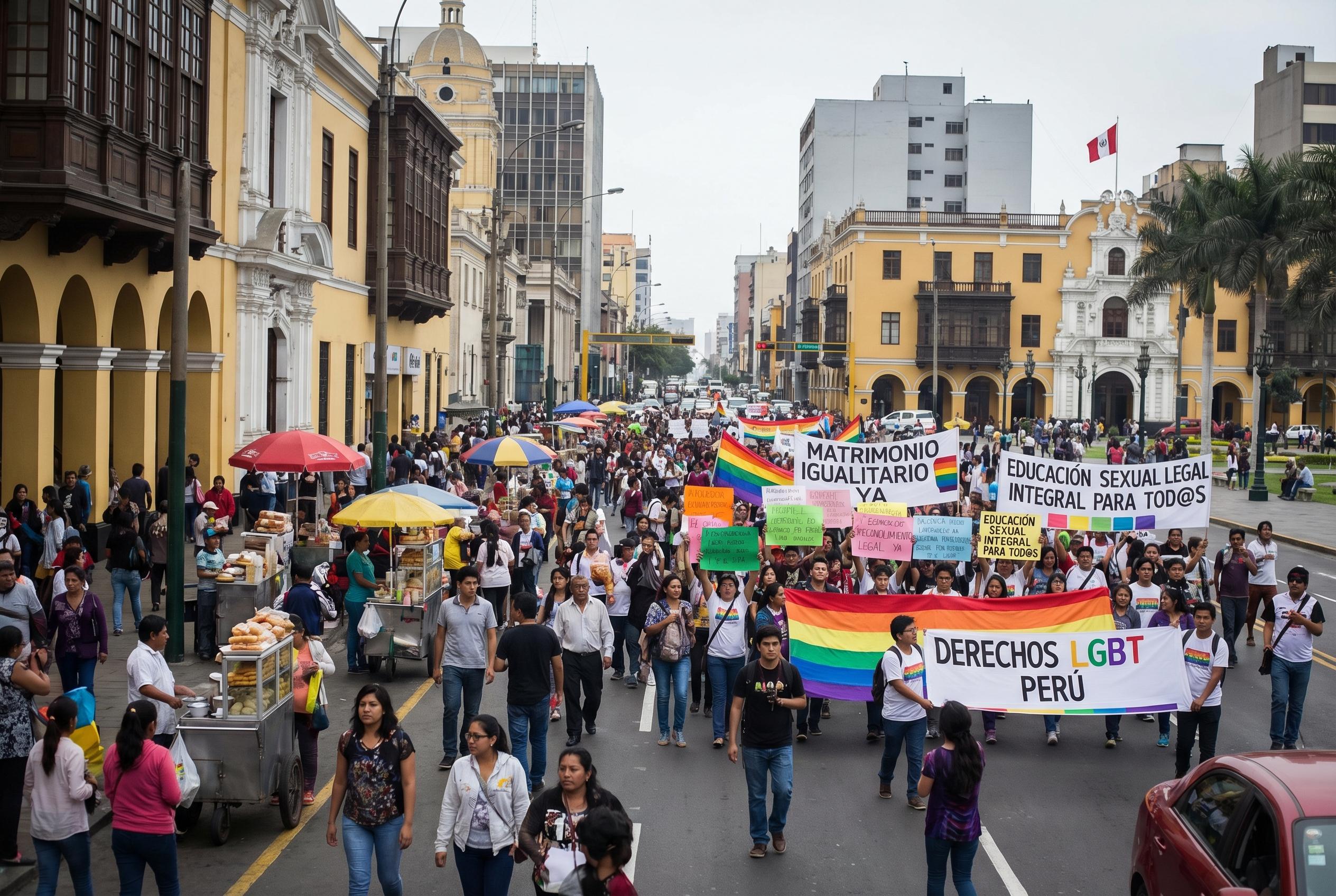
Shoppers are turning their attention to civil rights as Lima saw its first Trans and Non-Binary March this weekend; around 100 people marched from Miraflores to Kennedy Park, demanding legal recognition, safer public spaces and better healthcare just weeks before national elections.
Essential Takeaways
- Growing visibility: About 100 participants gathered in Miraflores and marched to Kennedy Park, using trans-flag colours and chants like “Identity is not a disease.”
- Political context: Activists say most parties have left trans and non-binary issues out of manifestos as anti-trans rhetoric rises in the campaign trail.
- Key demands: Calls include easier legal gender recognition, protections against violence and workplace discrimination, improved healthcare access and reinstated comprehensive sex education.
- Everyday risks: Protesters highlighted laws and proposals that force restroom use by biological sex, which they say heightens harassment and exclusion.
- Legal barriers: Many trans people still need court rulings to change documents, limiting access to services and rights.
A small march with a big message
The sight of ribbon-cutting with the trans-flag colours at Kennedy Park felt deliberately public and visual, a quiet defiance in a busy part of Lima. According to accounts from the event, the turnout was modest , roughly a hundred people , but the mood was purposeful and urgent. Marchers chanted and handed out leaflets, making a point that visibility alone is part of political pressure.
Organisers say the timing matters: the march took place less than two weeks before Peru’s general elections, when politicians are shaping platforms and voters are listening. For many activists, it’s a nudge to put trans and non-binary rights on the agenda rather than letting the debate be driven by rhetoric.
Why activists say political platforms have missed the mark
Participants and spokespeople argued that most political parties haven’t integrated trans and non-binary issues into their manifestos, leaving a gap in public policy debate. Lesly Quispe, a spokesperson for the march, criticised politicians for using anti-trans language as a distraction from wider issues like crime and the economy.
Human Rights Watch and other observers have highlighted similar trends in recent reporting on Peru: marginalised groups get little space when campaigns pick polarising talking points. That omission matters because it means specific legal and service-based problems go unaddressed.
The laws on daily life that activists want changed
There’s a laundry list of practical demands coming from the march. People want an easier path to change legal documents without lengthy court battles, clearer recognition of hate crimes against trans people, and workplace protections to prevent discrimination. Healthcare reform ranks high, with activists asking for trans-competent services that aren’t gatekept or pathologised.
A particularly pointed concern is any law or policy forcing people to use public restrooms based on biological sex. Marchers said such rules are not just symbolic , they create real risk of harassment and exclusion, especially for young people and those who already face social stigma.
Misinformation, stigma and the role of public debate
Organisers warned that misinformation and hate speech are being used to push policies that restrict trans rights, and that public debate often frames trans people in ways that reinforce stigma. Groups working on the ground pointed to recent court and policy developments across the region, where shifting legal standards sometimes help and sometimes hinder progress.
There are legal wins to point to elsewhere in Latin America that offer templates for change, but activists in Lima stressed that progress depends on sustained political will and clearer, inclusive party platforms as elections approach.
What this means for voters and everyday life
If you live in Peru or follow its politics from abroad, the march is a reminder that small civic actions can shape election conversations. For those who care about rights and safer public spaces, it’s worth asking candidates directly about specific commitments: will they simplify gender document changes, fund inclusive healthcare, or recognise hate crimes?
On a practical level, allies can support local organisations, share reliable information to counter misinformation and show up to visibility events. For trans and non-binary people, these demands aren’t theoretical , they affect everyday access to work, healthcare and safety.
It's a small change that can make every day safer for more people.
Source Reference Map
Story idea inspired by: [1]
Sources by paragraph: