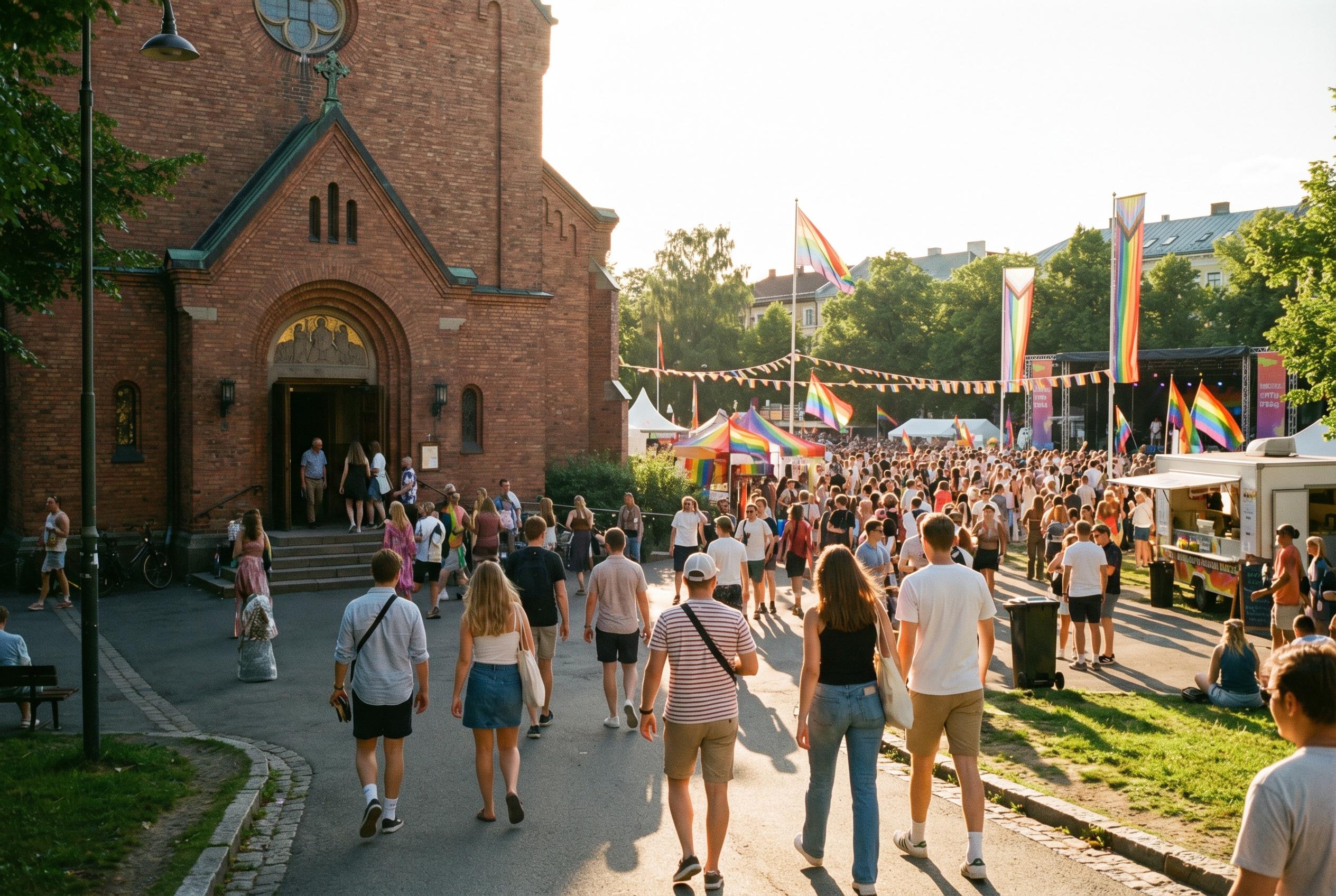
Shoppers and culture-seekers alike will spot bold new queer work across central Oslo this summer as Pride Art opens submissions for OUTSIDE//CLOSET, a free-entry exhibition running 18 June–30 August at Tøyenkirken and surrounding Pride venues; artists, sign up and show your voice to thousands.
- Who can enter: Open to Pride Art members (membership 200 NOK) with up to four works per artist.
- Where it shows: Visible to visitors at Tøyenkirken, commuters on the subway and crowds in Pride Park , high-footfall, public-facing spaces.
- Cost to artist: Registration is free; joining Pride Art is required.
- Timing: Exhibition runs mid-June to end of August; submissions are for this summer’s programme.
- Feel: Expect public, visible, festival-ready pieces , playful, political, and made to be seen.
Why OUTSIDE//CLOSET matters now
This isn’t a tucked-away gallery show; it’s a festival-stage moment for queer art in the middle of the city, with works seen by millions of passers-by and the Pride crowd. That visibility changes the game: your piece won’t just be curated for art-world insiders, it will meet commuters, families, tourists and festival-goers. For artists who want their work to strike up conversations in public, it’s an unusually direct route.
The call is organised by Pride Art, which asks entrants to be members , a small fee that covers participation and helps sustain the community. According to event listings, registration itself is free, and each artist may submit up to four works, so you can enter a series or try out different formats.
Where your work will appear , think big, think public
Tøyenkirken sits amid the bustle of central Oslo, with the exhibition visible to subway travellers and visitors to Pride Park, plus guests at TV//47, the event arena. That mix of sacred-space architecture, transit corridors and festival ground makes for a varied audience: some will glance, some will linger, and others will stumble upon your piece mid-commute.
If you’re used to white-cube thinking, plan for different viewing distances and quick impressions. Bolder colours, readable type and immediate emotional hooks tend to work better in transit contexts. Meanwhile smaller, tactile works can be placed in viewing nooks for those who stop.
How to prepare a submission that stands out
Start with a clear concept that translates at a distance and in a crowd. Photographic detail, strong silhouettes and concise artist statements help judges and the public alike. Since you can submit up to four works, balance scale and media: include one or two large-impact pieces plus a more intimate work to show range.
Documentation is key , good photos, dimensions, and a short, punchy text that tells people why the piece matters to the queer community. Remember practicalities: transport, installation needs and durability in a public context. If your work needs tech or special hanging, say so early.
Membership, registration and practical tips
Pride Art membership is required (200 NOK), and event pages list a free registration process for the exhibition. Join early to sort paperwork and get your submission in on time; festival shows move fast and planning spaces is a logistical jigsaw.
If you’re uncertain about scale or placement, ask organisers about typical site setups , they’ve staged shows that intersect museums, public parks and pop-up arenas before. And photograph your work in natural light: that’s how most viewers will first encounter it.
What this means for Oslo’s queer arts scene
OUTSIDE//CLOSET follows a lively year for queer culture in Oslo, with museum programmes and community exhibitions increasingly making space for diverse voices. Putting work in public view helps normalise queer perspectives and invites non-art audiences into the conversation. For artists it’s a chance to reach new eyes and be part of a city-wide moment.
So if you’ve been waiting for an open, high-visibility platform to show something bold, this is it , bring something that makes people stop, smile, think or squint and then look again.
It's a small step that can make every summer stroll in Oslo a little more colourful.
Source Reference Map
Story idea inspired by: [1]
Sources by paragraph: