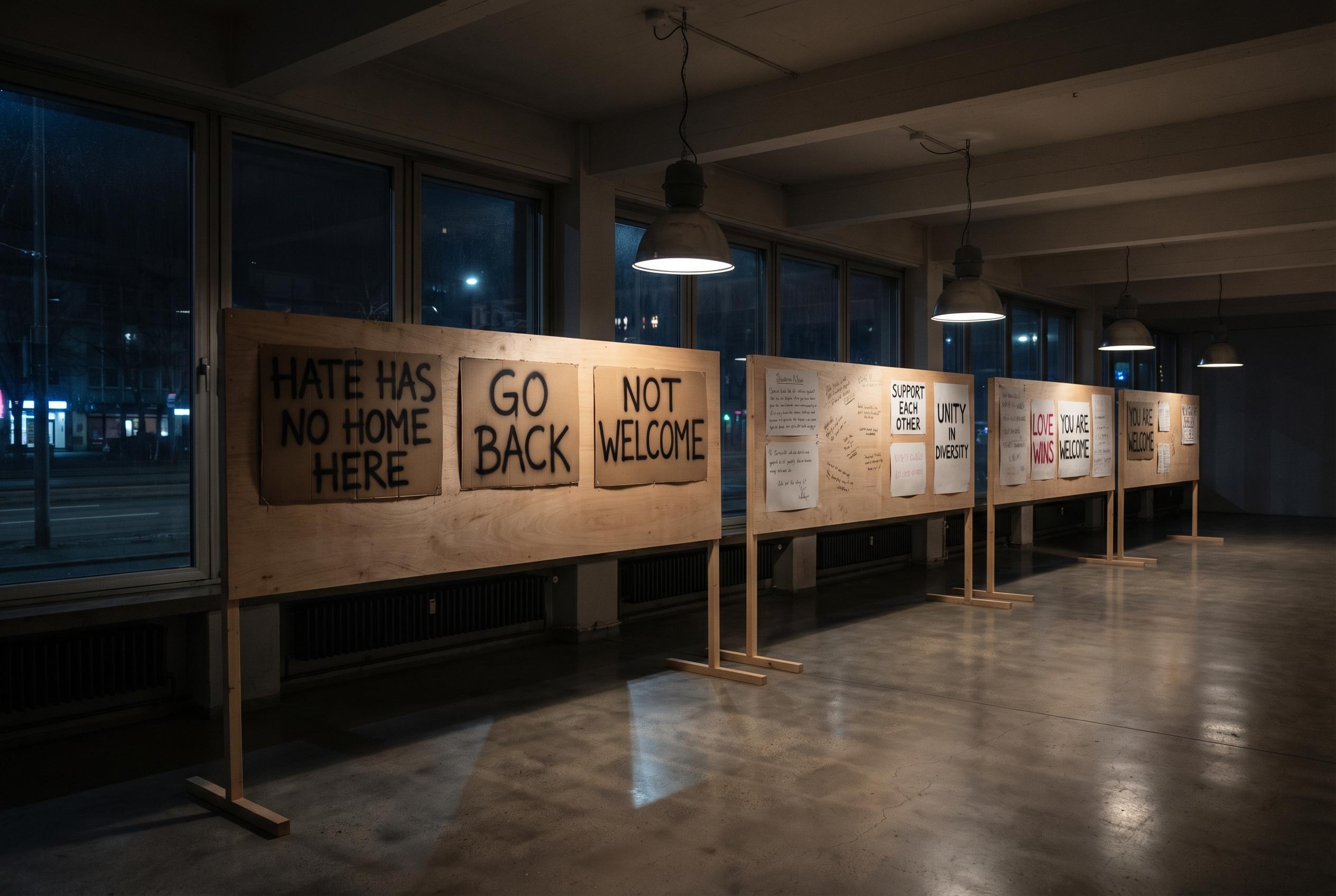
Shoppers, neighbours and civic groups have rallied round as Queer Euskirchen turns a surge of hate into a public conversation; the small exhibition "Words of Hate, Answer of Reason" at Simons Glück shows both the ugliness of threats and the warmth of solidarity, and it matters because visibility and safety go hand in hand.
Essential Takeaways
- Exhibition format: A two-room show contrasts hateful messages and threats with supportive notes, photos and community responses, creating a stark emotional arc that's easy to engage with.
- Police partnership: Local police and state security are investigating threats and vandalism, and the venue now has CCTV and more frequent patrols.
- Community backing: Political parties, churches, clubs and hundreds of citizens have publicly supported the group, with encouraging messages left at the storefront.
- CSD growth: Organisers expect about 1,000 participants at Euskirchen's CSD parade on 16 May, roughly double last year, with a full programme of events across May.
- Practical safety steps: The festival has a detailed security plan, awareness teams, stewards and blocked access routes to reduce risk during public gatherings.
How a compact exhibition makes big things visible
The hook is simple and striking: visitors walk from a dim, evidence-strewn rear room filled with screenshots of insults and threats into a front space full of uplifting notes and solidarity. The display has a tactile, emotional effect , the contrast feels deliberately intimate. Queer Euskirchen says the show invites people to look, listen and think about how words wound and how communities respond with reason and care. It’s a clever, low-cost way to turn harassment into a civic teaching moment.
Why the police are involved and what that means for safety
Incidents have included online abuse, graffiti and vehicle damage, so authorities have taken them seriously. The group reports close cooperation with police and the state protection service; the shop now has cameras and officers pay special attention to the area. That partnership matters: it signals that harassment isn't merely a private nuisance but a matter for public order, and it helps organisers plan safe events and reassure participants.
Solidarity in practice: neighbours, churches and parties step up
The other side of the story is unmistakable warmth. Residents left sticky notes on the shop window, churches held meetings in the space and local parties publicly pledged support. The result is a visible boost to the whole neighbourhood, which residents say has benefited from the group's activity. That social momentum is important , it makes harassment feel less like an isolated attack and more like a prompt for collective defence.
The CSD parade: bigger, louder and planned with care
This year’s CSD on 16 May aims to be noticeably larger, with organisers expecting around 1,000 people to attend. Events on the day include stalls from parties, churches, youth organisations and grassroots groups, plus music, dance and a planned flashmob. Organisers have built a security concept with the police and the council, including access controls, awareness teams and numerous stewards; volunteers are still being sought. If you're thinking of going, register, read the safety guidance and consider joining a steward team to help keep things calm.
Beyond the parade: a month of events and conversations
May is full of lead-up activities: readings, talks about HIV and queer experience, liturgical services open to all lovers, workshops on violence prevention and community choir-style meetups. The programme connects visibility with practical support and education , a useful model for other towns facing similar tensions. For anyone interested, the group's website and printed brochure carry the full calendar and sign-up details.
It's a small change that can make every public moment safer and more visible.
Source Reference Map
Story idea inspired by: [1]
Sources by paragraph: